Beeswax: From Hive to Finished Block
Of every wax a candle maker can pour, beeswax is the only one a living creature builds for its own home. It burns longer and cleaner than paraffin, smells faintly of honey without any fragrance added, and shows up in candles, balms, wraps, and wood polish alike. This guide walks the whole journey: how bees make it, which kind to use, how to render raw comb into clean blocks at home, and what to do with them once you have them.
How worker bees make wax
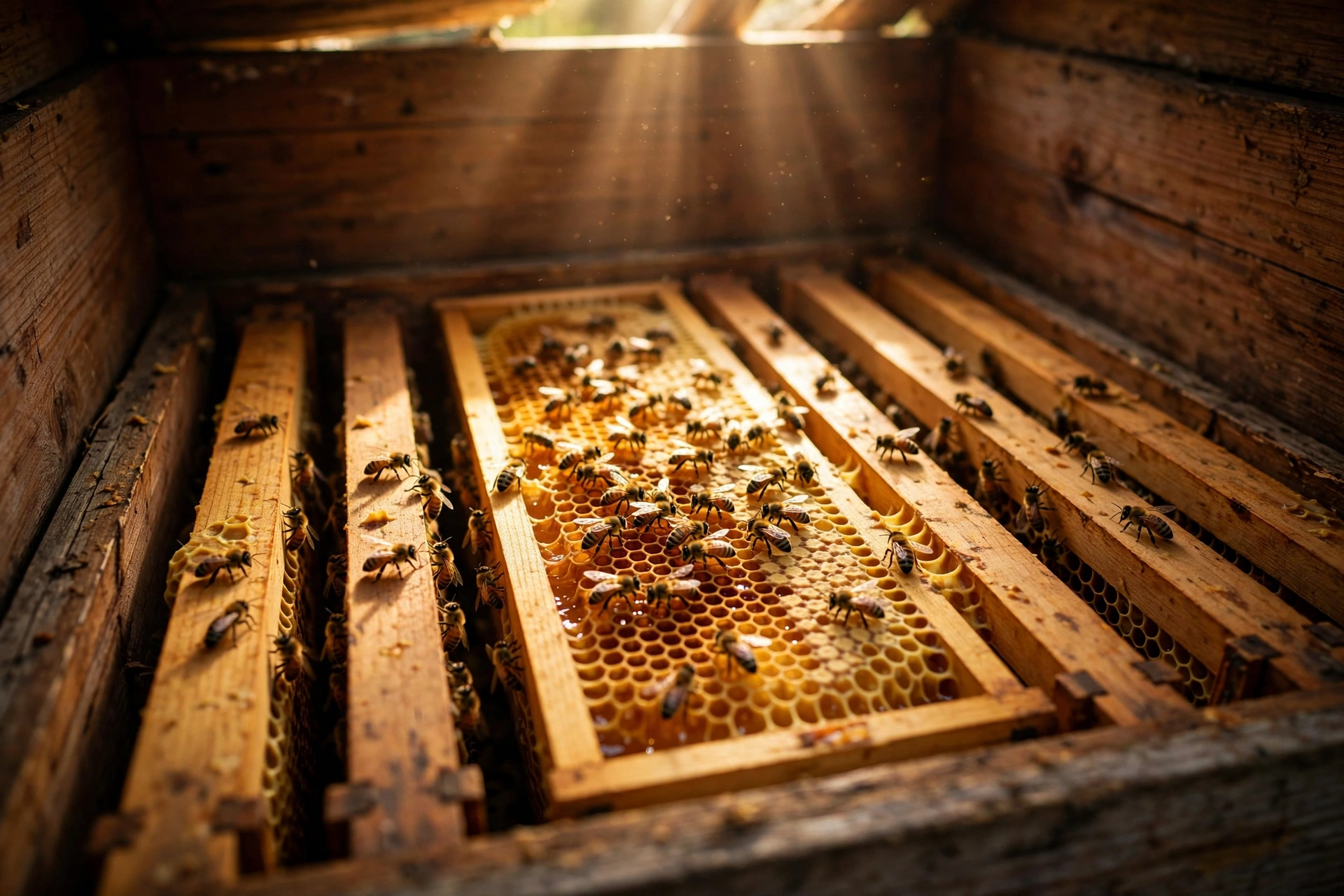
Wax comes from the bees themselves. Young worker bees — roughly 12 to 18 days old — have eight wax glands on the underside of their abdomen. These glands secrete tiny wax scales, about 1,100 of them to make a single gram of wax. The bee chews and kneads each scale with her mandibles, softening it with saliva, then presses it into the comb.
Making wax is expensive for the colony. Bees consume roughly 10 pounds of honey to produce 1 pound of wax, and the hive has to stay at 90°F or warmer for the glands to work at full speed. That is why comb building peaks during strong nectar flows in warm weather.
Freshly made wax is colorless. It turns yellow and then amber as it absorbs pollen pigments and propolis from inside the hive. So the deeper the color, the longer that wax has been doing duty in the colony.
Cappings versus brood comb
Not all comb wax is equal. The two kinds a maker will run into most often are cappings and brood comb, and they go to very different projects.
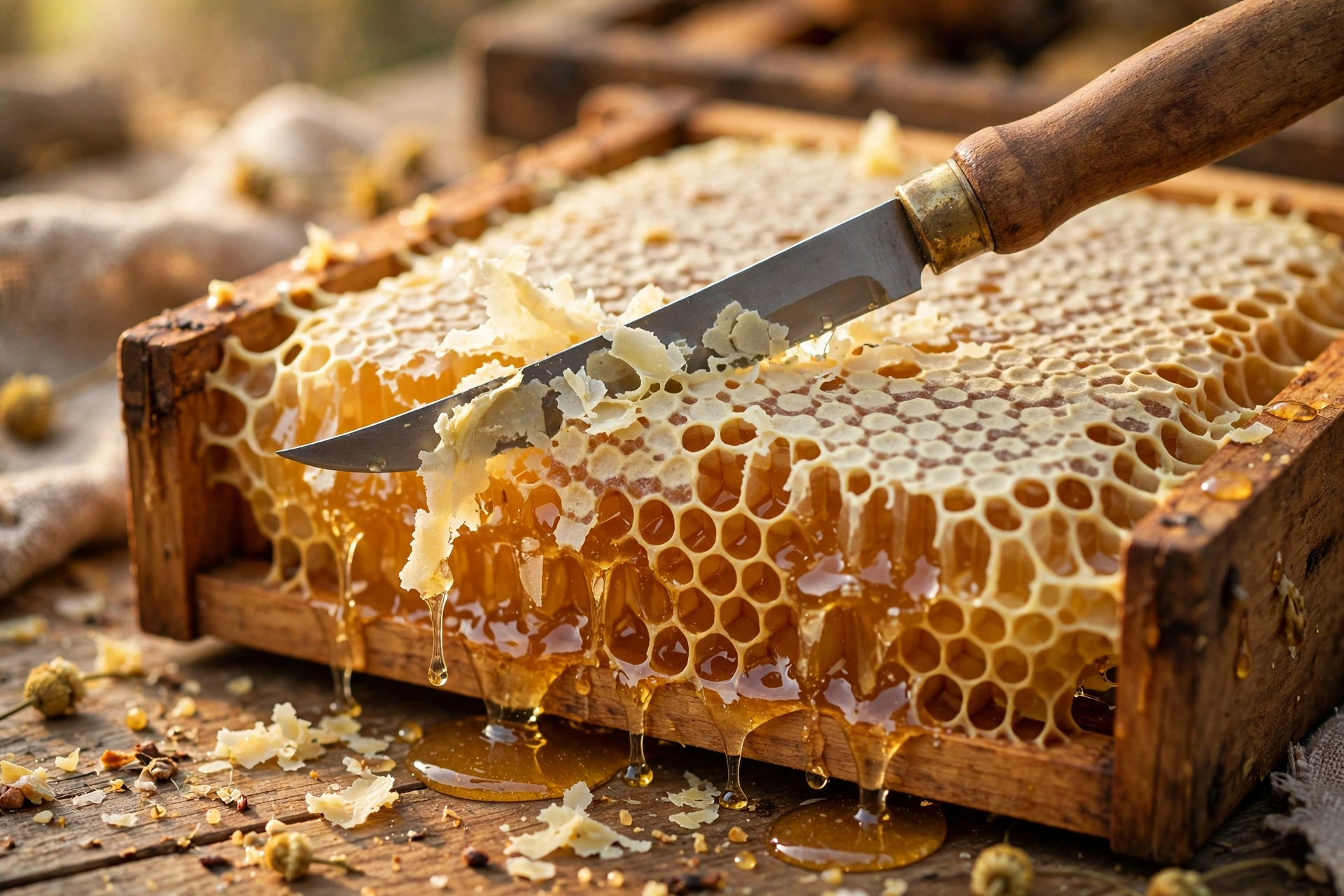
Cappings are the thin wax lids beekeepers slice off honeycomb during harvest. This wax is the cleanest and lightest you can get from a hive — it has never held brood, so it stays pale and mild-smelling. It is the best choice for candles, lip balm, salves, and food wraps.
Brood comb is the wax from the frames where bees raise their young. It darkens over time from pollen, propolis, and many generations of cocoons. It is perfectly good wax, but its deeper color and stronger scent suit projects where looks matter less — wood and leather conditioner are classic uses.
Rendering raw wax into clean blocks
Raw comb — whether cappings or crushed comb — still holds honey, bits of propolis, and debris. Rendering turns it into clean, usable wax, and it happens in two passes.
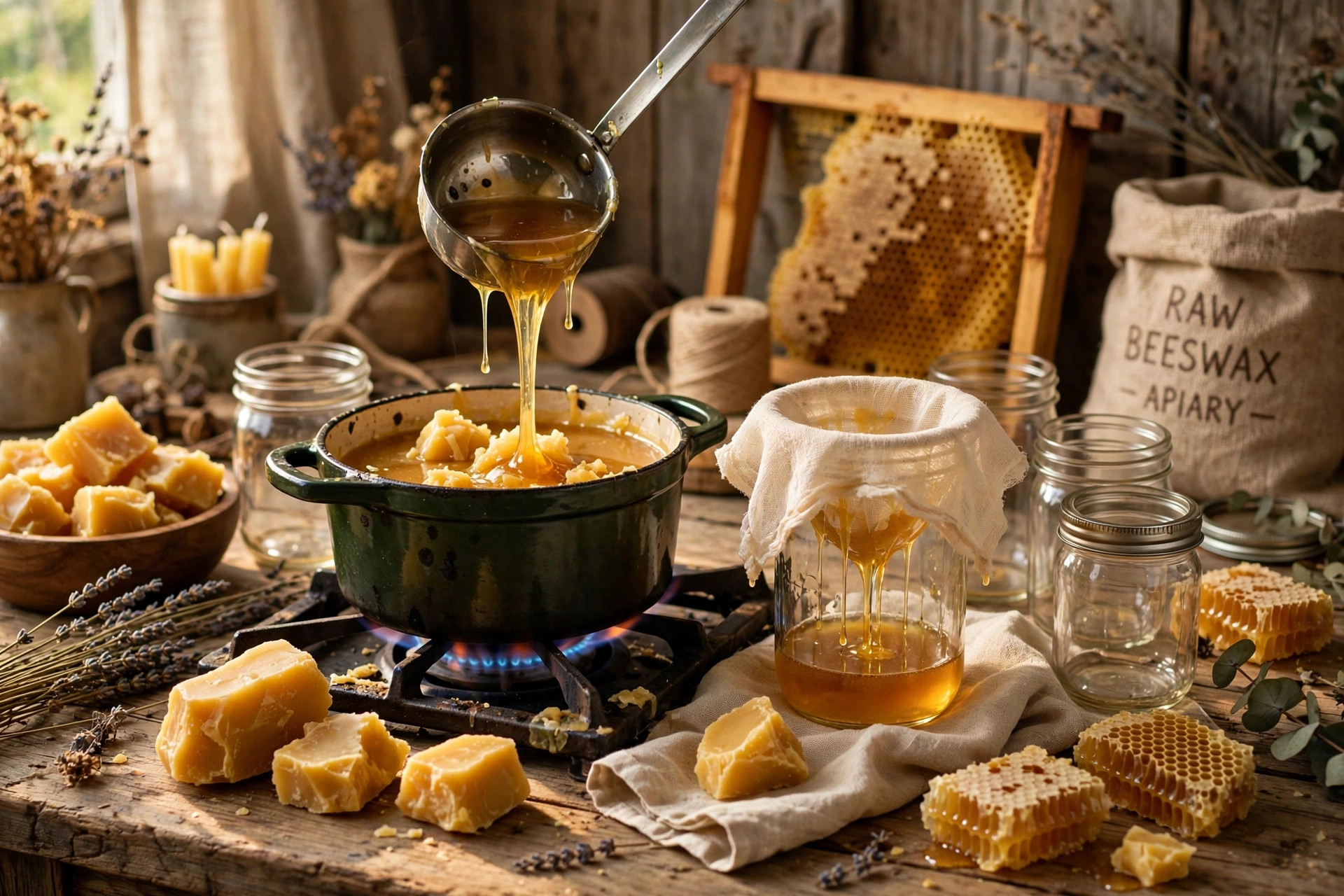
First melt: separate the debris. Put the comb in a pot with water and heat it gently (a water bath works, or a solar melter on a hot day, or simply boil-and-strain on the stove). The wax melts, the debris and honey dissolve or sink, and the liquid wax rises to the top. Let it cool completely and the wax sets into a solid disc on top of the water. Pop the disc out and scrape off the dirty bottom layer.
Second melt: clean it. Melt the disc again with no water this time, then pour it through fine filtering material — cheesecloth, a paper towel, or a piece of nylon stretched over a funnel or strainer. Very dirty wax may need two or three passes. Each pass leaves more gunk in the filter and a cleaner block behind.
Grades and buying
Yellow versus white. White beeswax is simply yellow beeswax that has been filtered further until the color is gone. It looks cleaner in white candles and skin products, but the extra filtering also strips out some of the natural honey scent. Choose by the look and smell you want in the finished product.
Cosmetic grade. If your wax is going on skin — balms, salves, lotions — buy cosmetic grade. It has been tested and filtered to cosmetic standards; the cheapest craft-store block may not meet them.
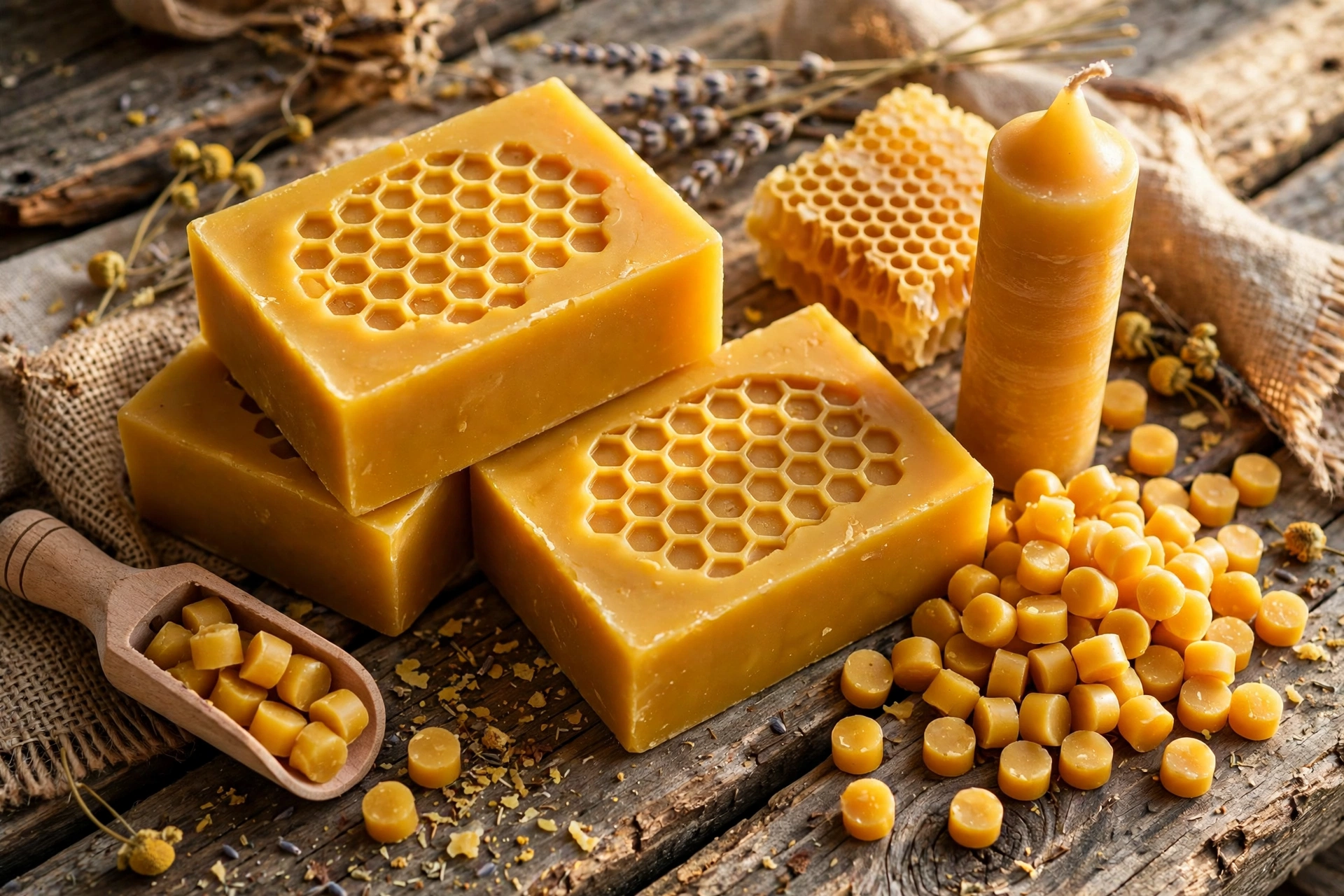
Blocks versus pellets. Pellets (also called pastilles) melt faster and are easier to weigh for small batches. Blocks are usually the better price per pound and melt fine if you break them up first.
Whatever form you buy, look for 100% pure beeswax. Some blended waxes mix in paraffin to cut costs — fine if that is what you want, but buy them knowingly, not by accident.
What to make
This section has a tutorial for every classic beeswax project:
- How to Render Raw Beeswax
- How to Make Beeswax Taper Candles
- How to Make Beeswax Container Candles
- How to Make Beeswax Lip Balm
- How to Make Beeswax Food Wraps
- How to Make Beeswax Wood Polish
- How to Make Beeswax Ornaments
Storage
Keep beeswax in a cool, dry place — a pantry shelf or a cabinet away from the stove. It keeps indefinitely; a ten-year-old block pours just like a fresh one.