How to Make Room & Linen Sprays (Beginner Recipe)
Room and linen sprays are the cheapest, fastest project in home fragrance — no wax, no wicks, no curing. Just distilled water, a solubilizer, and fragrance, and you’ve got a giftable product in under half an hour. Here’s the whole method, including the two things most tutorials skip: why you need a solubilizer, and the preservative question.
What you’ll need
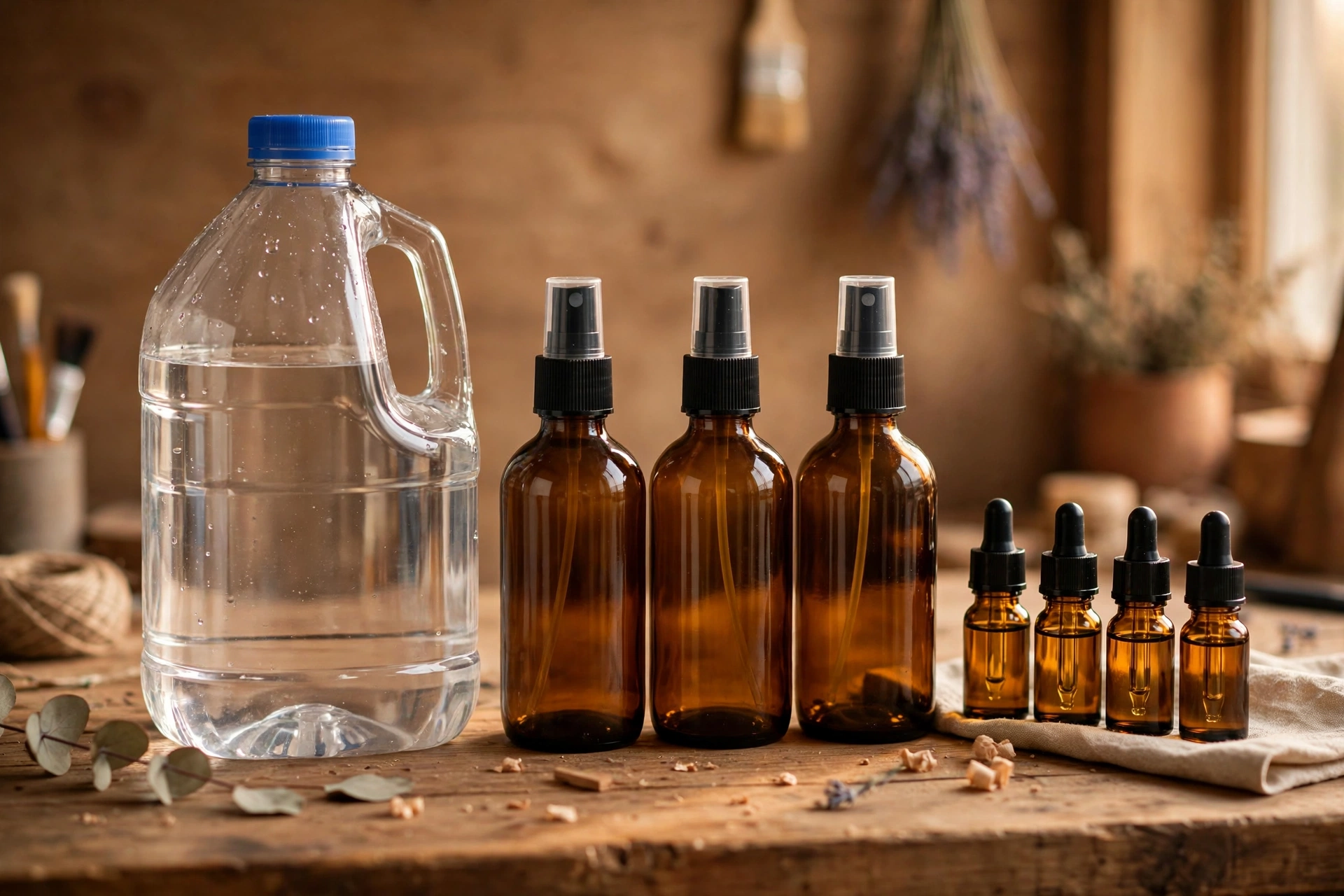
- Distilled water (not tap — minerals and microbes shorten shelf life)
- A solubilizer made for fragrance in water-based products (from your supplier)
- Fragrance oil rated for body/home use by your supplier
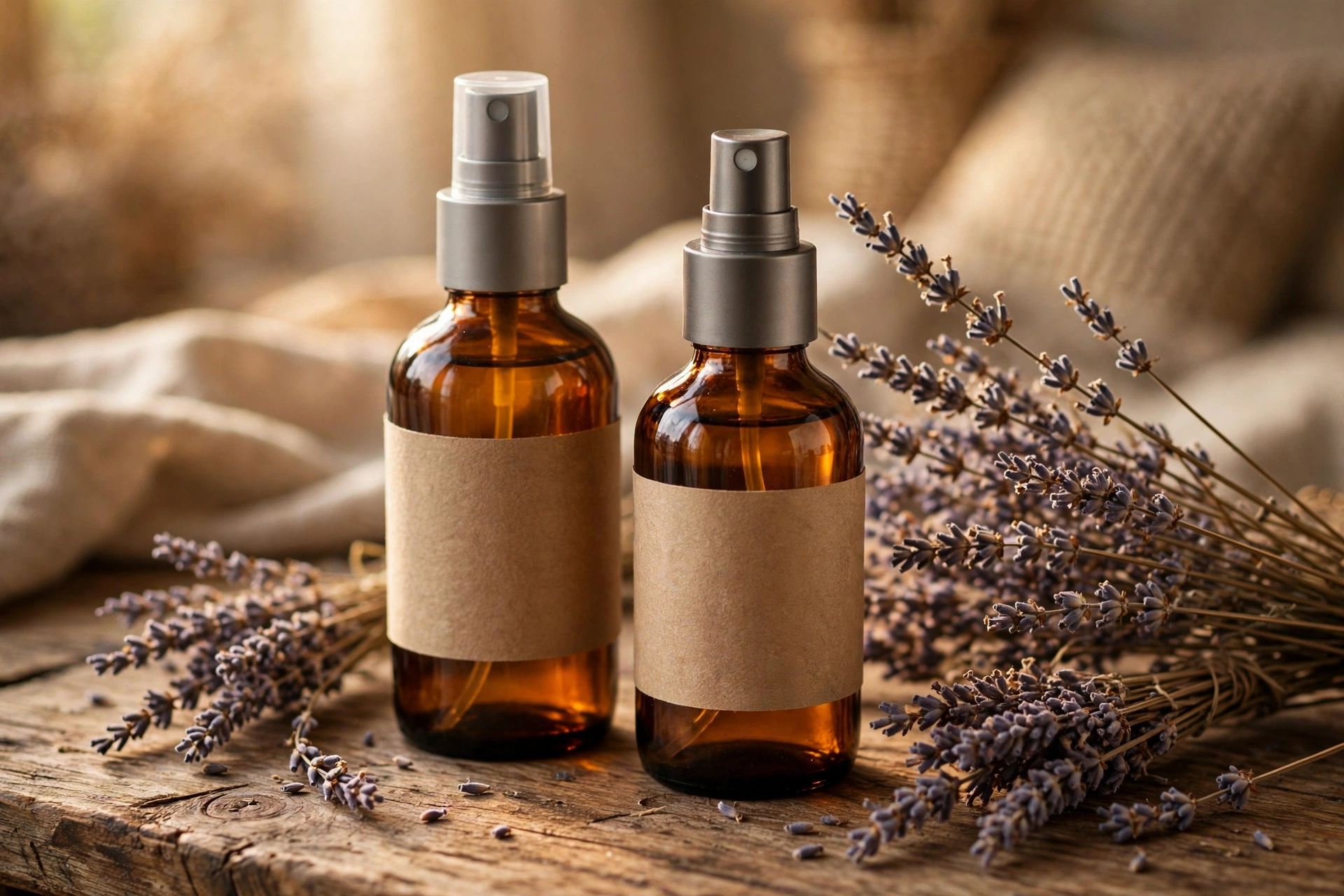
- Amber glass spray bottles with fine-mist sprayers
- Small funnel, measuring cups or a scale, labels
Why you need a solubilizer
Oil and water don’t mix — that’s the entire problem. Stir fragrance oil into plain water and it floats in beads on top; spray it and you get uneven scent, oily spots on fabric, and a bottle that looks separated and unprofessional. A solubilizer is an ingredient that coaxes the oil into the water so it disperses evenly and sprays as a fine, consistent mist.

Use a solubilizer made for this purpose from a reputable supplier, and follow their usage guidance — the ratio matters, and “a splash” isn’t a formula. What about plain rubbing alcohol? It’s a weak solubilizer at best: it evaporates fast, can dry out the scent, and still leaves you with separation. Do it properly with a real solubilizer and your sprays will look and perform like store-bought.
Steps
1. Measure your water
Start with distilled water in a clean glass measuring cup or beaker. Distilled matters — tap water carries minerals and microorganisms that shorten shelf life and can cloud your spray.
2. Pre-blend fragrance and solubilizer
In a separate small container, combine your weighed fragrance oil with the solubilizer at the ratio your supplier recommends. Stir until completely uniform — this pre-blend is the step that makes everything else work.

3. Combine and shake
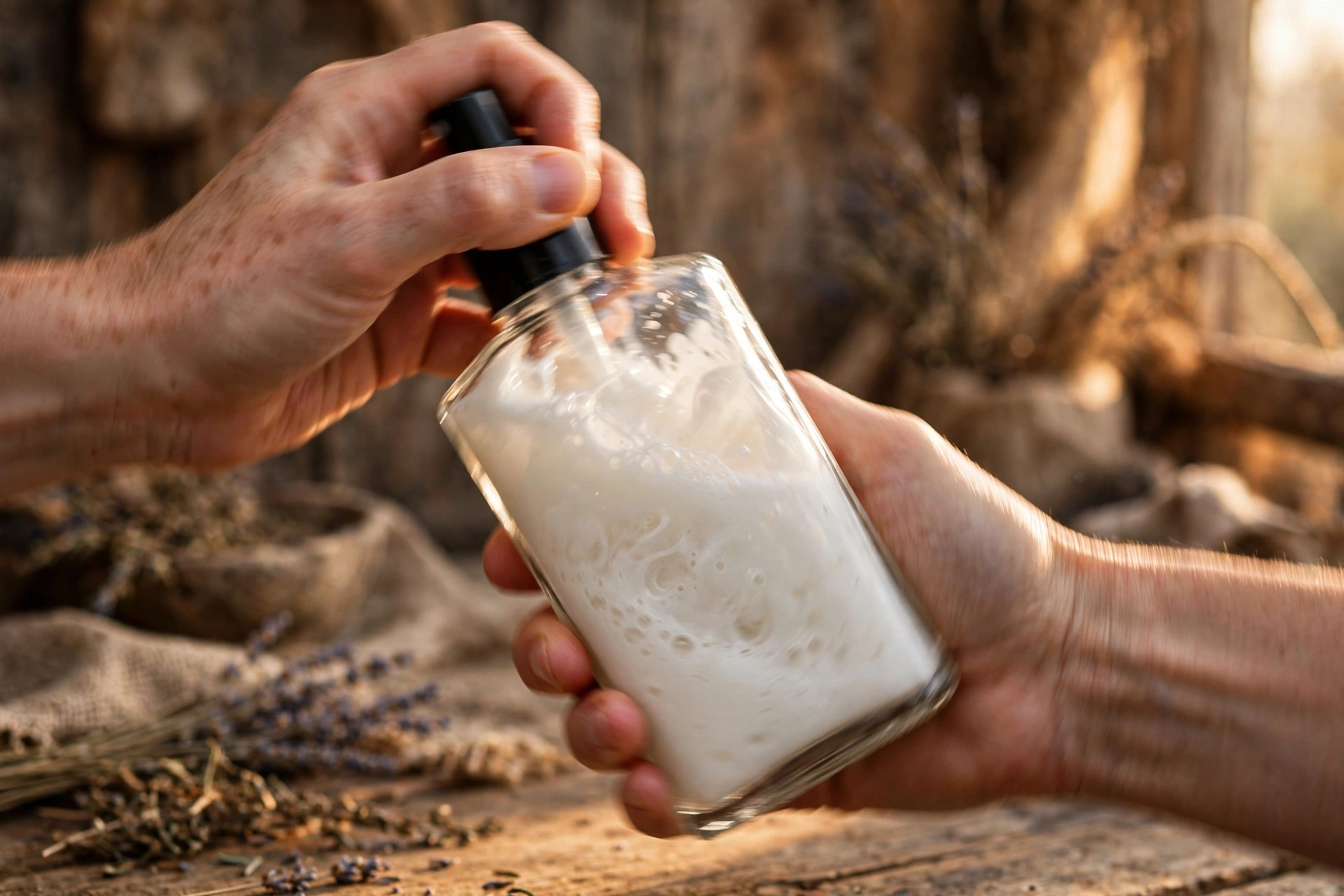
Pour the pre-blend into the distilled water and stir or shake vigorously. The mixture should look uniform — slightly hazy is fine, visibly separated oil beads are not. If you see beads, you need more solubilizer (check your supplier’s guidance).
4. Funnel into bottles
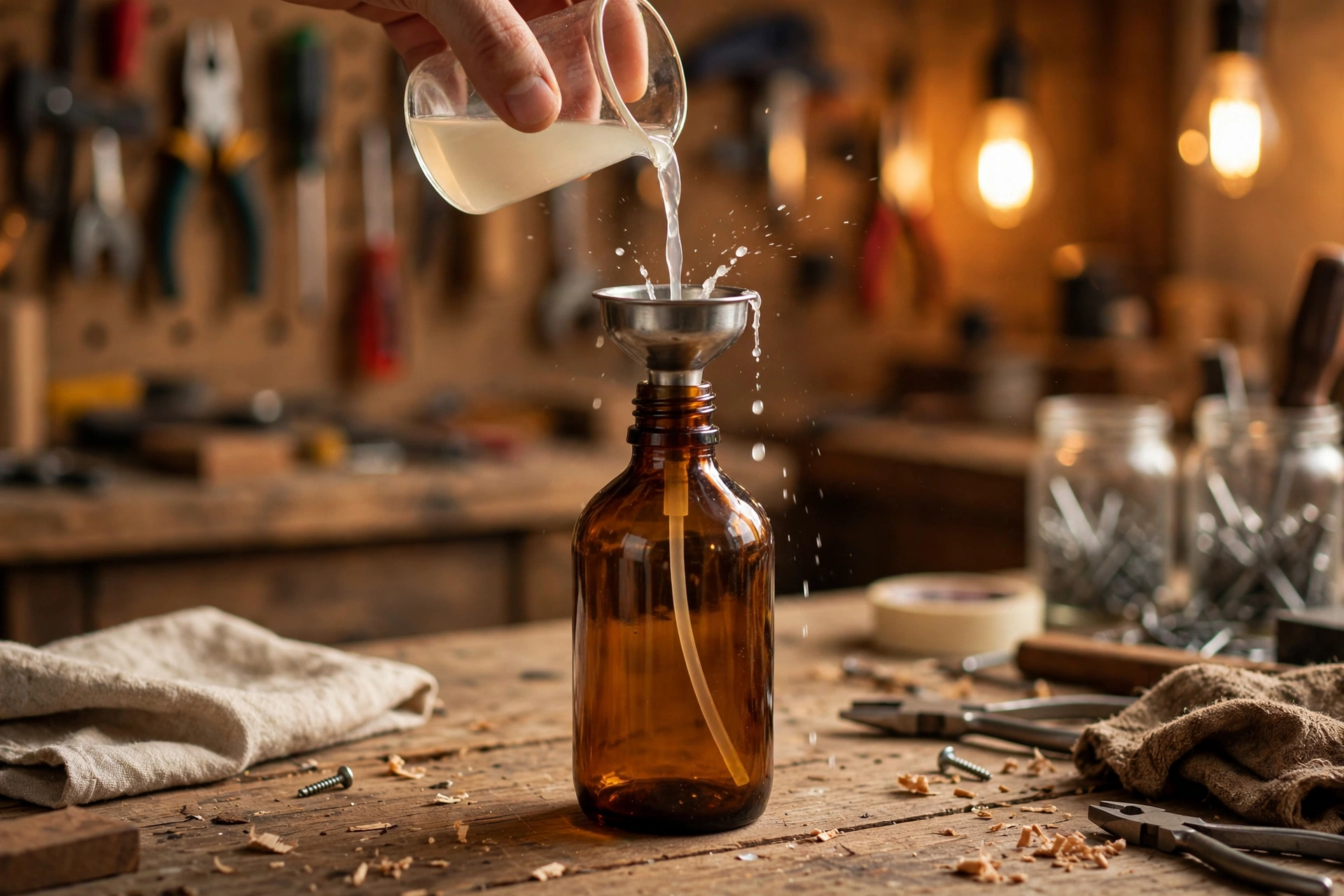
Using a small funnel, fill your amber spray bottles, leaving a little headspace. Amber glass protects the fragrance from light, which keeps the scent truer for longer. Cap tightly and give each bottle a final shake.
5. Label everything
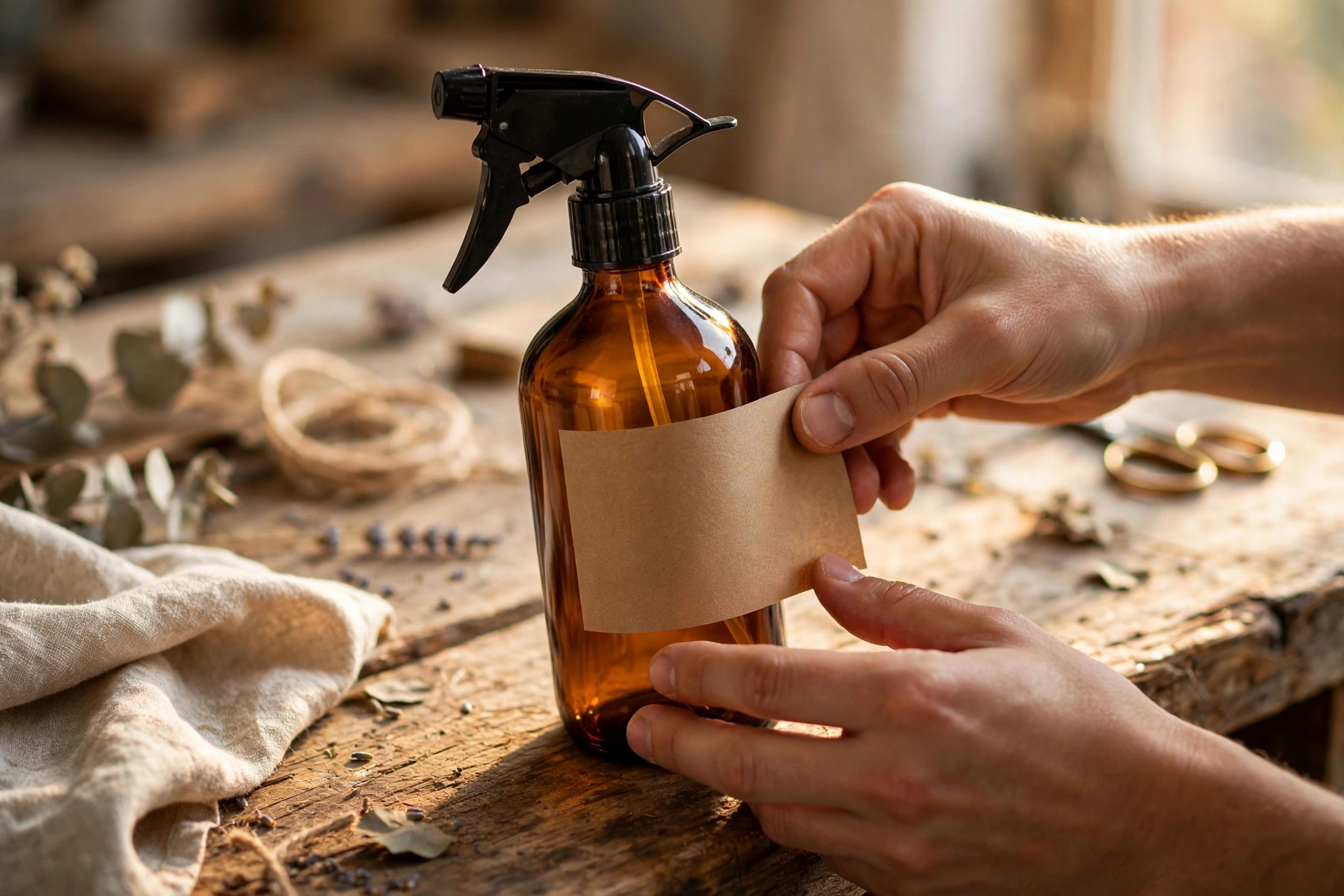
Every bottle gets a label: product name, scent, the date you made it, and “shake before use.” If you’re selling, add your business name and a basic ingredient listing per your local labeling rules. A printable label template keeps batches consistent — design one and reuse it.
The preservative question
This is the #1 unanswered question about DIY sprays, so let’s settle it: any product containing water can grow bacteria and mold, and that includes your room spray. A preservative isn’t optional chemistry trivia — it’s what keeps a water-based product safe on a shelf.
Distilled water, clean equipment, and sensible batch sizes all help, but they’re hygiene, not preservation. The preservative is the preservation.
Using and gifting
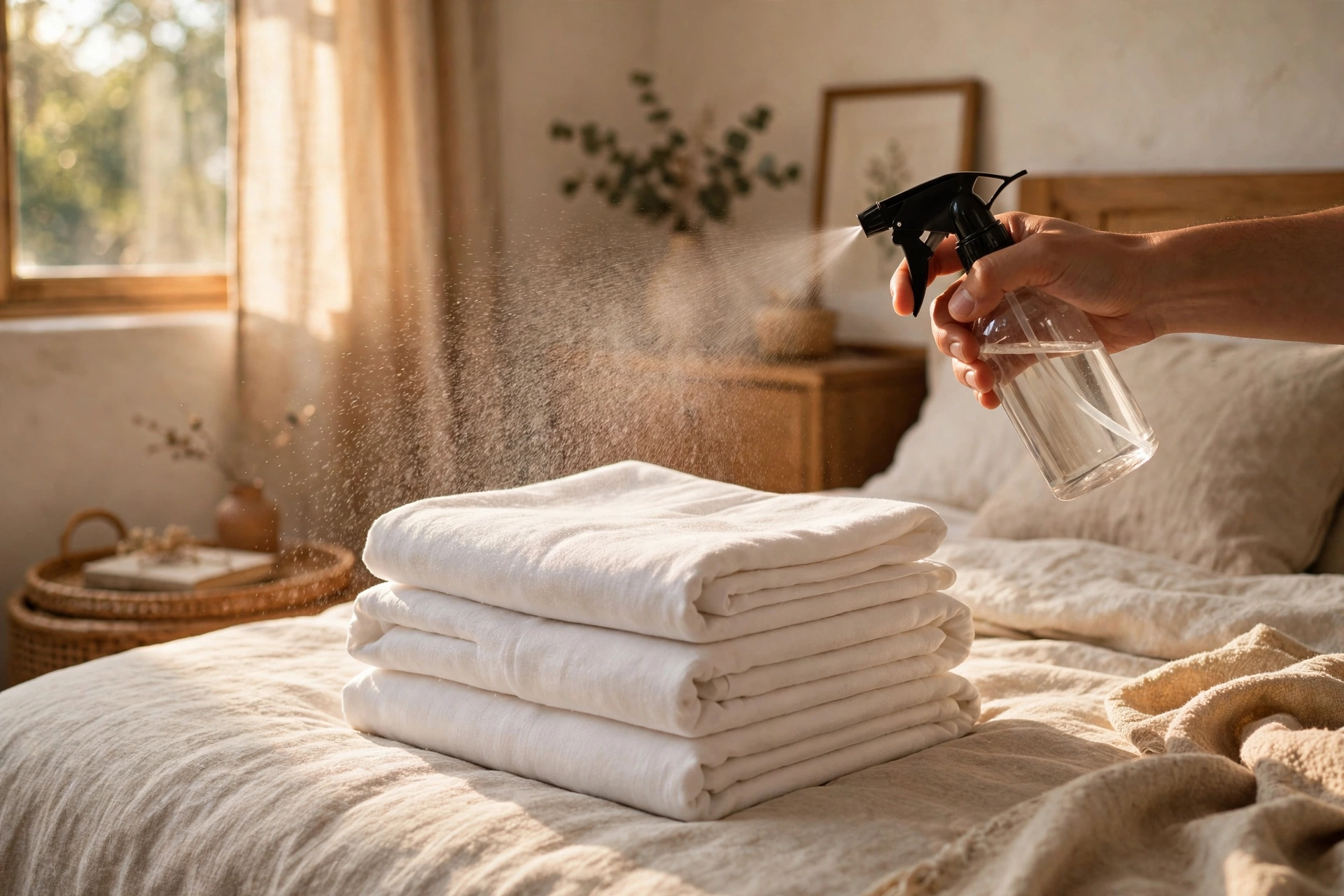
On linens: mist from 8–12 inches away and test on a hidden spot first — some fragrances can spot delicate fabrics. In rooms: a few pumps toward the center of the room, not directly at furniture.
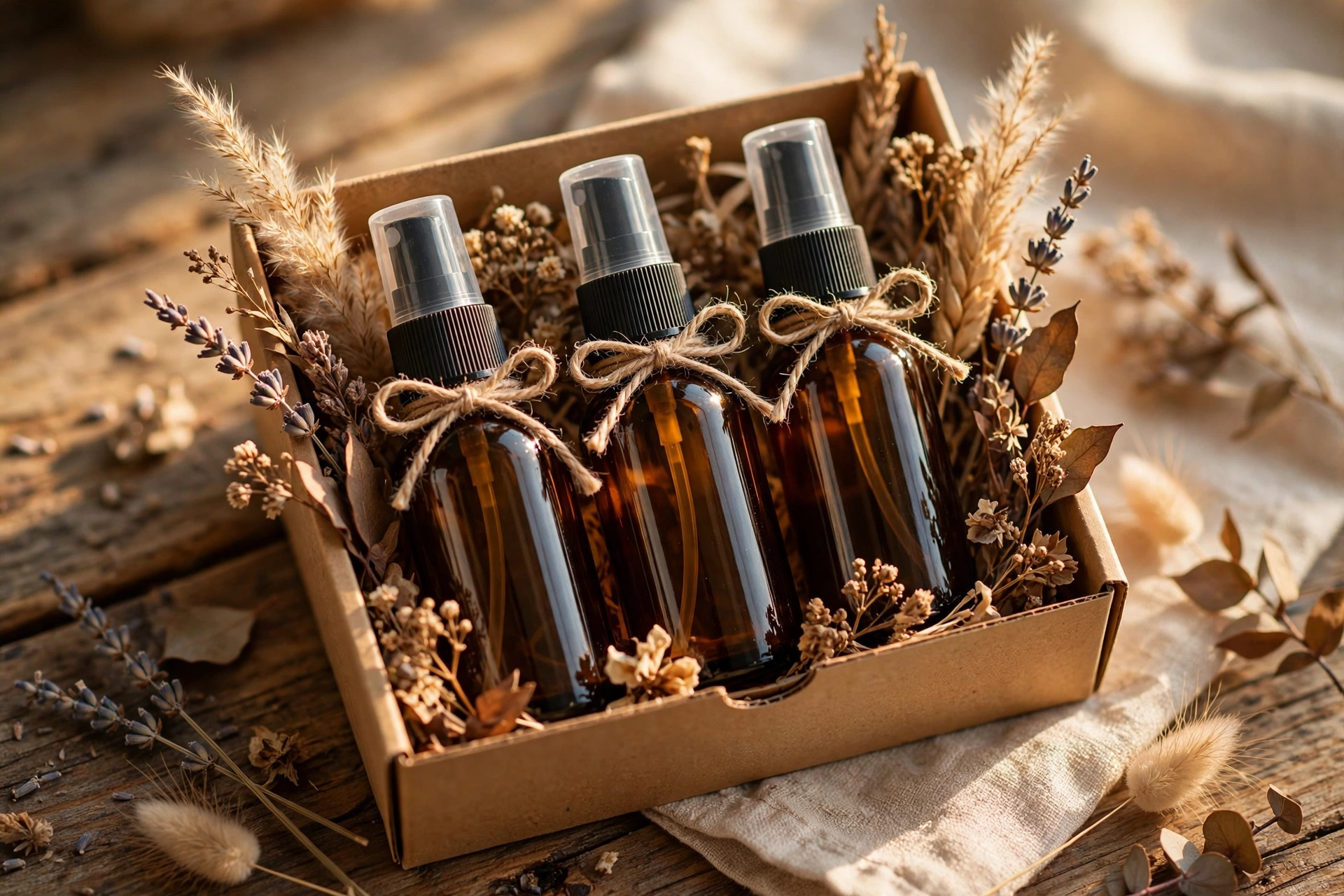
As gifts: sprays are perfect stocking stuffers and add-ons. Bundle two or three complementary scents in a small box with dried flowers or twine, and you’ve got a gift that looks far more expensive than it was to make.
Next steps
Building a scent line? The fragrance blending tutorial shows how to create balanced top-middle-base blends that work across candles, sprays, and more.