How to Blend Fragrance Oils
Anyone can buy a fragrance oil. Blending your own is how you get a scent nobody else sells. Here’s a perfumer’s approach, simplified for candle makers.
What you’ll need
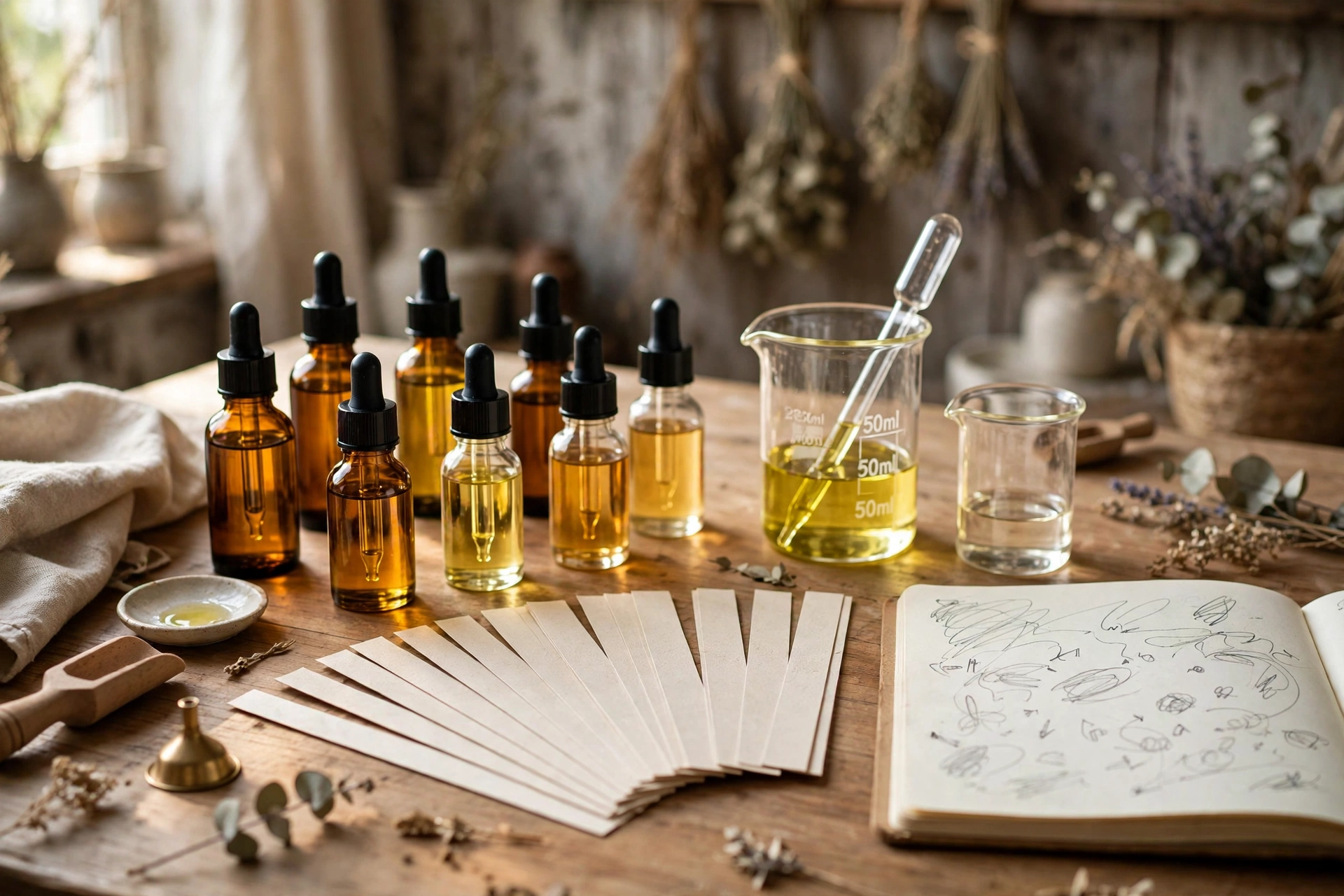
- 5–8 fragrance oils in different families (citrus, floral, wood, musk, vanilla, spice, herbal, fruity)
- Glass beakers or small jars for test blends
- Pipettes or glass droppers — one per oil, no cross-contamination
- Paper scent strips (blotters)
- A notebook — blends you don’t write down don’t exist
- Digital scale (0.01 g precision for small test batches)
Steps
1. Learn the notes
Every blend has three layers: top notes hit first and fade fast (citrus, herbs), heart notes form the character (florals, fruits, spices), and base notes linger for hours (woods, musks, vanilla, amber). A blend that’s all top notes smells exciting for five minutes and then disappears.
2. Start with a ratio
Beginners do well with a 30-50-20 rule: 30% top notes, 50% heart notes, 20% base notes. Pick one oil per layer for your first blend — three oils total. Complexity comes later. Try our free scent blending calculator to split any total across your chosen ratio.
3. Blend by drops, record everything
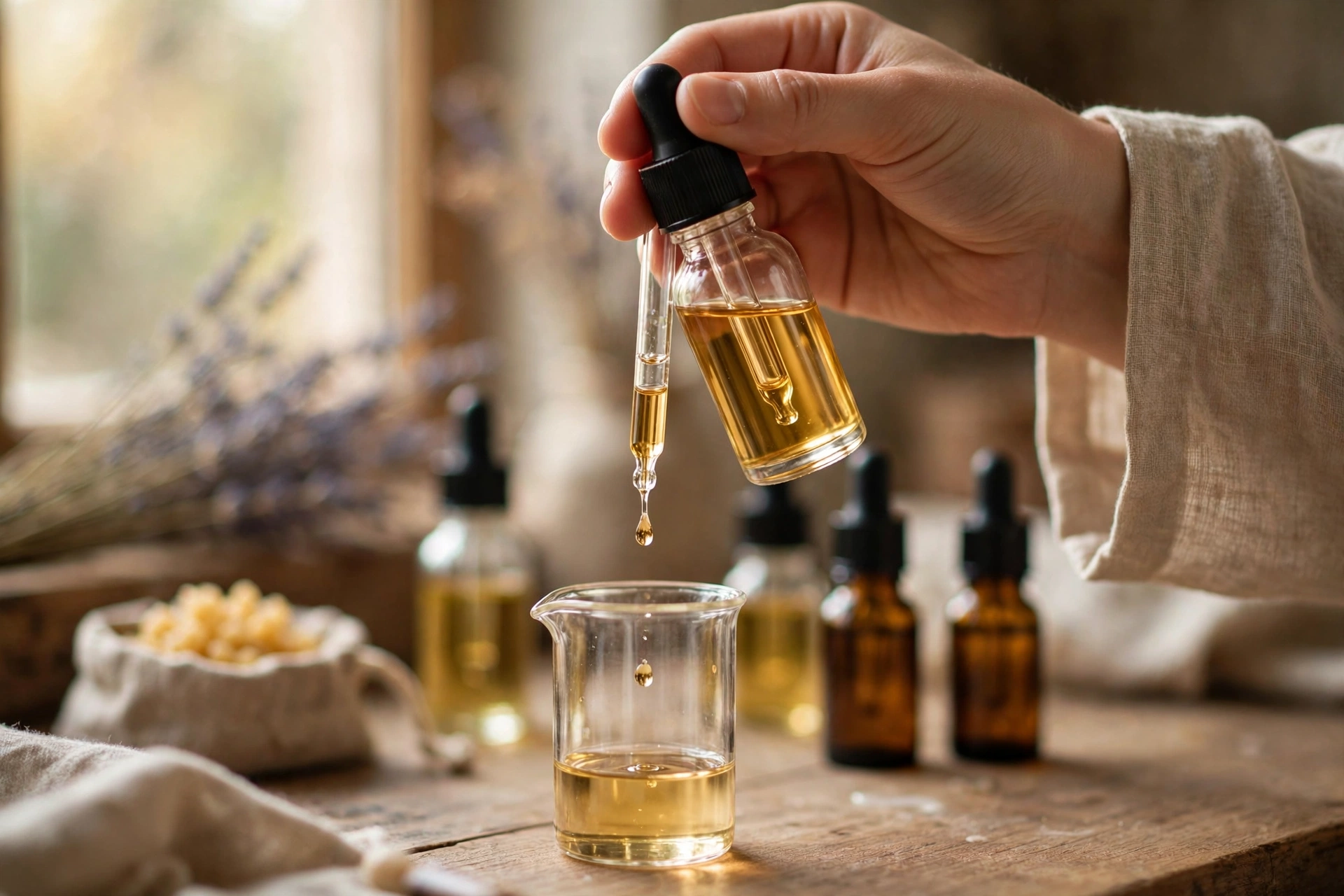
Using separate pipettes, add drops to a beaker following your ratio — e.g. 3 drops top, 5 drops heart, 2 drops base. Write down the exact oils and drop counts. Dip a strip, wave it to dry, and smell.
4. Evaluate like a customer
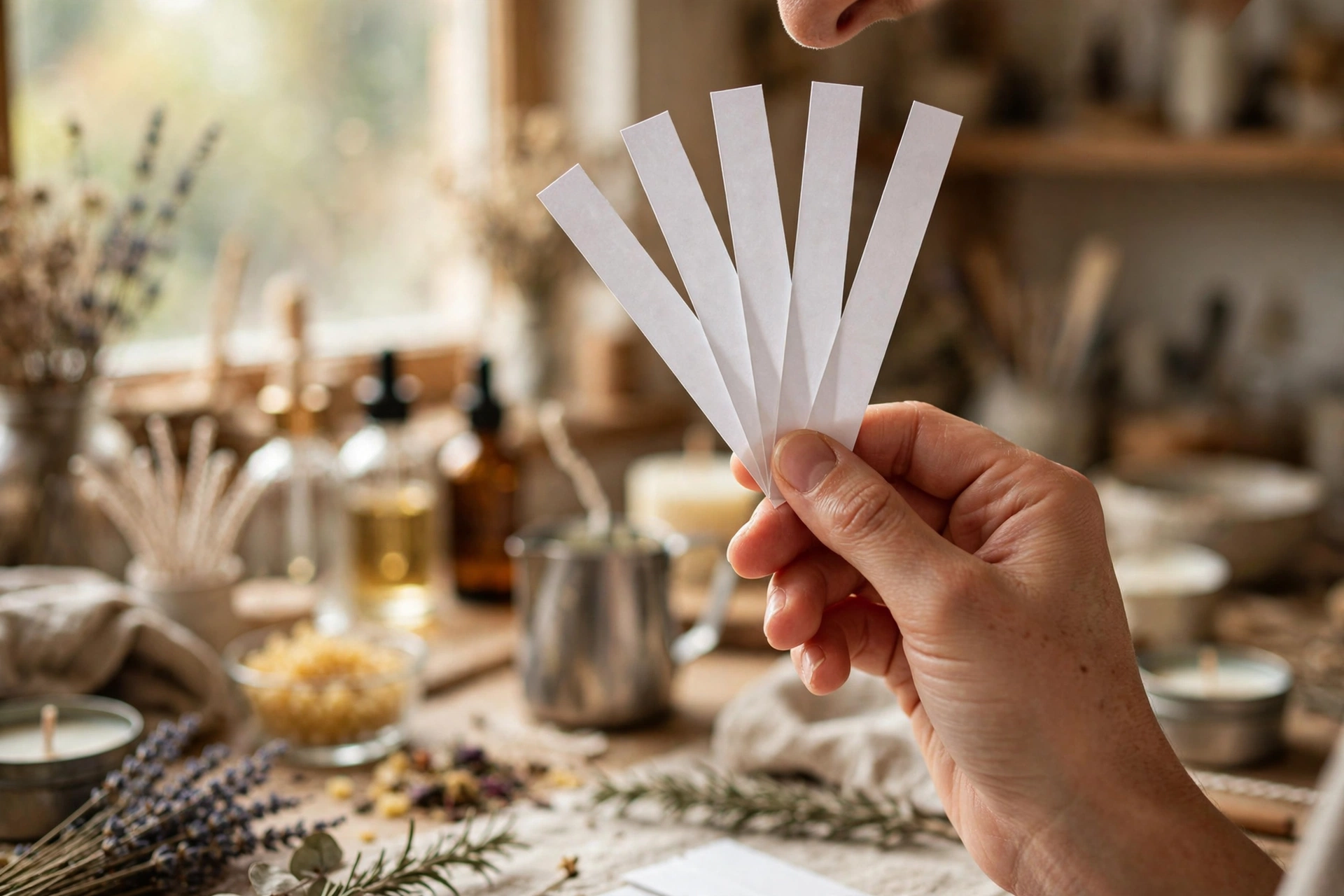
Don’t judge on first sniff. Smell the strip immediately (first impression), after 10 minutes (the heart), and after an hour (the dry-down — this is what the candle will actually smell like most of the time).
5. Iterate, then scale
Too sharp? Add base. Disappears fast? More heart, less top. Muddy? You have too many oils fighting — remove one. When a 10-drop test blend sings, scale it to grams and make a 1 oz test batch. Then — and only then — test it in wax, because heat changes everything.
Three starter formulas
Cozy: vanilla bourbon (base) + cinnamon (heart) + orange (top). Fresh: white musk (base) + eucalyptus (heart) + bergamot (top). Woodsy: cedarwood (base) + clove (heart) + fir needle (top). Adjust the 30-50-20 ratio to taste.
This tutorial contains affiliate links. As an Amazon Associate I earn from qualifying purchases — it helps keep these tutorials free, at no extra cost to you.