Can You Use Essential Oils in Candles? The Definitive Guide
“Can I use essential oils instead of fragrance oils?” — it’s one of the most-asked questions in candlemaking, and the honest answer is: yes, but they’re not a simple swap. Here’s how essential oils behave in wax, what the flash point fuss is really about, how much to use, which scents survive the flame, what they’ll cost you, and how to stay safe.
The short answer
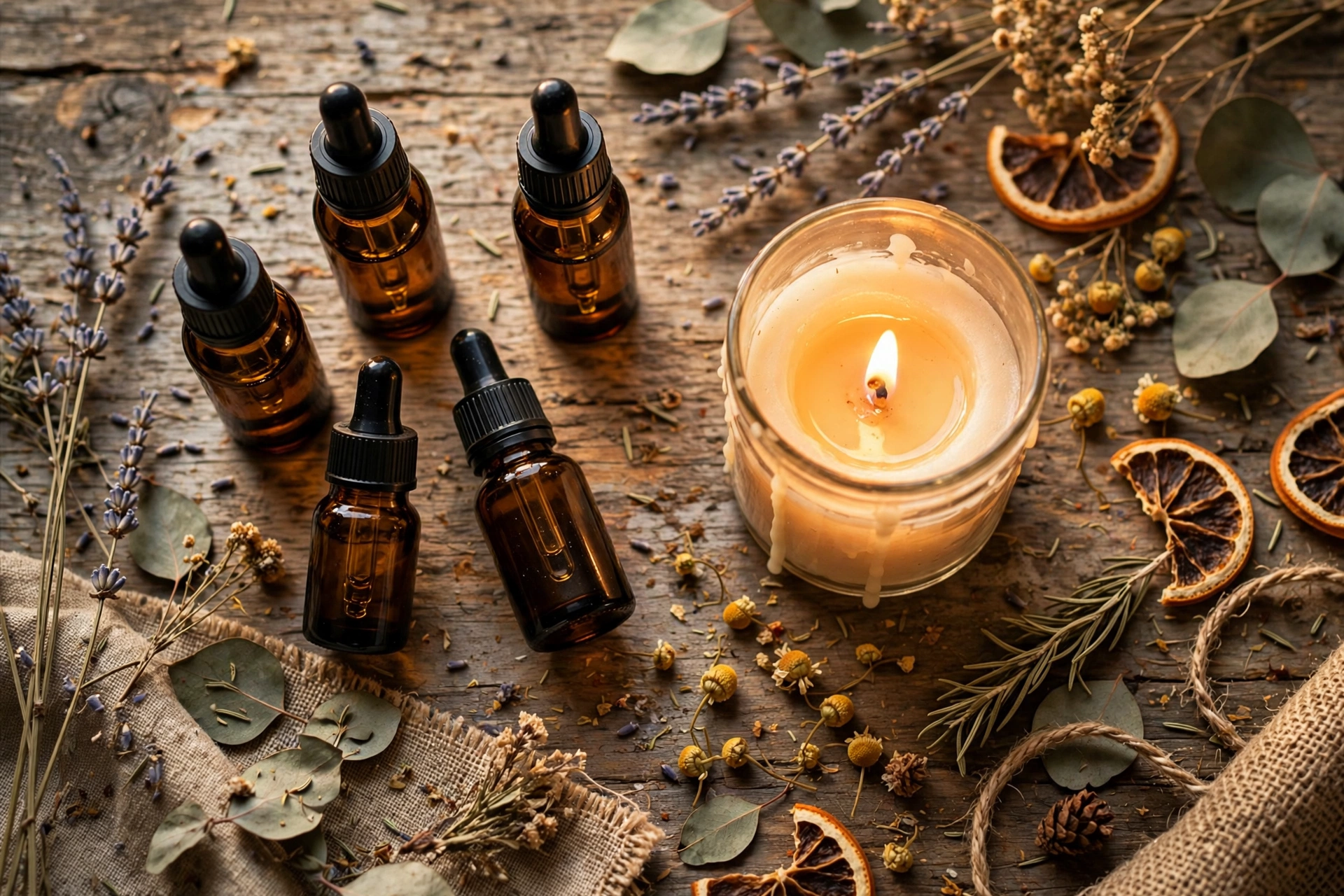
Essential oils (EOs) can absolutely scent a candle — people have done it for centuries. But EOs are natural plant extracts with real limitations in hot wax: many fade fast, some change character when heated, and they’re dramatically more expensive than fragrance oils (FOs) at candle-strength loads. EOs shine in all-natural product lines and aromatherapy-positioned candles; FOs win on scent strength, variety, and cost. Neither is “better” — they’re different tools.
Essential oils vs fragrance oils
Essential oils are concentrated plant extracts — steam-distilled or cold-pressed from botanicals. Their scent profile is whatever the plant gives you, which means beautiful complexity but also batch variation and a limited palette (there’s no essential oil that smells like fresh-baked cookies).
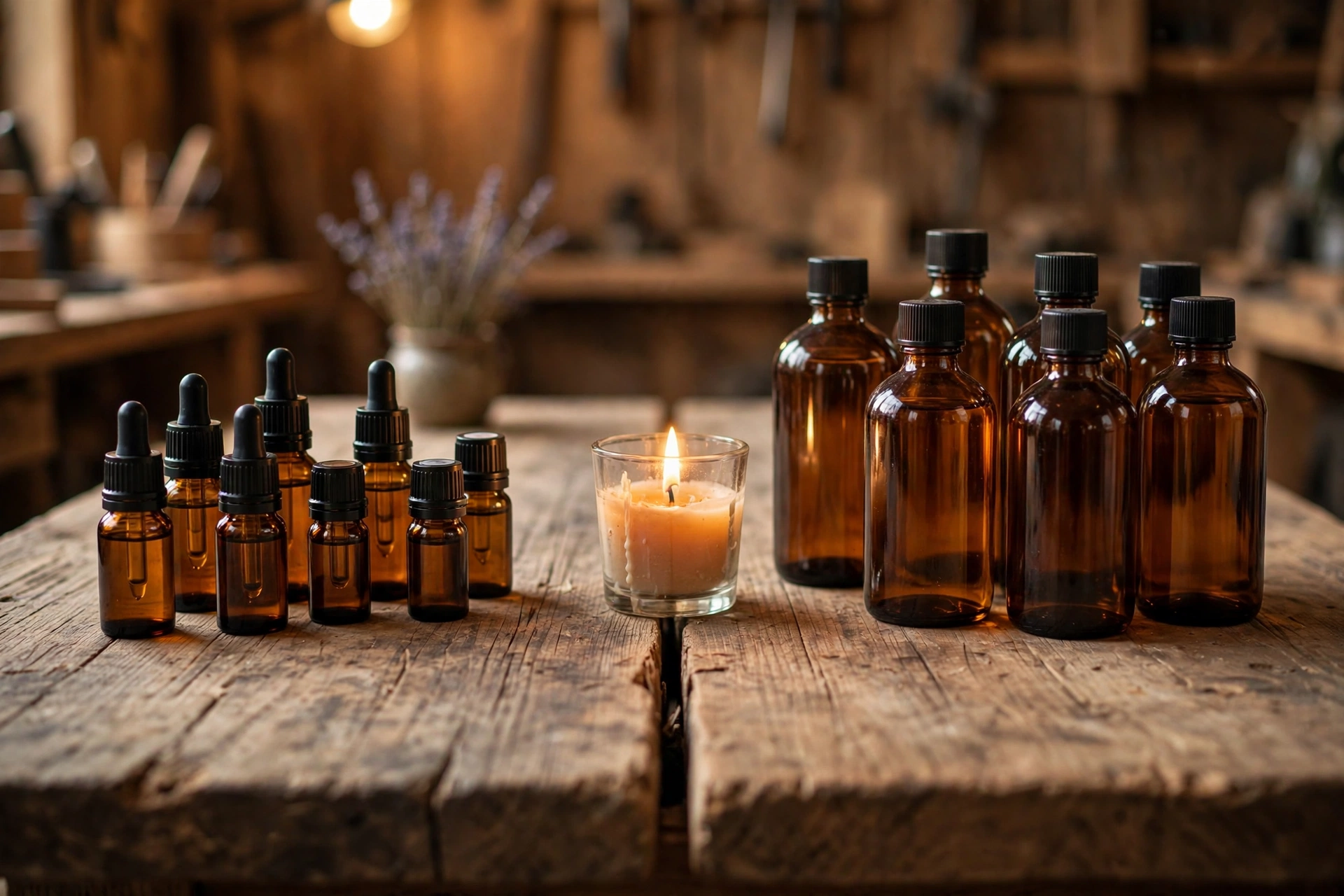
Fragrance oils are blended aroma compounds made for a purpose — including many designed specifically to survive hot wax and throw strongly. They offer thousands of scents, consistent batches, and far lower cost per candle.
The practical difference in your candle: FOs are engineered for the job, so they’re more forgiving. EOs demand more care — the right oil, the right load, and realistic expectations about throw.
Flash point, explained
Flash point is the temperature at which a liquid’s vapors can ignite near an open flame — and EO suppliers list it because EOs are handled and shipped as concentrated liquids. Here’s what confuses everyone: the flash point of the raw oil is not the temperature at which your candle becomes dangerous.
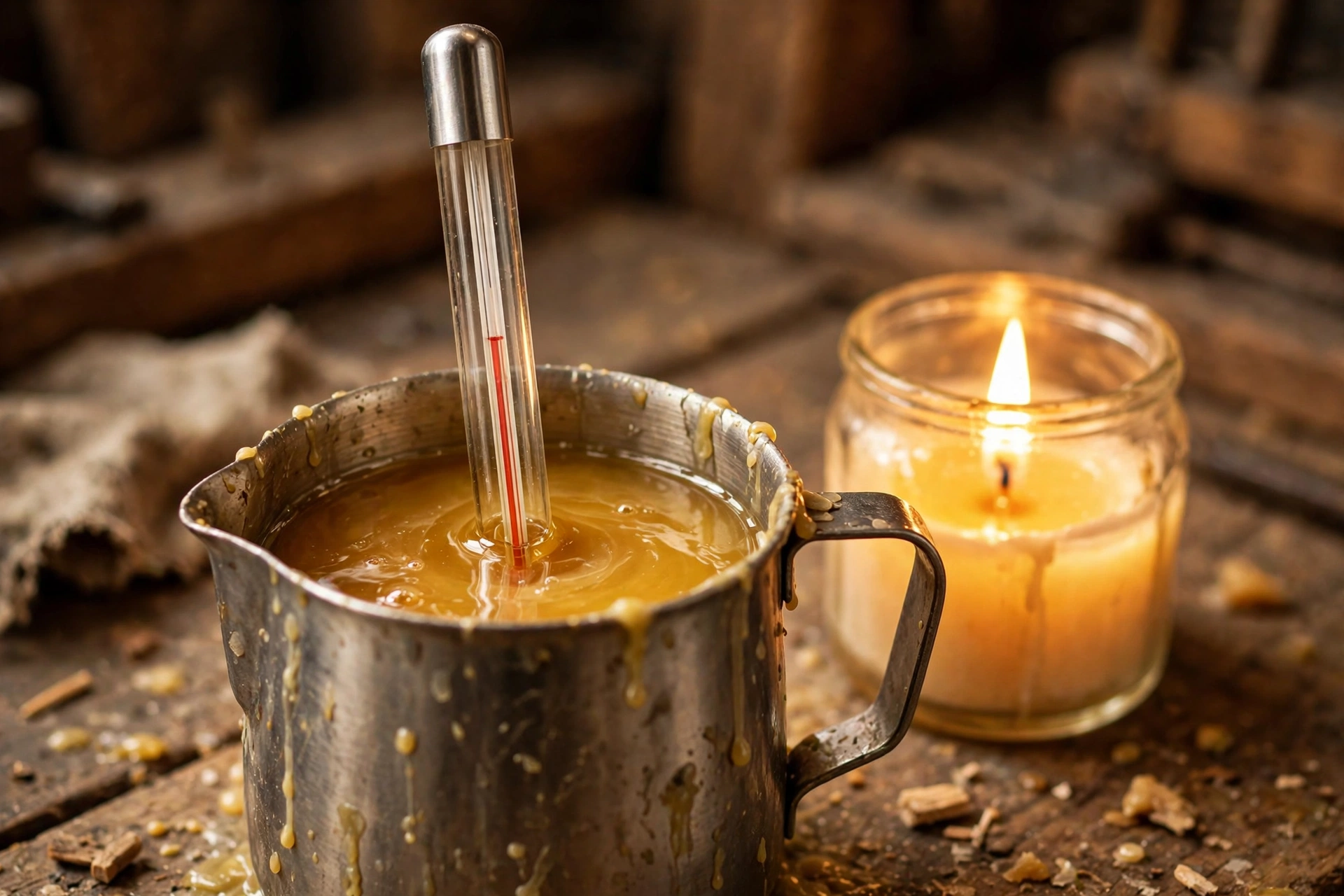
In a finished candle, the oil is diluted to a few percent in wax and burned in a controlled wick flame — a completely different situation from a bottle of concentrated oil near a flame. What actually matters for your candle: add the oil at the temperature your wax supplier recommends (so it binds into the wax instead of flashing off), use a load within your wax’s rating, and test burn. The number on the bottle is for safe handling and shipping of the raw oil — respect it there, and follow your wax supplier’s process guidance for the candle itself.
How much to use
There’s no universal “EO percentage” — it depends on the oil, the wax, and the candle’s purpose. The principle: start with your wax supplier’s recommended fragrance load range and stay inside it, then check the oil’s IFRA guidance for the candle category to make sure your planned load is within the safe-use level for that specific oil. Some EOs (cinnamon bark, clove, lemongrass types) have notably low maximums — the IFRA sheet is the authority, not a blog recipe.
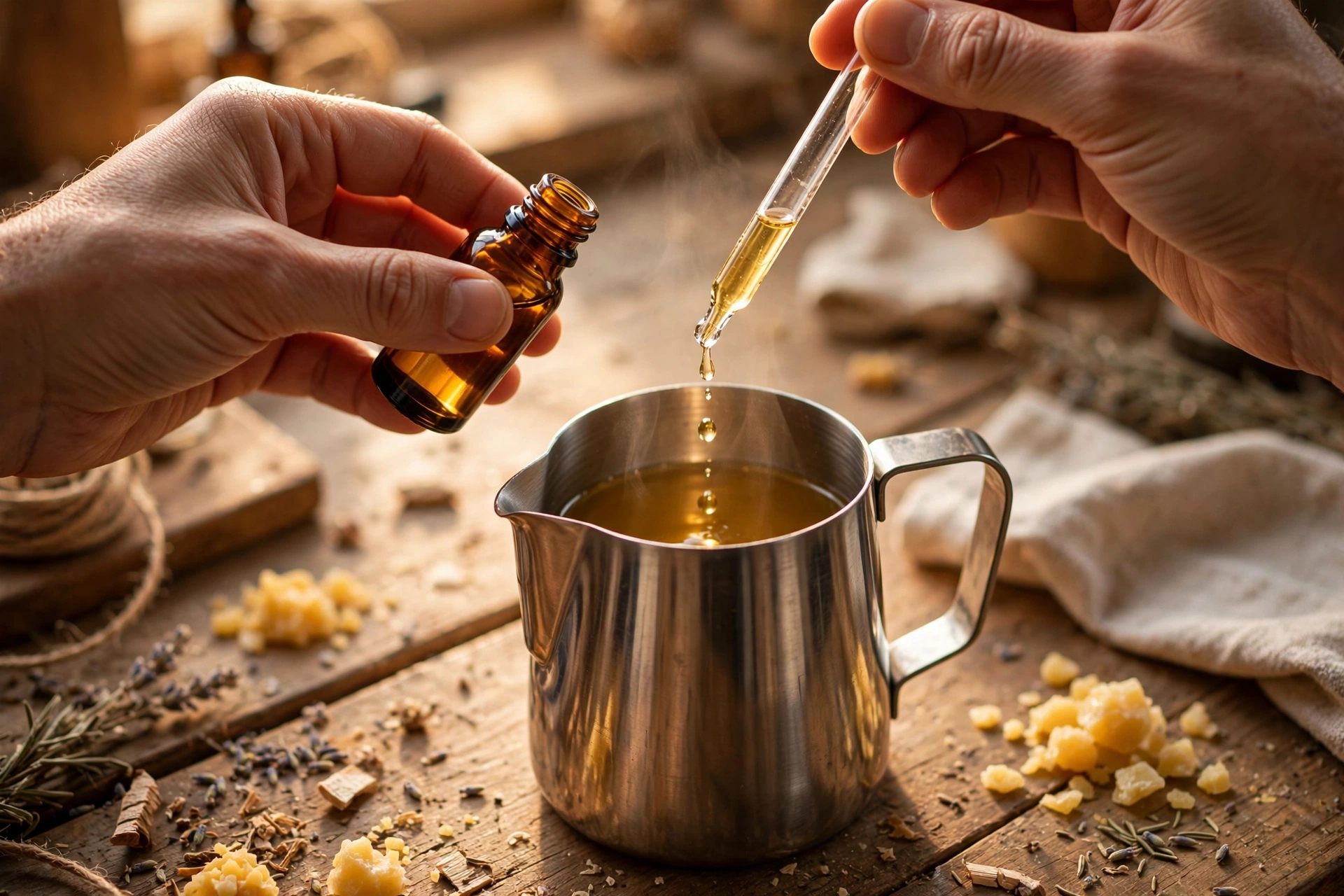
Weigh your oil on a scale like any fragrance — drops are inconsistent and a recipe you can’t repeat is a recipe you can’t sell. And expect to use the top of your wax’s load range: EOs are subtler than FOs, so under-loading an EO candle is the most common reason they “don’t smell like anything.”
Which essential oils behave well in candles
Heat is the enemy of delicate top notes. As a rule of thumb, the lighter and more volatile the scent, the faster it fades in hot wax:
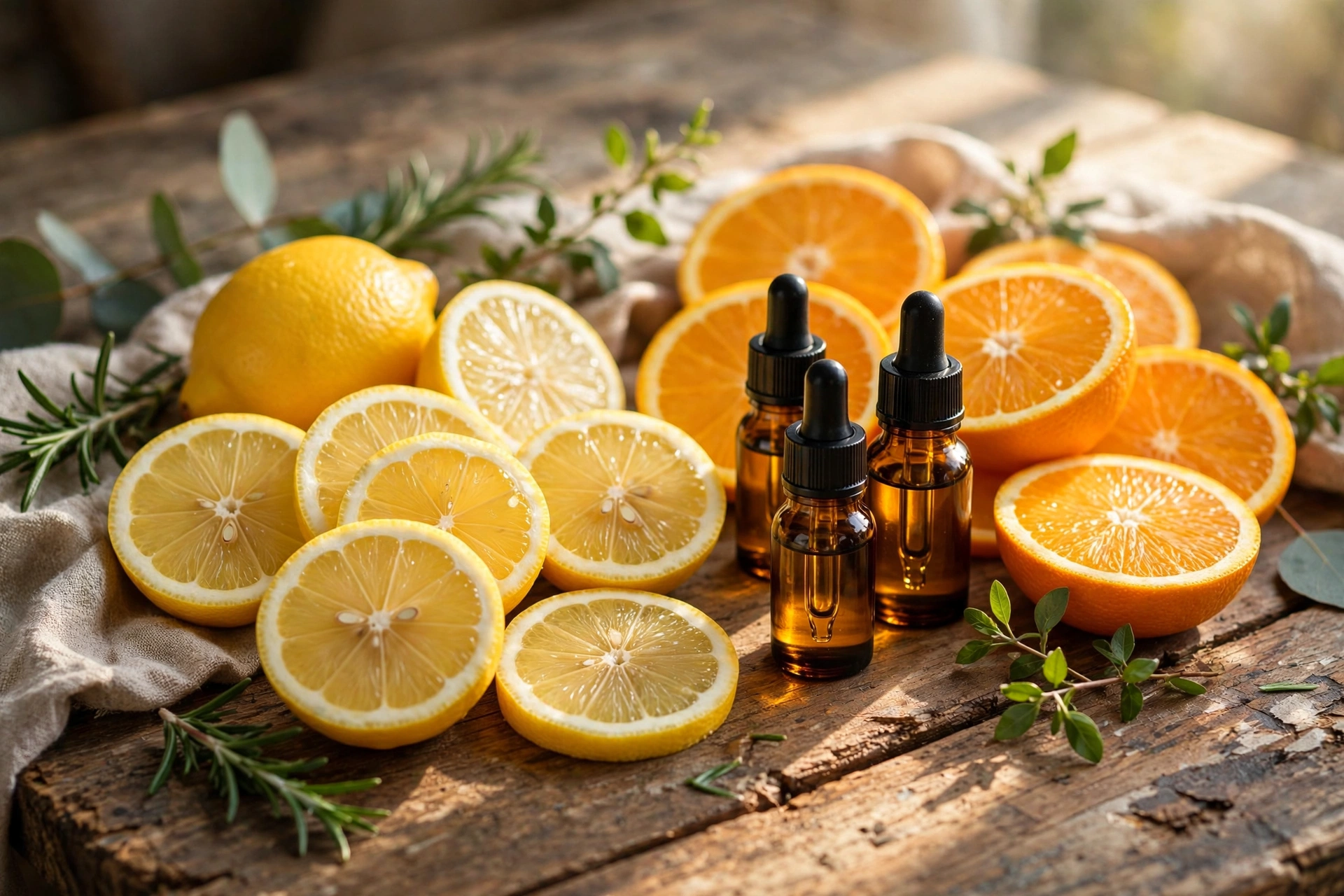
Fade fastest: bright citrus oils (lemon, grapefruit, bergamot types) — gorgeous out of the bottle, often whisper-quiet in a burning candle. They’re the #1 disappointment for first-time EO chandlers.
Middle ground: florals and herbs (lavender, rosemary, eucalyptus types) — decent throw if loaded properly, and they blend beautifully.
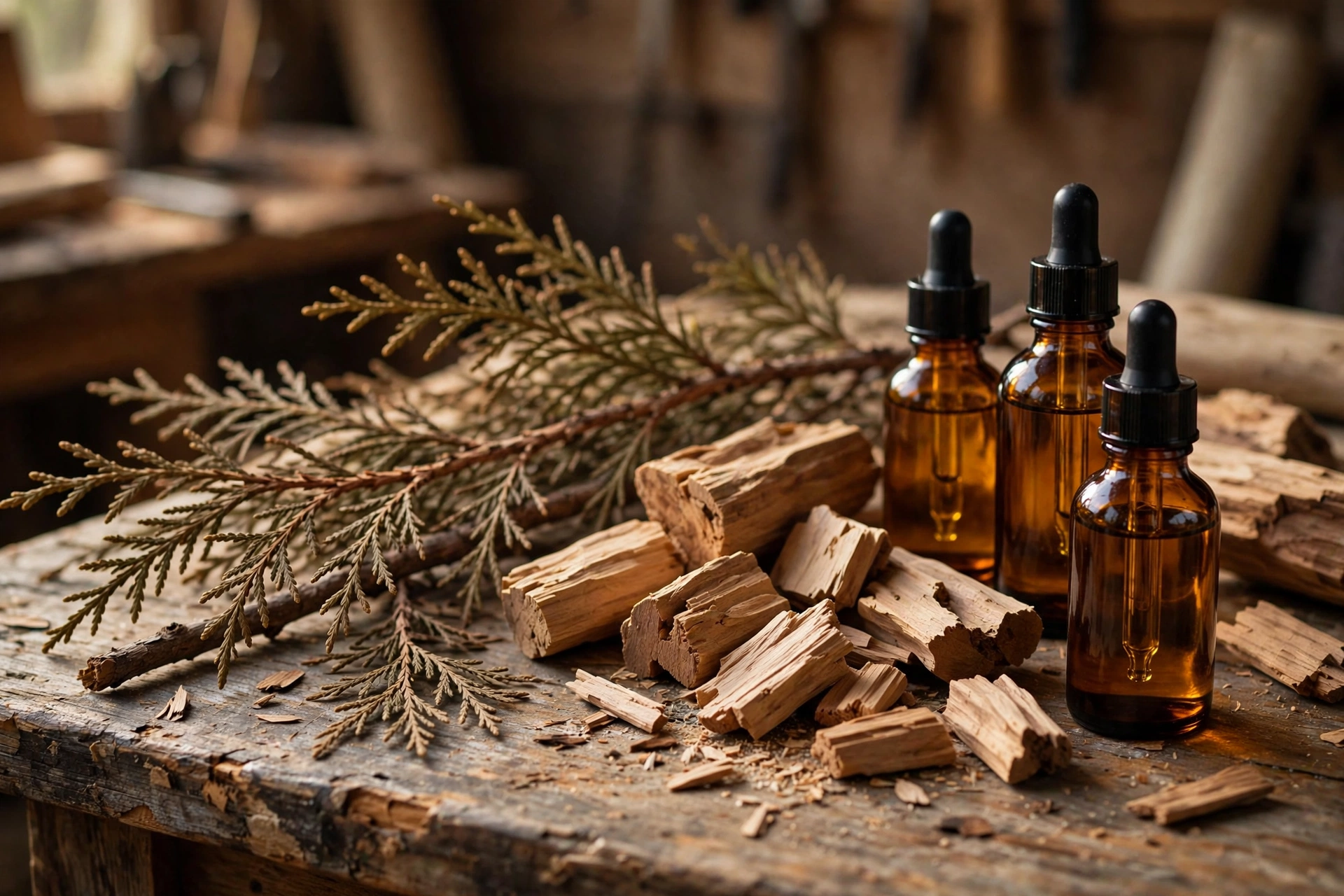
Hold best: base notes — cedarwood, sandalwood-type, vetiver-type, and patchouli-type oils. They’re the backbone of most successful EO candles because they survive heat and anchor the lighter notes.
The cost reality check
This is the part nobody warns you about: quality essential oils cost many times more per ounce than fragrance oils, and EO candles typically need generous loads to throw well. Do the math before you fall in love with a recipe — price your oil per candle, add it to your wax, wick, and vessel costs, and make sure the finished price still works.
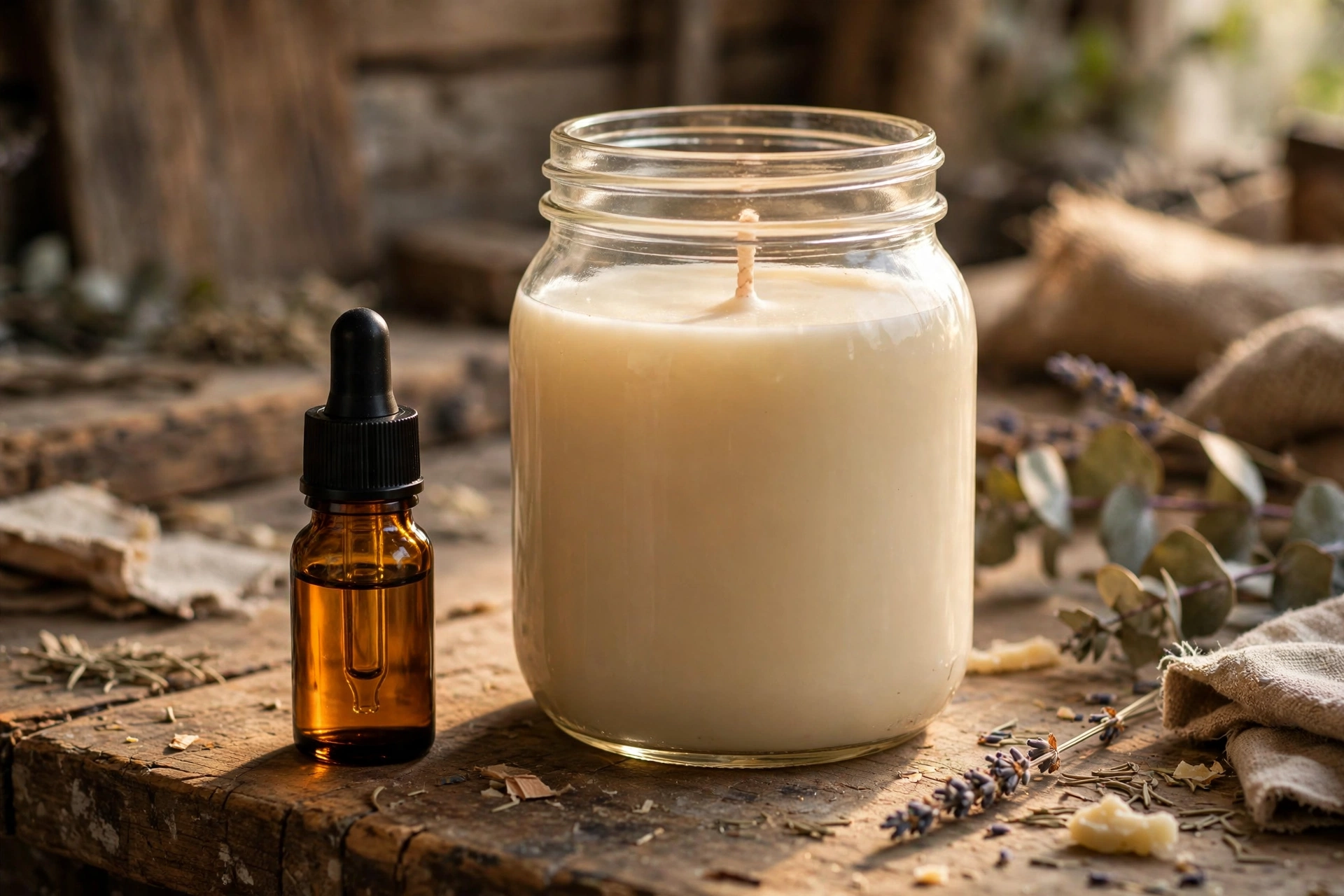
Many makers land on a hybrid line: EO candles as a premium, higher-priced offering, and FO candles as the everyday range. That’s a legitimate business strategy — just be honest on the label about what’s inside.
Safety notes
On skin: concentrated EOs can irritate or sensitize skin — wear gloves when handling them neat, and wash up after. Sensitization is cumulative and permanent, so “I’ve always done it barehanded” is not a safety record.
Around pets: cats and birds are especially sensitive to airborne essential oils. If your customers (or you) have them, research the specific oils and ventilate well — when in doubt, choose unscented or FO options for those homes.
Labeling honesty: “made with essential oils” means what it says — don’t stretch it. And standard candle safety always applies: never leave a burning candle unattended, trim the wick to 1/4 inch, and keep burns to 4 hours or less.
Steps: your first EO candle
1. Choose heat-friendly oils
Build a simple blend anchored in base notes, with middle notes for character and a light hand on citrus top notes. Start with oils you love the smell of — you’ll be testing a lot of it.
2. Check your numbers
Confirm your planned load fits your wax supplier’s recommended range and the IFRA safe-use level for each oil in candles. The lower of the two wins.
3. Add at the right temperature
Stir your weighed oils into the wax at the temperature your wax supplier recommends for fragrance addition, and stir thoroughly — a full minute or two — so the oil binds into the wax instead of sitting on top.
4. Cure, then test burn
Cure like any candle (about 7–14 days for soy-type waxes), then test burn before selling or gifting. EO candles especially need the cure — scent perception changes a lot in the first two weeks.
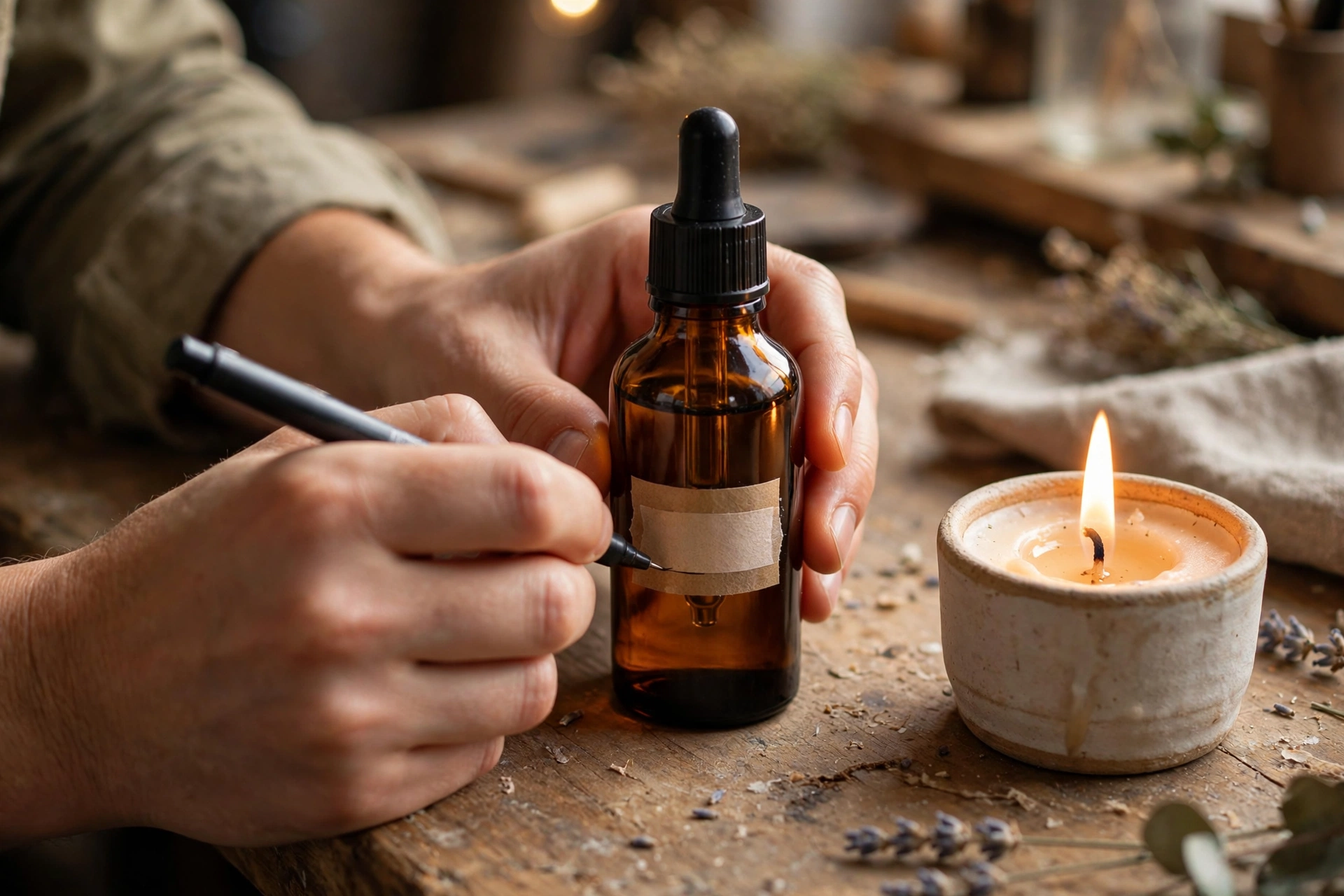
5. Label honestly
List what’s actually in the candle. “Scented with pure essential oils” is a selling point — but only if it’s true down to the last drop.
Next steps
Ready to build signature blends? The fragrance blending tutorial covers building balanced top-middle-base blends — the same structure works whether your palette is essential oils, fragrance oils, or both.