Espresso Martini Gel Wax Candle
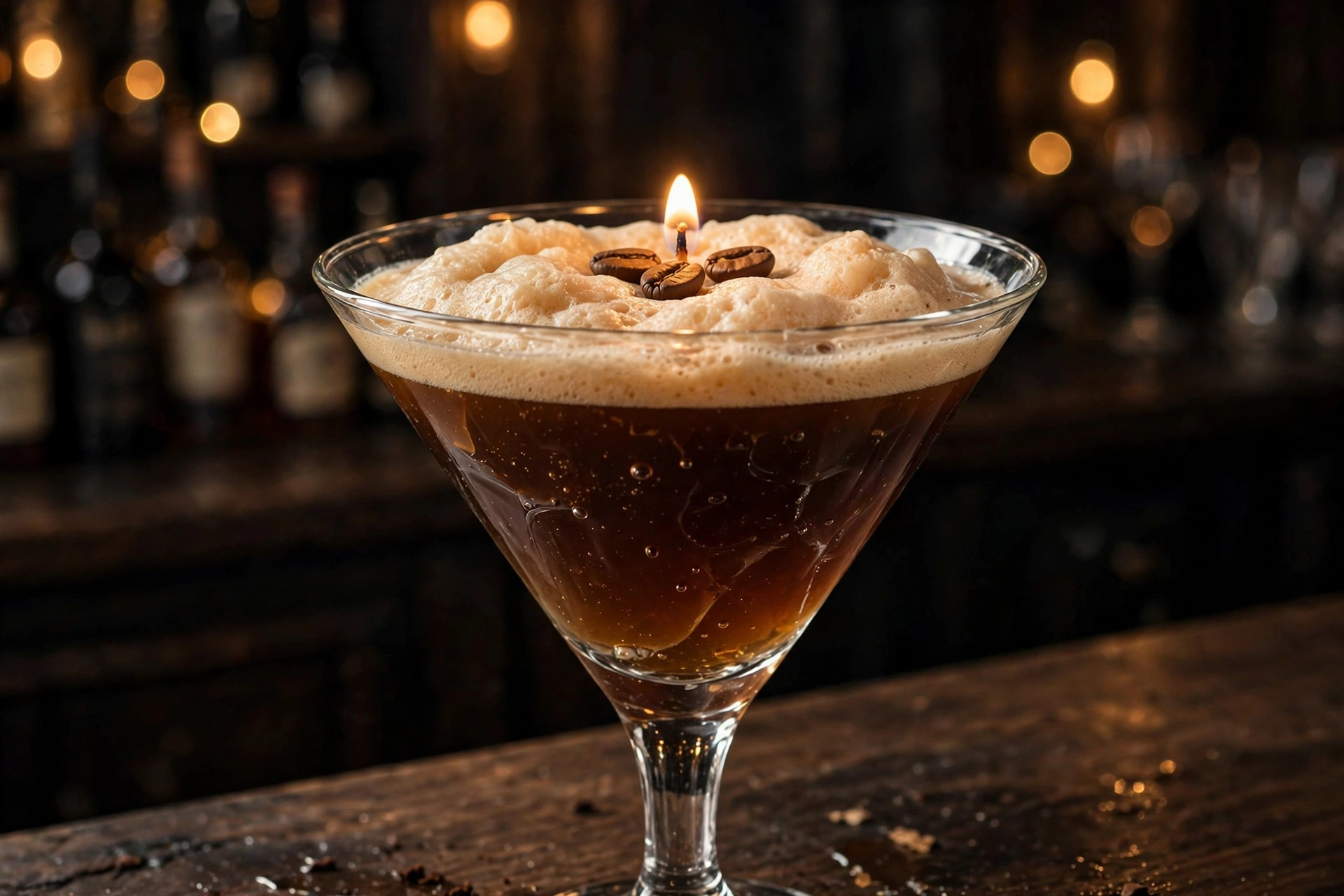
The espresso martini is the cocktail of the moment, and it makes a stunning candle: deep coffee-brown gel in a stemmed glass, a pale crema layer floated on top, and three coffee beans in the center — just like the real garnish. It’s a two-pour gel project, and the second pour is easier than it looks.
What you’ll need
- Medium or high density gel wax, about 6 oz for a standard martini glass (1 lb makes 2–3)
- A heat-safe martini glass — no chips or cracks, and a wide, stable base. Stemware tips more easily than a tumbler, so pick a steady one.
- A zinc-core wick sized for the glass’s top diameter (martini glasses are widest at the rim — size for that), plus a wick sticker
- Gel-safe espresso or coffee fragrance oil — rated gel safe by the supplier (non-polar, flash point 170°F or higher)
- Liquid candle dye — brown, black, and a cream/tan for the crema layer
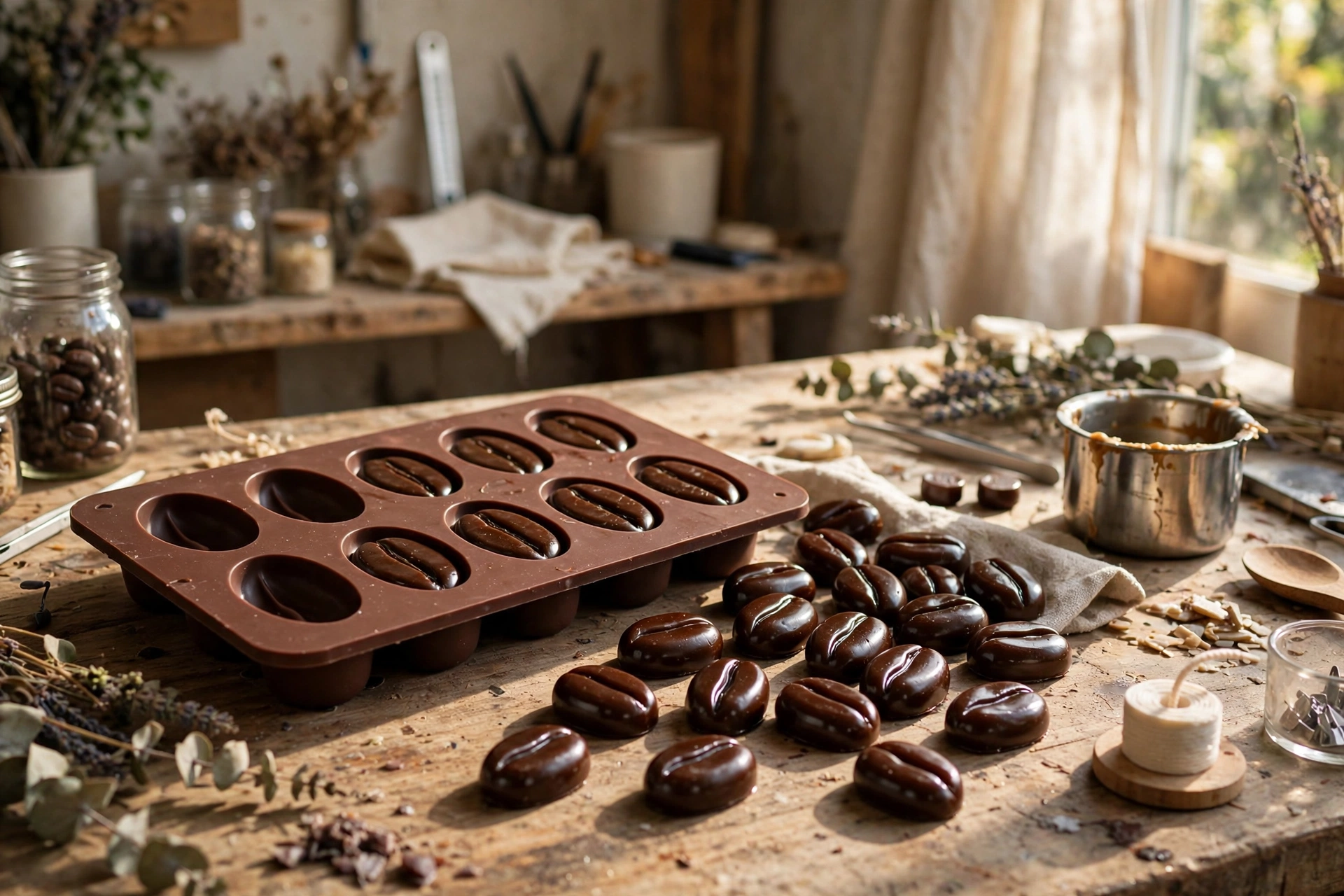
- A silicone coffee bean mold (or small oval molds) for the gel beans
- A heat-safe pouring pitcher, thermometer, and scale
- Tweezers for placing the beans
Gel wax, gel-safe fragrance oils, bean molds, and dyes are all easy to find on Amazon, and the standard candle gear is listed on our supplies page.
Steps
Step 1 — Make the coffee beans ahead. Melt a small amount of gel (200–225°F), tint it deep coffee-brown, and pour it into the bean molds. Let them cool completely and pop them out. Make a handful — you only need three for the top, but extras cover drops and wobbles, and the rest keep for your next pour.
Step 2 — Prep the glass and wick. Wash and fully dry the glass — water clouds gel. Center the zinc wick with a sticker, sized for the rim diameter. Set the glass on a level, stable surface where it can stay untouched for hours — with stemware, where you pour it is where it cools; don’t plan on carrying a full glass of hot gel across the kitchen.
Step 3 — Melt and tint the espresso gel. Melt your 6 oz of gel to 200–225°F. Tint with brown dye first, then add black by the tiniest amount — black takes over fast. Check on a white spoon: you want dark coffee that still shows a little translucency at the edges, not a glass of ink.
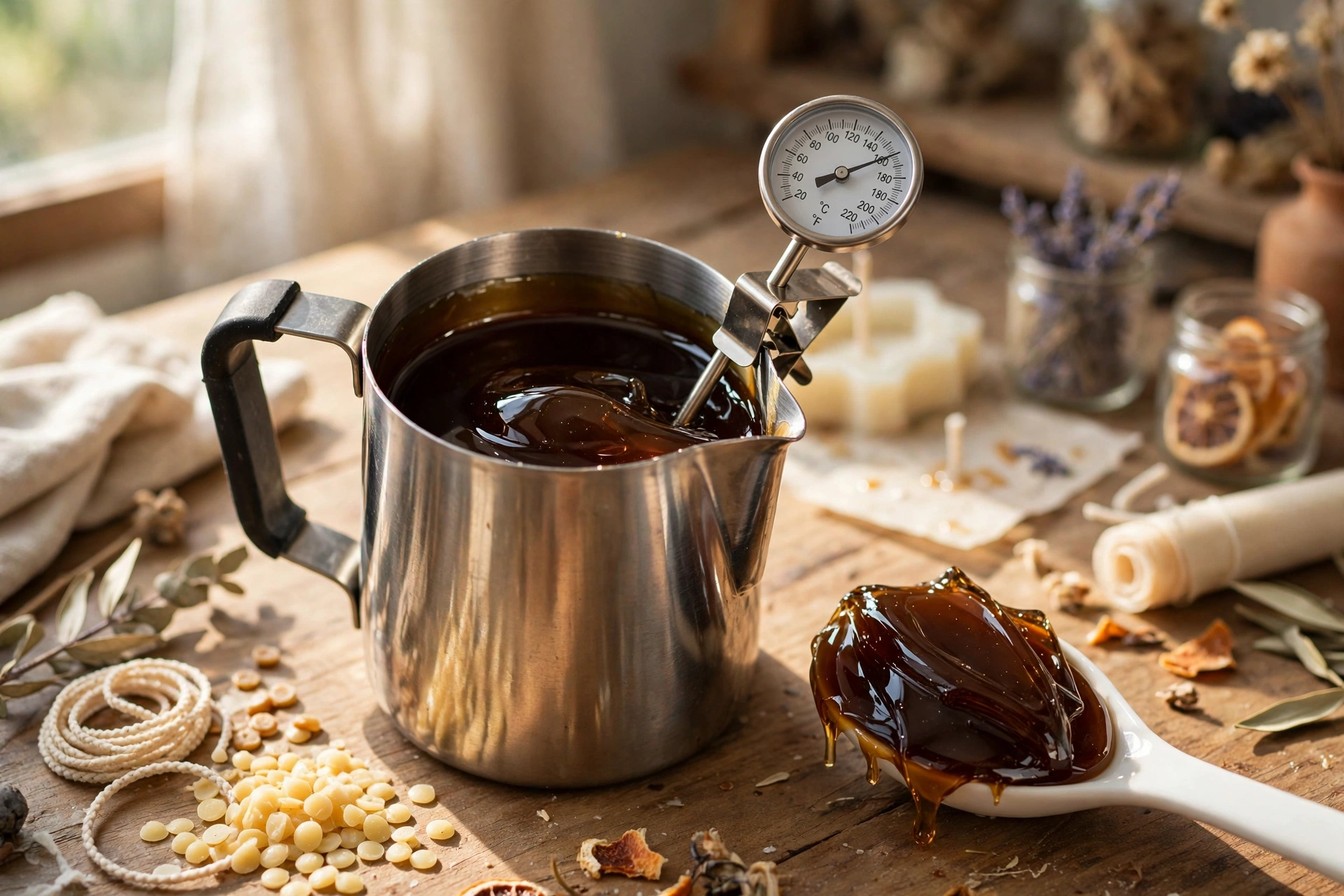
Step 4 — Add the fragrance. At about 200°F, stir in your gel-safe espresso fragrance oil at about 3% (roughly ½ oz per pound of gel), or your supplier’s gel rate. Stir slowly and gently for a minute — fast stirring means bubbles, and bubbles are forever in gel.
Step 5 — Pour the espresso layer. Let the gel cool to about 190–200°F and pour, filling the glass to about 85–90% of your final height — leaving room for the crema. Let this layer skin over well, 10–15 minutes. The crema floats on this layer, and it can only float on a layer that’s set enough to hold it.
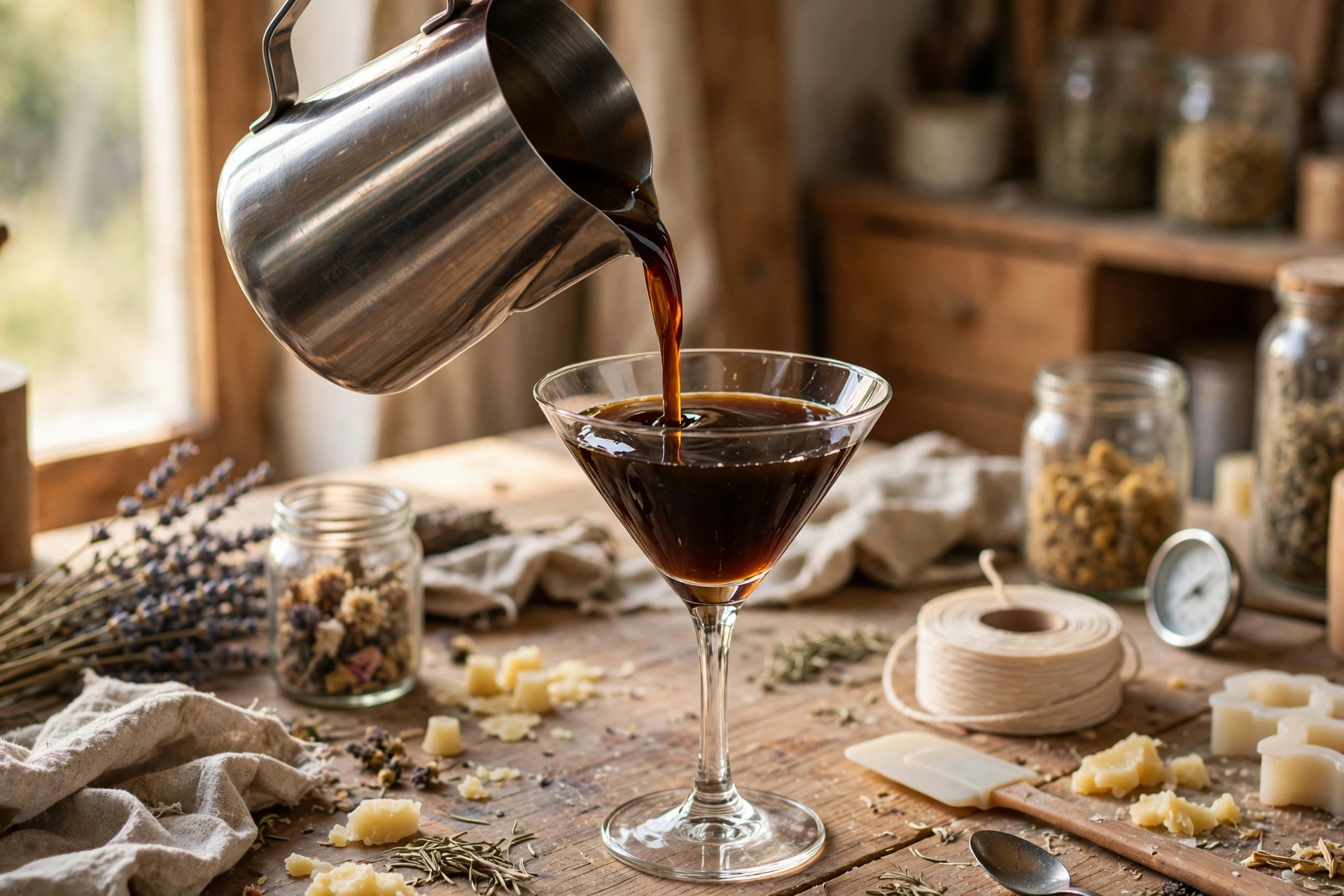
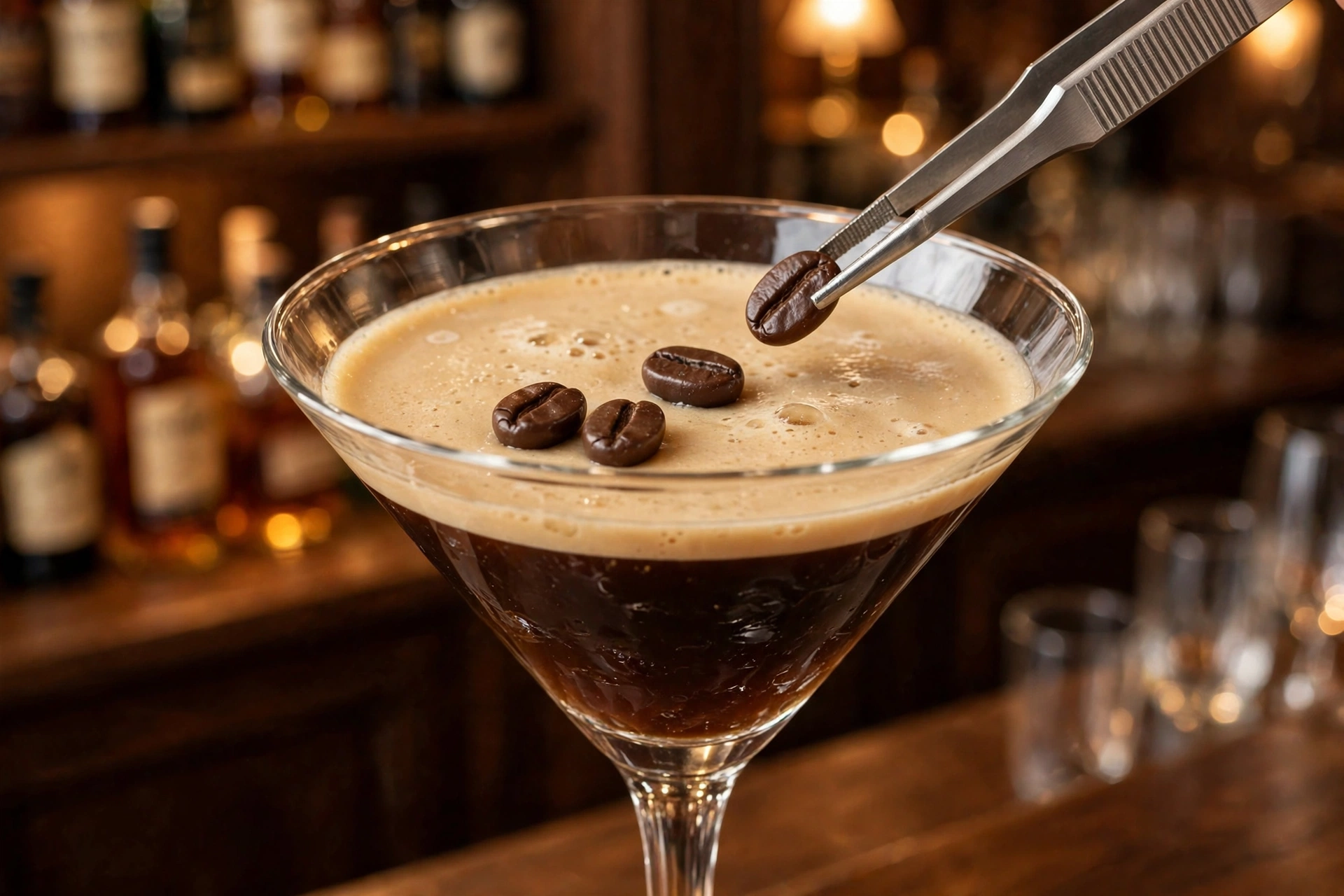
Step 6 — Float the crema and set the beans. Melt a small amount of gel (an ounce or two is plenty) and tint it a creamy tan. Let it cool until it just begins to thicken, then give it a slow stir — slightly cooled, lightly stirred gel turns frosty, which is exactly the crema look. Pour a thin layer, about ¼ inch, gently over the back of a spoon so it spreads instead of diving. While it’s still tacky, set three gel coffee beans in the center with tweezers — three beans is the classic espresso martini garnish. Cool undisturbed for several hours, trim the wick to about ¼ inch, and rest the candle 48 hours before its first burn.
Troubleshooting
| Problem | What’s happening and how to fix it |
|---|---|
| The crema sank or swirled into the coffee layer | The first layer hadn’t skinned over enough, or the crema went on too hot. Give the espresso layer a full 10–15 minutes, and pour the crema cool and gently over a spoon. |
| The beans slid off-center | The crema was still liquid when you placed them. Wait until it’s tacky — set enough to hold a bean but still soft enough to grip it. |
| It just looks black | Too much black dye. Brown should do nearly all the work; black is a micro-drop at the end. Test on a white spoon as you go. |
| Bubbles throughout | Stirred too fast or poured too hot. Slow stirring, a 190–200°F pour, and a warmed glass (a few minutes in a low oven first) keep gel clear. |
FAQs
Can I put real coffee beans on top?
Not safely. Real beans are flammable and will scorch beside a flame. The beans in this tutorial are gel wax from a bean mold — same look, made for a candle.
Is a martini glass safe to burn in?
A heat-safe, chip-free one with a stable base, yes — burned on a coaster or plate, on a steady surface, away from edges where a stemmed glass can be knocked. Never leave any candle burning unattended.
Why size the wick for the top of the glass?
A martini glass is widest at the rim, and the first burns happen at the top. A wick sized for the narrow bottom would leave the top edges unmelted; size for the widest part it has to melt.
Does it need to cure?
No cure like soy — rest it 48 hours so bubbles settle and rise out, then burn.
Can I make it a different “cocktail”?
Absolutely — the two-pour method is the template. A lighter gel under a frosted top becomes a latte candle; clear gel and fruit-colored gel embeds become a sangria. Just keep every embed gel wax and every oil gel safe.
Get candle-making tips by email
Join the list for new tutorials, tools, and supplier deals — straight to your inbox.
Signed up between Oct 7 and Oct 28 and never heard from us? We fixed a glitch that was dropping signups — please sign up again!