How to Make Whipped Sugar Scrub
A whipped sugar scrub is a spa product in a jar: fluffy, cloud-soft, sweetly scented, and made from ingredients you probably already own. It costs pennies per jar, takes about twenty minutes to whip up, and looks so good it doubles as a holiday gift. Here’s how to make the good kind — the emulsified kind that rinses clean instead of leaving an oil slick.
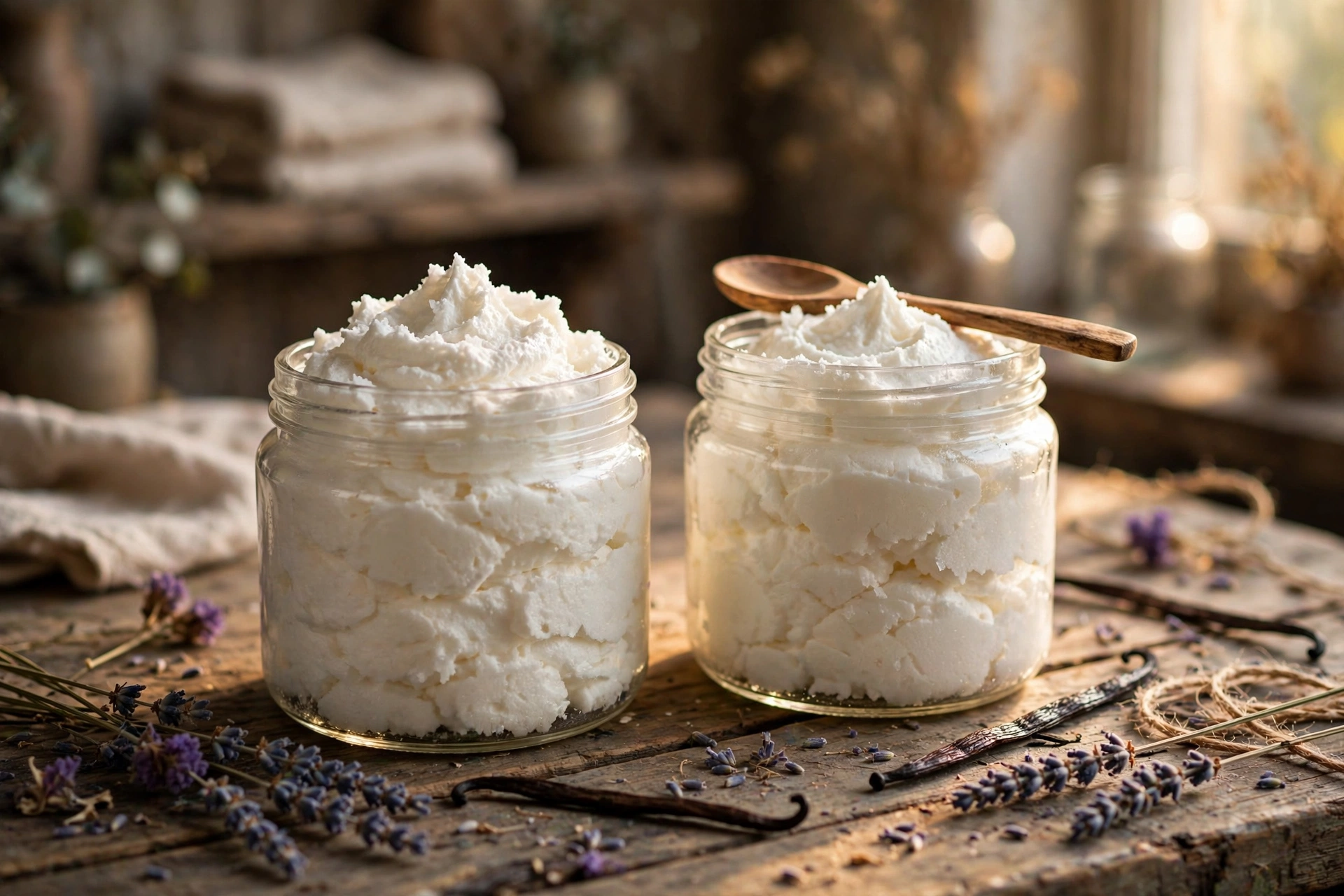
Plain vs. emulsified: the one decision that matters
Most homemade sugar scrubs are just sugar stirred into oil. They work, but they have three honest flaws: the sugar sinks and the oil floats, the oil sits greasy on your skin, and it leaves a slippery film in the shower that can turn a tub into a hazard.
An emulsified scrub adds one ingredient — an emulsifier — and it changes everything. The emulsifier is the same kind of ingredient that lets lotion exist: it binds oil and water together. When the scrub meets water on your skin, the oil rinses away clean instead of beading up, and the finish feels like lotion, not grease. Same ingredients, same jar, wildly better product.
Know your ingredients
Five ingredient groups, each doing one job. Pick them for the job, not the label.
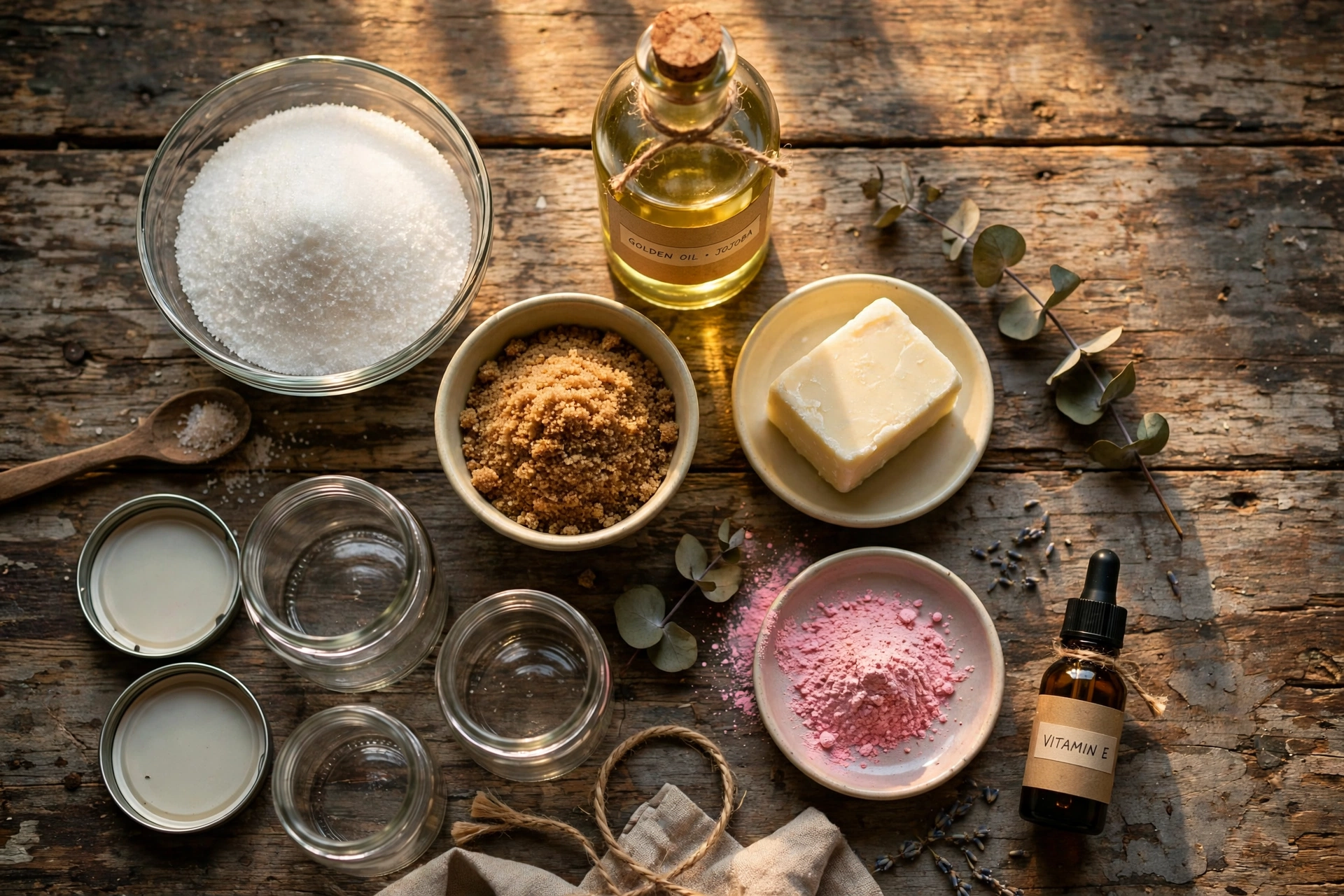
Sugar (the exfoliant). White granulated sugar is the gentlest and whips up the whitest — perfect for general body scrubs. Brown sugar brings a soft caramel scent and color and is slightly finer, so it’s lovely for gifts. Coarse or turbinado sugar is much more aggressive: save it for foot scrubs only, never for the body or face.
Liquid oils (the glide). Light oils give the nicest skin feel. Fractionated coconut oil and sweet almond oil are the two best starting points — both stay liquid at room temperature, absorb well, and don’t feel heavy. Heavier oils like regular olive oil work but leave more residue.
Emulsifier (the game-changer). This is what makes the scrub rinse clean. Use an emulsifying wax or a ready-made emulsifying ingredient from your soap or lotion supplier, added at the usage rate they recommend on the product page. Rates are typically a small percentage of the total batch — follow your supplier’s guidance, because too little won’t emulsify and too much can feel waxy.
Butters (optional richness). A small amount of shea butter or cocoa butter adds body and a creamier skin feel. A little goes a long way — more than about a tenth of the batch makes the scrub heavy and shortens the fluffy texture.
Fragrance and color (optional). Use a skin-safe fragrance oil or essential oil blend at your supplier’s recommended usage rate for leave-on-adjacent body products — scrubs rinse off, but skin-safe rates still apply. A pinch of mica powder gives the scrub a soft shimmer and a tinted look.
What you’ll need
- Sugar (white, brown, or coarse — see above)
- Light liquid oil such as fractionated coconut or sweet almond oil
- Emulsifying wax or emulsifying ingredient, at your supplier’s recommended rate
- Shea butter (optional, small amount)
- Skin-safe fragrance, at your supplier’s recommended rate
- Mica powder for color (optional)
- Heat-safe glass bowl, a pot for a double boiler, spatula
- Hand mixer or stand mixer
- Clean glass jars with lids (4-ounce jars are the classic gift size)
Steps: whipping your scrub
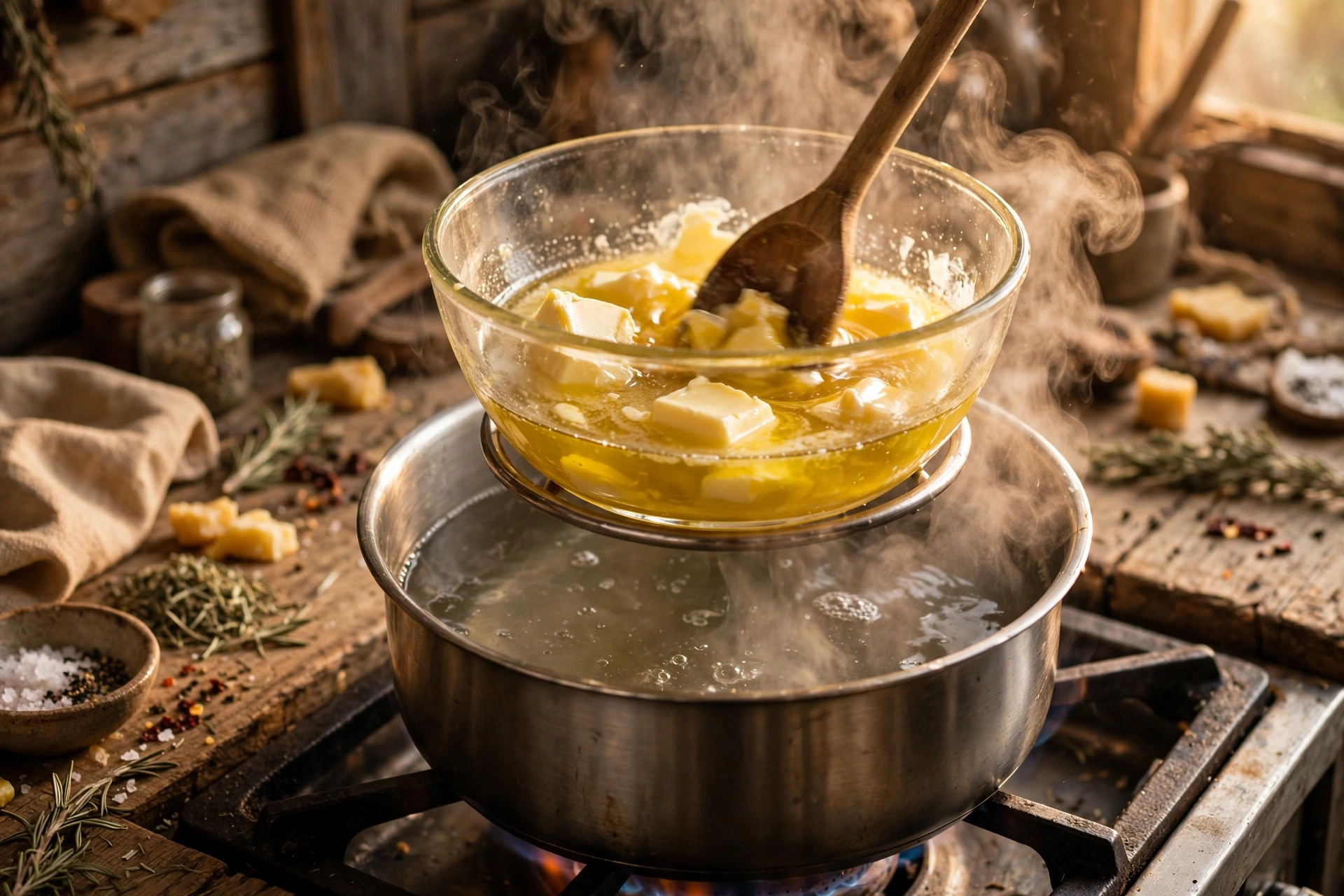
1. Gently melt the base
Put your liquid oil, butter (if using), and emulsifier in a heat-safe bowl over a pot of simmering water — a simple double boiler. Warm it gently, stirring, just until the emulsifier and butter are completely melted and the mixture looks smooth and clear. Don’t boil it; low and slow is the whole technique.
2. Cool it, then scent it
Take the bowl off the heat and let it cool until it’s warm but not hot — comfortable to the touch, like warm bathwater. Then stir in your fragrance and mica, if you’re using them. Heat burns off scent, so this is the moment: warm enough to stir in easily, cool enough to keep the fragrance true.
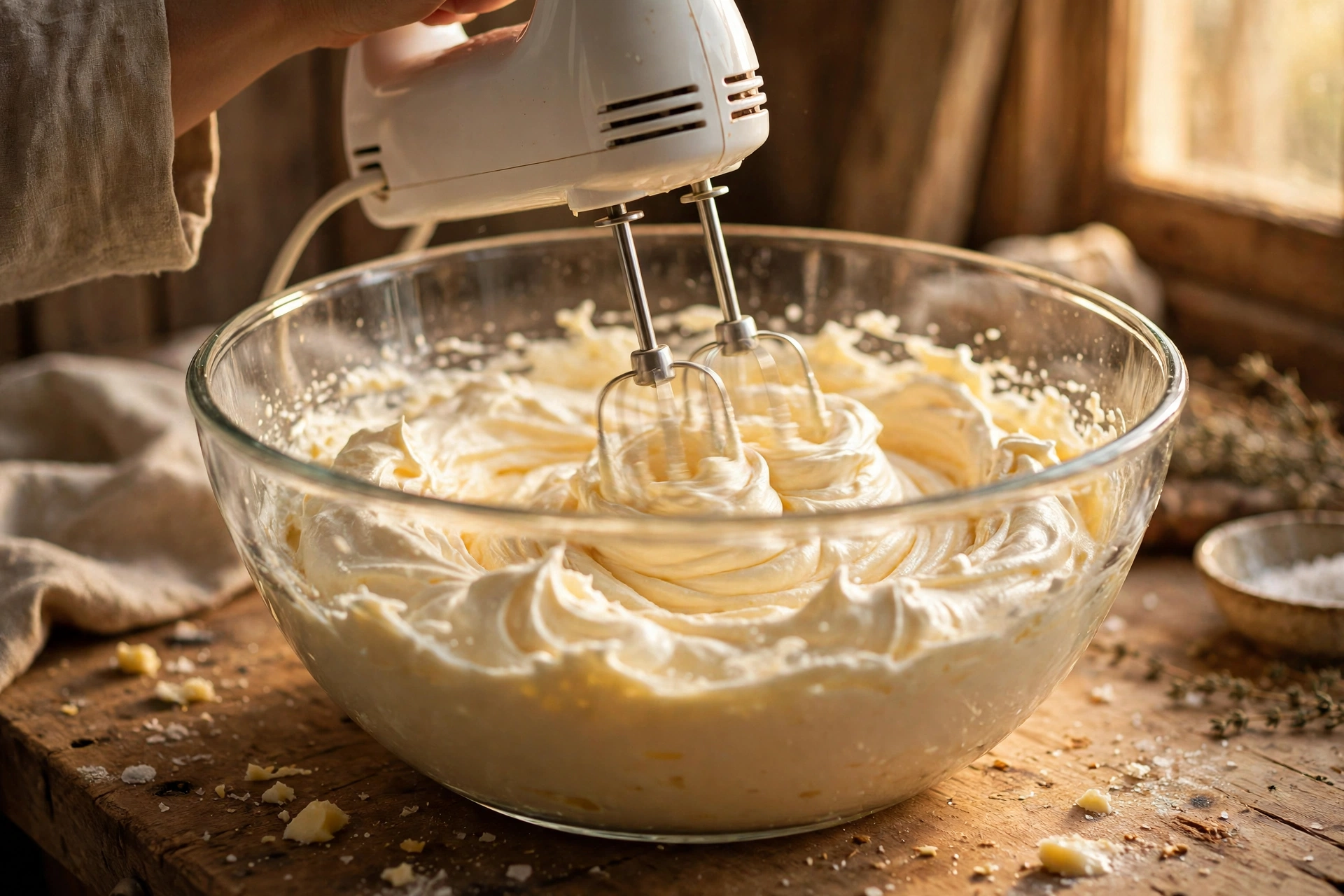
3. Whip it until fluffy
Now the fun part. Beat the cooled oil base with a hand mixer on medium for 3–5 minutes. You’ll watch it change: it lightens in color, grows in volume, and builds soft peaks like whipped frosting. That air is the whole point — it’s what makes the scrub feel like a cloud instead of wet sand.
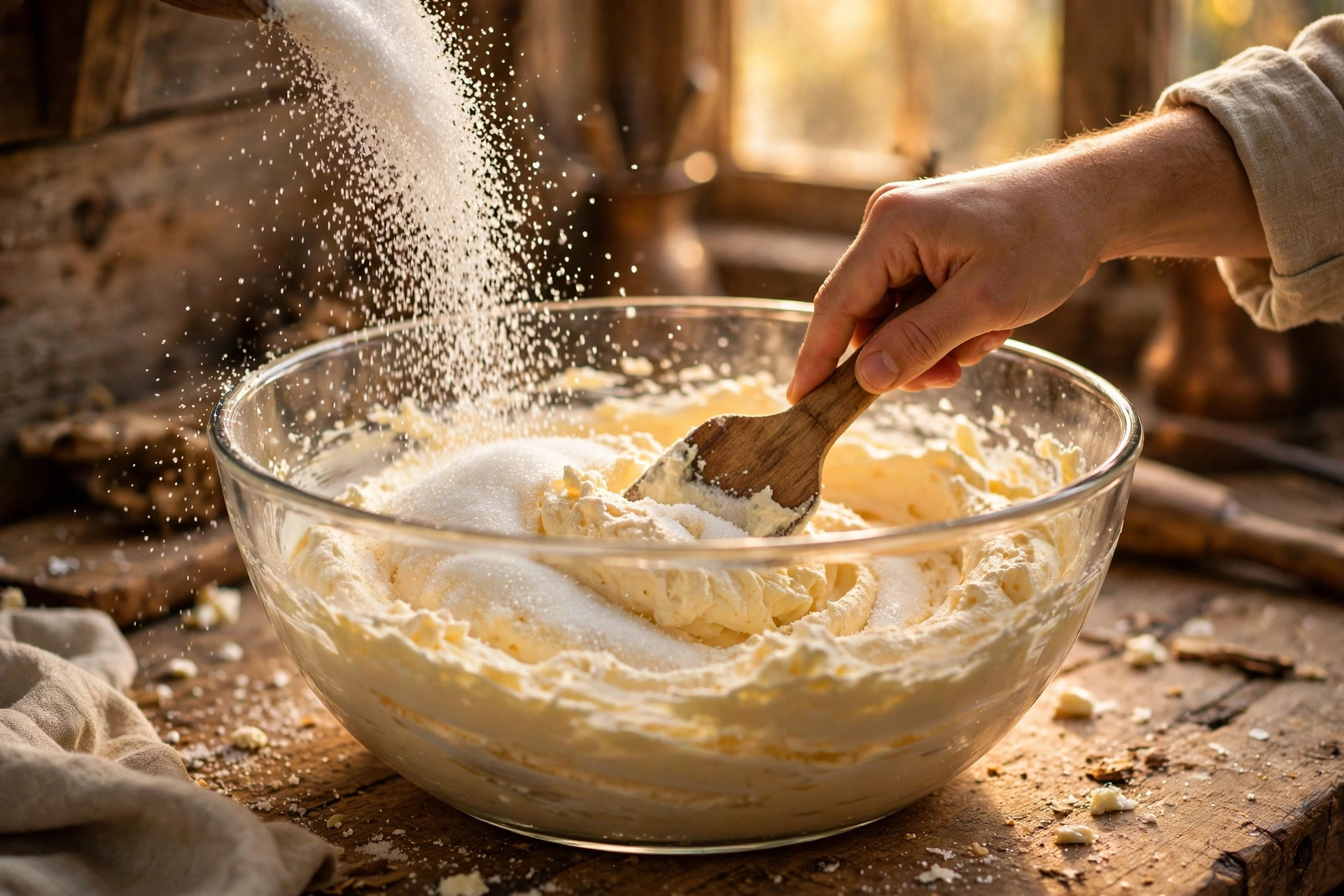
4. Fold in the sugar — don’t whip it
Add the sugar and fold it in gently with a spatula, the way you’d fold flour into cake batter. Do not use the mixer here: whipping grinds the sugar crystals down and dissolves them into the oil, and dissolved sugar can’t exfoliate anything. Folding keeps the crystals intact and the texture fluffy.
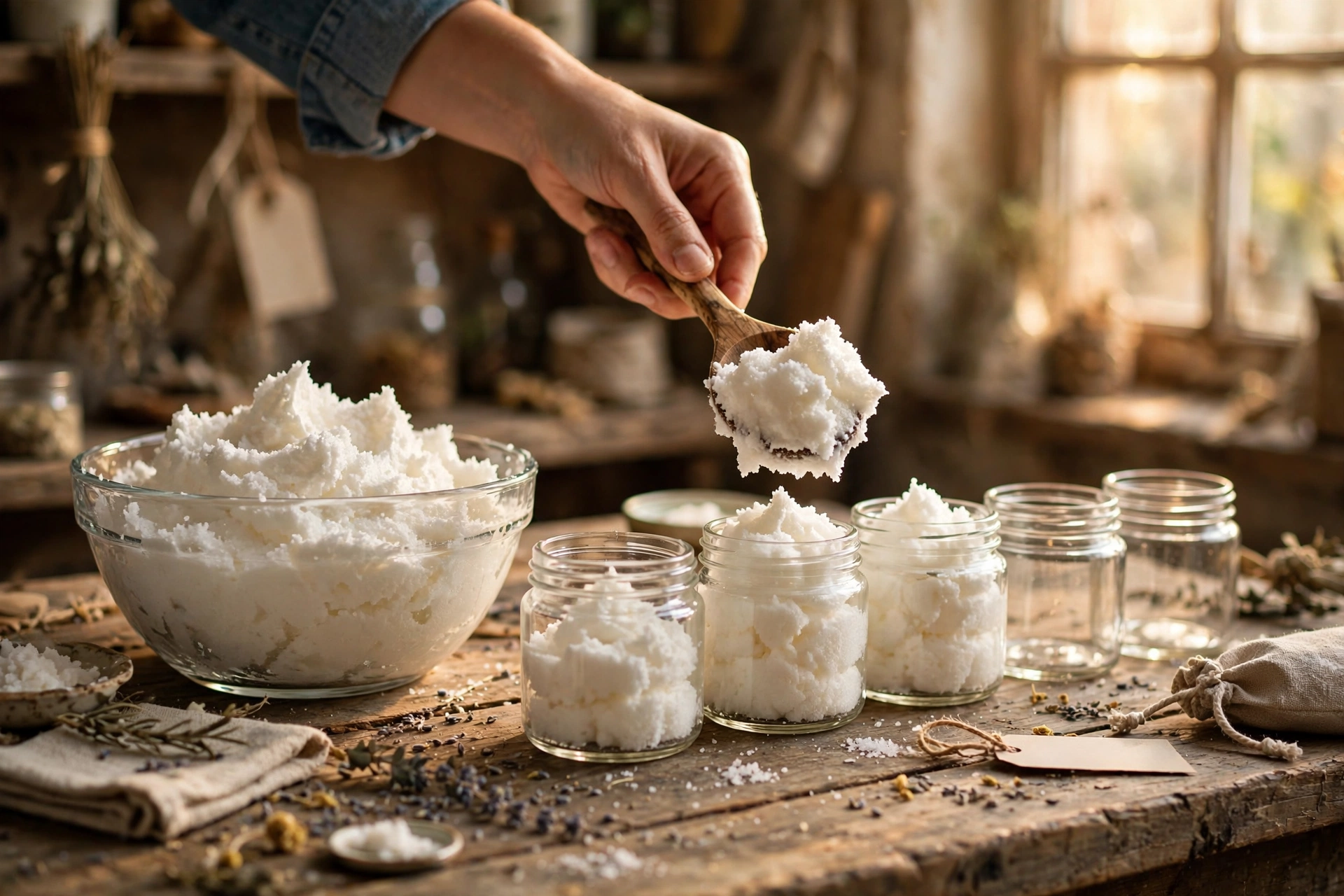
5. Spoon into jars
Spoon the scrub into clean, sanitized jars, pressing gently to remove air pockets, and fill to the very top — headspace invites condensation, and condensation invites trouble. Screw the lids on and let the jars sit at room temperature for an hour so the texture sets.
The preservative question (read this before you gift a jar)
This is the most-asked question about scrubs, and it deserves a straight answer. A scrub is made without water — but the moment someone dips wet fingers into the jar in the shower, water is introduced. Any product that gets water in it can grow mold and bacteria without preservation.
Choose a broad-spectrum preservative rated for oil-based or anhydrous products, use it at your supplier’s recommended usage rate, and follow their guidance exactly — preservative chemistry is one place where close-enough doesn’t count. Add it during the cool-down step with your fragrance, so the heat doesn’t degrade it.
Three holiday scent ideas
Add fragrance during the cool-down step, at your supplier’s recommended rate. These three blends are gift-ready crowd-pleasers:
Vanilla lavender. Warm vanilla rounded out with a whisper of lavender — the classic spa jar. Tint it a pale lilac with mica for the full effect.
Peppermint holiday. Crisp peppermint with a touch of vanilla to take the sharp edge off. Pair it with a deep red mica swirl and it looks like Christmas in a jar. This one sells out first at every craft fair.
Bright citrus. Orange and lemon with a hint of something green — energizing, cheerful, and perfect for January “new year, new you” gifting. Leave it uncolored and let the white sugar shine.
Want to blend your own? See our fragrance blending tutorial for how to layer top, middle, and base notes.
Jarring and gifting
Sanitize your jars and lids in hot soapy water, rinse well, and let them air-dry completely — any trapped moisture is a mold invitation. Fill to the top, label each jar, and your scrub is a finished gift.
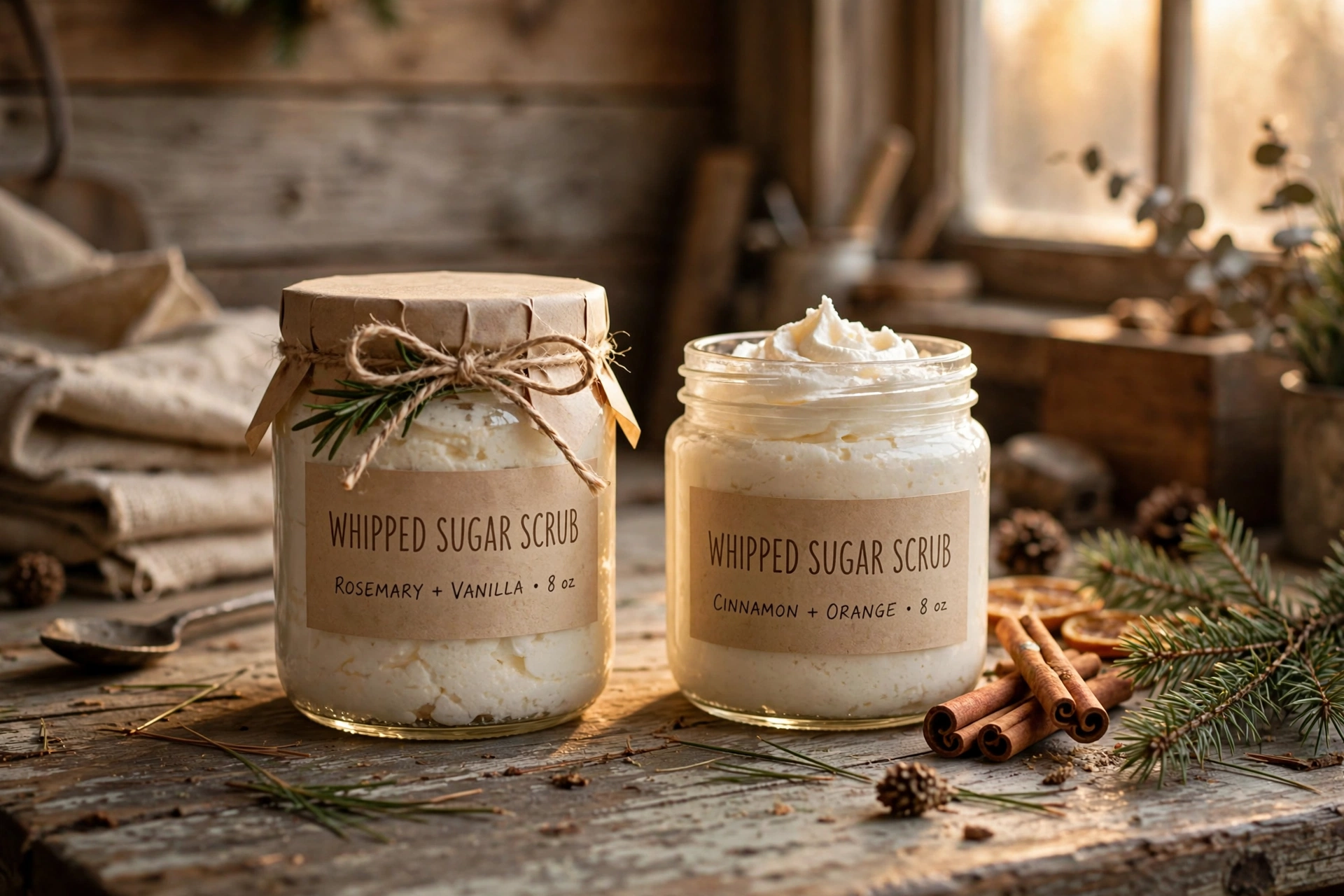
Label every jar with two things: the ingredients and a use-by date. List every ingredient (in case the recipient has an allergy — nut oils and fragrances matter), and give it a use-by date of about 6 months out for a preserved scrub, much sooner for an unpreserved one. A printable label makes it look professional; even a handwritten kraft tag with twine looks intentional and charming.
What to do when something looks wrong
Too oily or greasy? You need more exfoliant: fold in more sugar until the texture balances out. Next batch, raise your sugar ratio.
Too stiff or crumbly? Not enough oil: drizzle in a little liquid oil and fold gently until it holds together.
Separates in the jar (oil pooling on top)? The emulsifier either wasn’t fully melted in, or its rate was too low. Make sure every grain melts clear in step 1, and confirm your emulsifier percentage against your supplier’s recommendation.
Scent fades fast? It went in too hot. Fragrance belongs in the cooled base, never the hot melt. Also confirm your fragrance is skin-safe and actually rated for the load you’re using.
Lost the fluff? Either the sugar was whipped instead of folded (it dissolved), or the base was still warm when you whipped it (warm oil won’t hold air). Cool base, fold gently, and the peaks come back.
For the full problem index with fixes, see our soap troubleshooting guide.
Safety notes
Not for faces or broken skin. Body scrubs are formulated for body skin. Facial skin is thinner and more reactive — keep the scrub below the neck, and never use it on broken, irritated, or freshly shaved skin.
Keep water out between uses. If your scrub is unpreserved, always scoop with dry fingers or a clean dry spoon — never let shower water run into the jar. If you chose to preserve it (and you should for gifts), it’s still good practice: preservatives handle incidental water, not a flooded jar.
Mind the tub. Even emulsified scrubs make surfaces slicker than plain water. Rinse the shower floor after use.
Next steps
Once you’ve whipped your first batch, the rest of the body-care shelf is easy. Our soap troubleshooting guide covers the full problem index for anything you pour or whip, and the fragrance blending tutorial will level up every scented thing you make next.