How to Get Stronger Hot Throw From Your Candles
Few things are more disappointing than a candle that smells incredible in the jar and then fills the room with… nothing. Cold throw is the scent a candle gives off unlit, straight from the container. Hot throw is the scent it releases while burning — and that is what your customers are actually paying for. If your hot throw is weak, this guide walks through every factor that matters, in the order you should check them.
Cure your candles
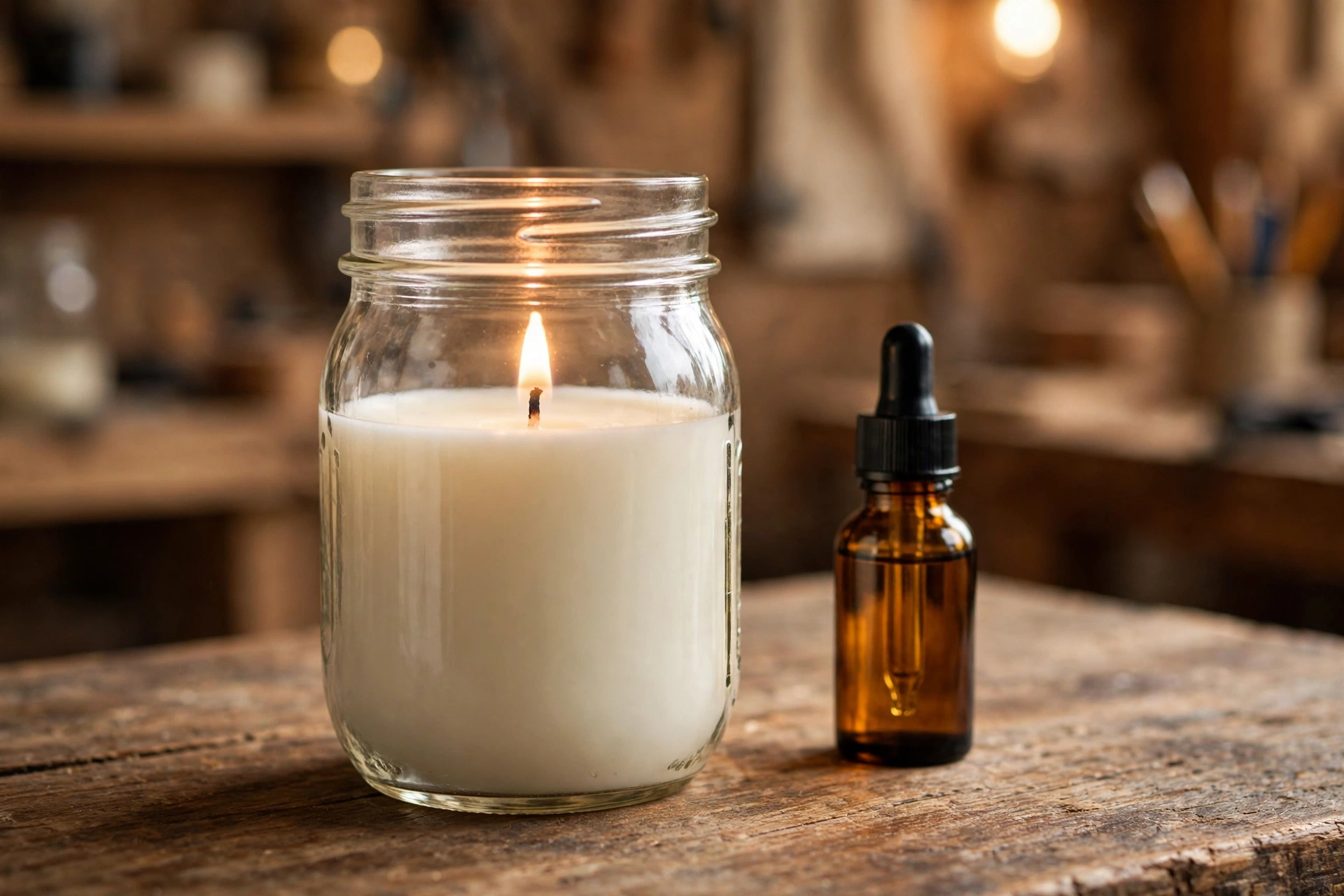
Curing is the waiting period between pouring a candle and burning it, and it is the number-one cause of weak hot throw — because most makers don’t do it long enough. During curing, the wax continues to crystallize and the fragrance oil bonds with the wax, which is what allows the scent to release evenly when the candle burns.
- Soy and parasoy (soy-paraffin blends): cure 7 to 14 days.
- Paraffin: cure 3 to 5 days.
- Test at intervals. Burn a test candle at 3 days, 7 days, and 14 days. Many fragrances keep getting stronger through day 10 or 12 — you won’t know your fragrance’s peak unless you test for it.
The hard truth: The vast majority of “weak throw” complaints are simply uncured candles. If you burned a soy candle two days after pouring it and the scent was faint, you haven’t tested anything yet — you’ve just burned a candle that wasn’t ready. Cure first, judge second.
Use enough fragrance — correctly
More fragrance is not always better, but too little is a guaranteed weak throw. Get the dosage right:
- Use your supplier’s maximum recommended load as your starting point, not the minimum. Most suppliers list a recommended percentage range — if you have been pouring at the bottom of the range, move toward the top and test.
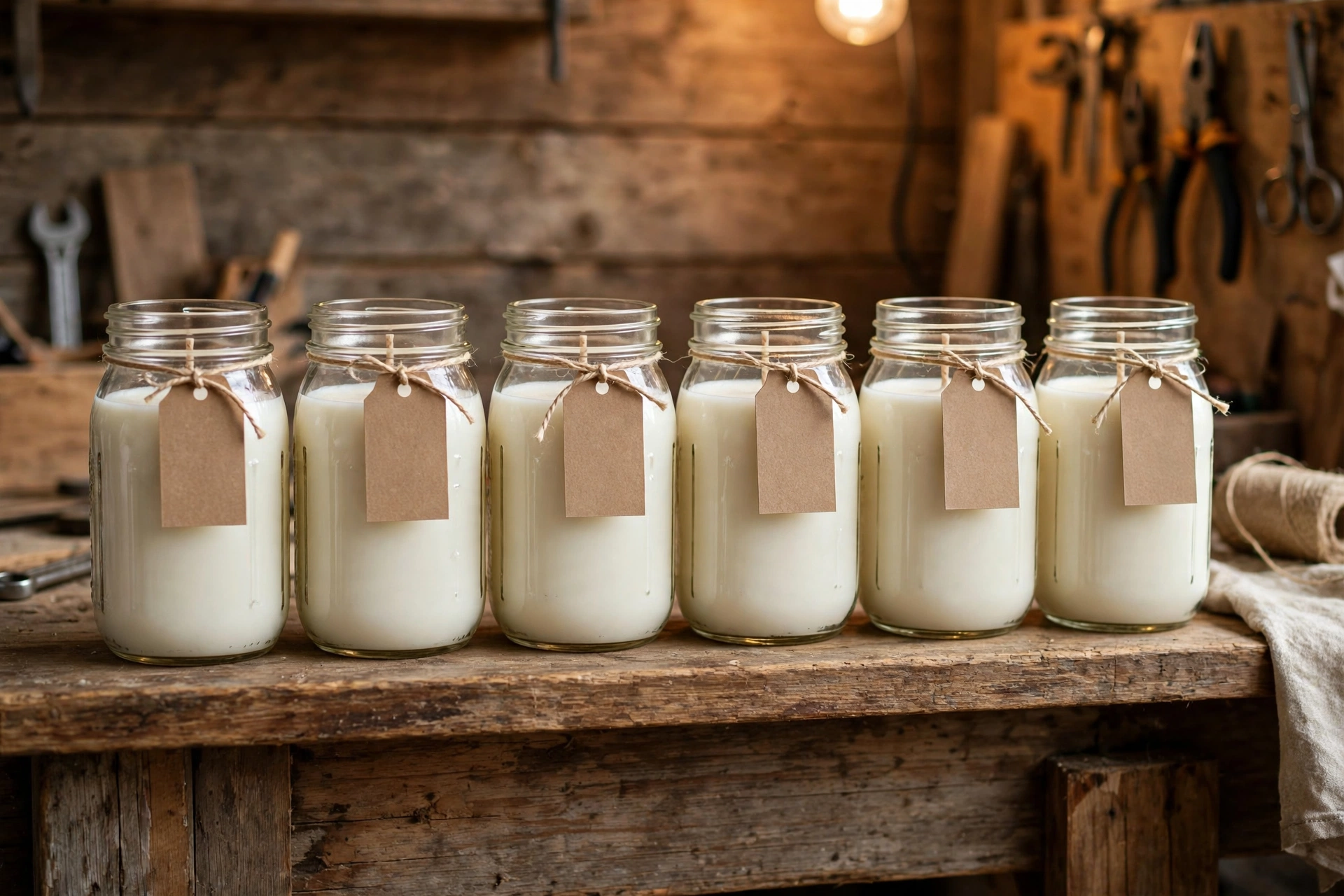
- Weigh, don’t eyeball. Fragrance load is a percentage of the wax weight. A kitchen scale is fine, but measuring by eye or by “a good glug” will give you a different load in every batch — and some of those batches will be weak.
- Use quality fragrance oils. Cheap, weak fragrance oil at a high load still smells cheap and weak. If two different scents at the same percentage give wildly different throw, the oil itself is the variable — some fragrance notes are simply stronger performers than others.
- Add at the correct temperature, usually around 185°F. Add the fragrance oil when the wax is at the temperature your supplier recommends (for most container waxes this is around 185°F), then stir gently but thoroughly for a full 2 minutes so the oil binds completely with the wax instead of sitting in pockets.
Wick for a full melt pool
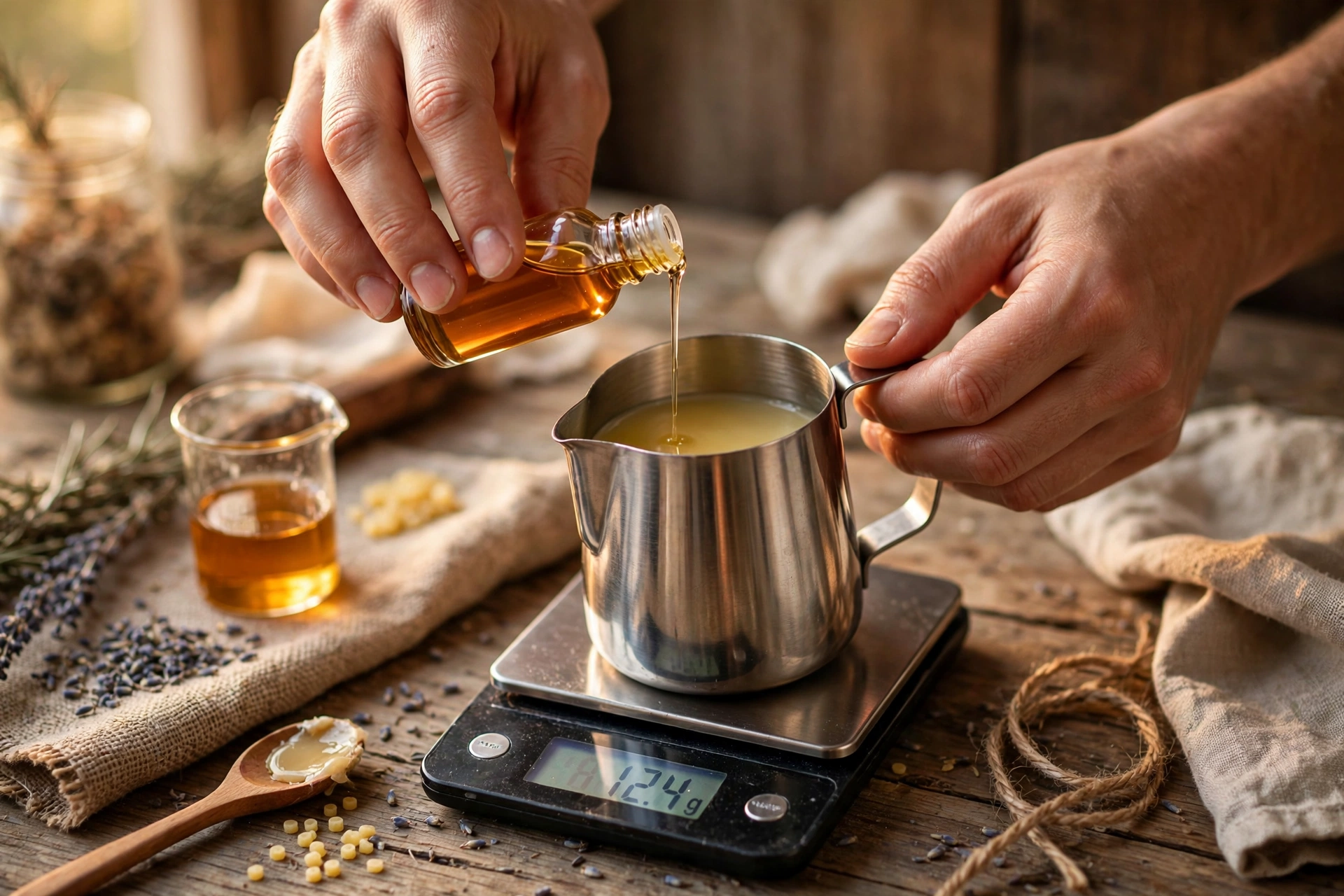
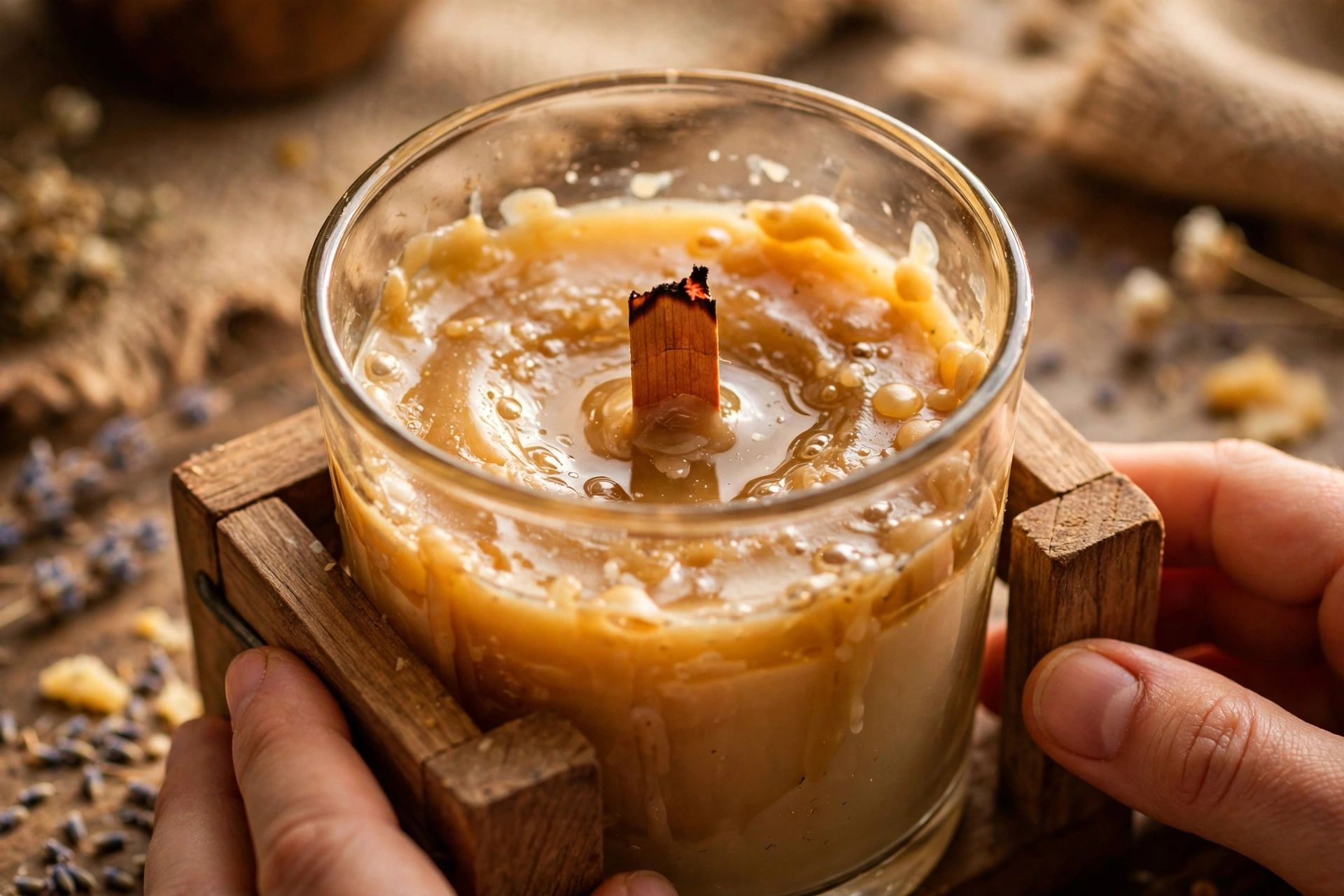
Hot throw comes from the melt pool — the liquid wax is what carries fragrance into the air. No melt pool, no throw. Your wick is correct when:
- The melt pool reaches the edges of the container by the second or third burn (the first burn always lags a bit).
- The pool is about 1/4 inch deep — deep enough to release scent, not so deep it’s a fire hazard.
An under-wicked candle — one whose melt pool never reaches the glass — will always have weak hot throw, no matter how much fragrance is in the wax. If the pool is tunneling down the middle, go up a wick size and test again. Wick testing is slow and unglamorous, and it is also the highest-leverage thing you can do for your scent performance.
Wax and container matter
- Wider containers give stronger throw. A wider jar means a larger melt pool, which means more liquid wax releasing fragrance at once. Two candles with the same fragrance load will not throw the same if one is a narrow tumbler and the other is a wide three-wick bowl.
- Soy vs. paraffin is a real trade-off. Paraffin generally gives stronger, more immediate hot throw — it releases fragrance readily. Soy throw builds more slowly and rewards patience (and full curing). Neither is “better”; they are different tools. If you love soy but want punchier throw, parasoy blends split the difference.
- Don’t blame the wax for a wick or cure problem. Wax choice matters, but it is rarely the main reason for weak throw. Check cure time, fragrance load, and wicking before you switch waxes.
Room factors
- Size the candle to the room. A single 8-ounce candle is right for a bedroom or a home office. It will not scent an open-plan living room, a great room with tall ceilings, or a space with the air conditioning running full blast — and no amount of fragrance load changes that math.
- Drafts kill hot throw. Moving air carries the scent molecules away before they can accumulate. Burn away from vents, open windows, and ceiling fans, and you’ll notice the difference immediately.
- Set customer expectations. If you sell candles, this is worth saying plainly in your product descriptions or in the group: one candle, one average room. Customers who buy a single candle for a huge space and report “no scent” usually have a sizing problem, not a candle problem.

Test one variable at a time
This is the method that separates makers who fix their throw from makers who chase it forever:
- Change one thing between tests. The wick or the fragrance load or the cure time — never all three at once. If you change everything and the throw improves, you have no idea what fixed it, and you can’t repeat it.
- Keep written notes on every batch. Wax type, fragrance name and percentage, pour temperature, wick size, cure days before testing, room size, and your honest rating of the throw. A notebook beats a memory every time.
- Test in the same room, same conditions. Comparing a candle burned in a small bathroom to one burned in a big living room tells you nothing about the candle.
Troubleshooting: match the symptom to the cause
| Symptom | Likely cause | Fix |
|---|---|---|
| Great cold throw, weak hot throw | Under-cured or under-wicked | Cure the full 7–14 days (soy) and re-test; check that the melt pool reaches the edges |
| Weak throw from the first burn onward | Fragrance load too low, or a weak fragrance oil | Move toward your supplier’s max recommended load; try a different fragrance oil known for strong throw |
| Strong at first, fades as it burns | Fragrance not fully bound to the wax | Add at the correct temperature (around 185°F) and stir a full 2 minutes; verify with a scale that your load is accurate |
| Tunneling down the middle | Wick too small | Wick up a size — the melt pool must reach the glass for the fragrance to release |
| Throw was fine, now it seems weaker | Nose blindness, or the room changed | Leave the room for 10 minutes and come back; check for new drafts or a larger space than usual |
| No scent in a big room | Candle undersized for the space | Use a larger candle or multiple candles; this is physics, not a formulation problem |

Safety reminders: Never leave a burning candle unattended. Trim wicks to 1/4 inch before every burn — a long wick gives a bigger flame but worse throw and more soot. Keep candles away from drafts, curtains, and anything flammable, and stop burning when about 1/2 inch of wax remains.
The bottom line
Hot throw is a system, not one trick. Cure time, fragrance load, wick size, wax choice, container width, and the room all multiply together — a candle that is fully cured, correctly wicked, properly fragranced, and burned in the right-sized room will throw beautifully with almost any decent wax. Work through the factors in order, change one variable at a time, and keep notes. Your future self — and your customers — will thank you.
Fragrance performance varies by oil and supplier, so treat every new scent as a new test: cure it fully, wick-test it, and judge it on its own results before committing to a large batch.