Candle making is safe when you respect two things: hot wax and open flame. Almost every accident in this hobby comes from skipping a basic rule — melting wax over direct heat, walking away from a melting pot, or leaving a burning candle alone in a room. This guide collects the rules that matter, for making and for burning, so you can build good habits from day one.
Making Safety: Hot Wax
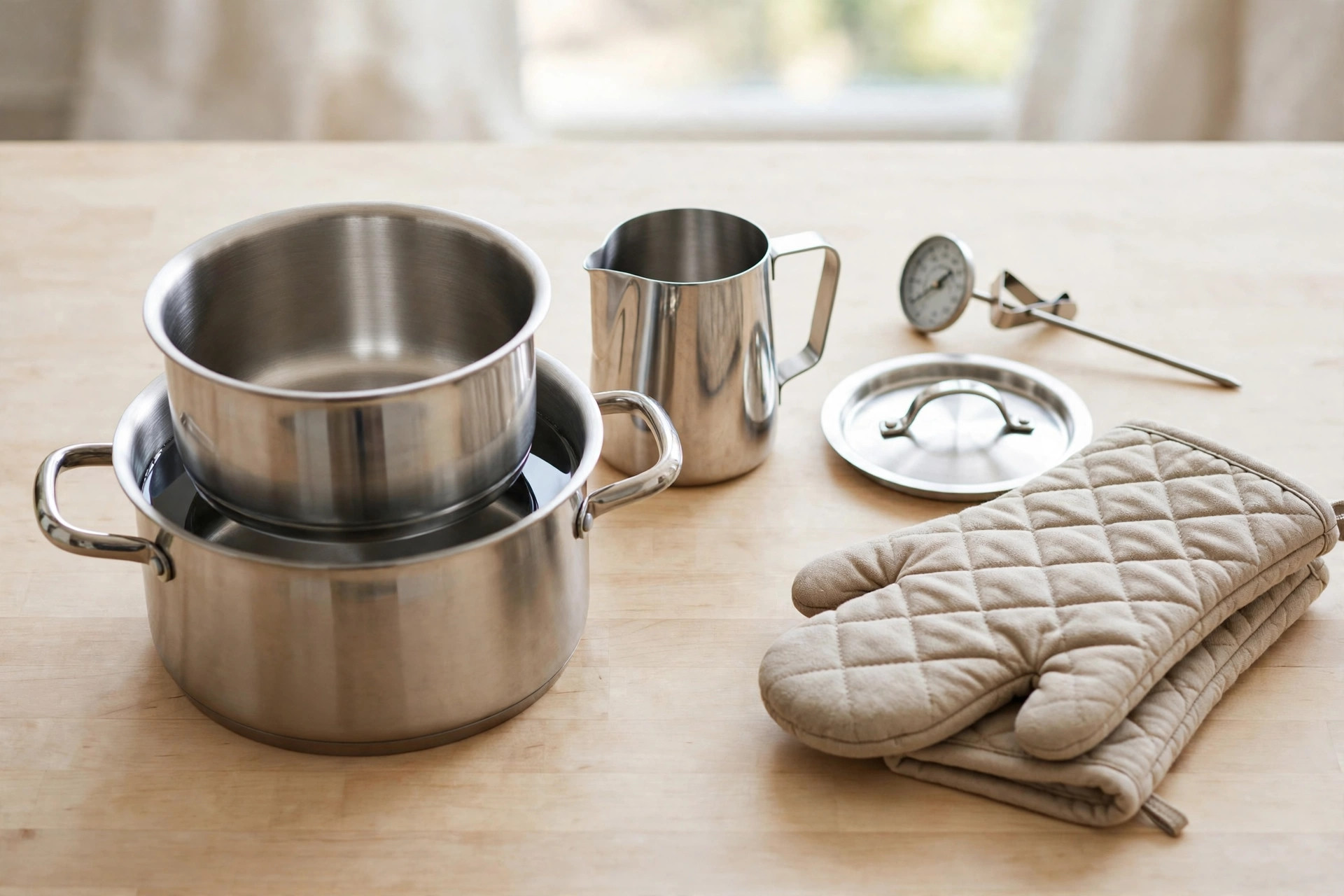
Always use a double boiler. Melt wax in a heat-safe pouring pitcher set inside a larger pot of simmering water. Never place a wax pot directly on a burner. Direct heat is hard to control, and overheated wax can reach its flash point — the temperature where its vapors can ignite — which for most waxes is above 300 degrees Fahrenheit. A double boiler keeps the heat gentle and even.
Use a thermometer every time. Never guess at wax temperature by looking at it. Clip a candle thermometer to the pitcher, check it often, and never let wax go above the maximum on your wax’s product sheet. If the wax starts to smoke, turn off the heat right away.
Never leave melting wax unattended. Not for a phone call, not for a quick errand. If you must step away, turn off the heat first. Keep the water in the double boiler topped up so the pot never boils dry.
Keep a metal lid nearby. If wax ever flares, a lid that covers the pot completely will smother the flames. Keep a fire extinguisher within reach as well, and know how to use it before you need it.
Never use water on a wax fire. Water makes hot wax splatter and spread, and it can crack a hot glass container. Treat a wax fire like a grease fire: smother it with a lid. If a fire spreads beyond the container, leave the room and call 911.
Protect yourself. Wear oven mitts when handling the pitcher, closed shoes, long pants, and an apron. Hot wax splashes hurt, and bare feet and bare arms are an easy target. If you have the choice, an electric heat source is safer than gas: an open flame can ignite wax vapors if the wax ever overheats.
Skip the microwave. Microwaves heat unevenly and can create hot spots in wax that you cannot see or control. The double boiler is the safe, predictable method.
Making Safety: Fragrance Oil
Use fragrance oil made for candles. Perfume and cologne are alcohol-based and can be a fire hazard in hot wax. Candle-grade fragrance oil is made to be heated in wax.
Read the safety sheet. Every fragrance oil has a safety data sheet that lists its maximum usage rate and any hazards. Some oils irritate skin or trigger allergies, so wear gloves and eye protection when handling fragrance oil, and wash your hands after.
Ventilate. Heated fragrance oil releases fumes. Open a window or run the range hood while you work.
Keep fragrance oil away from children and pets. Store it sealed, labeled, and out of reach, like any household chemical.
Burning Safety: The Rules That Never Change
- Never leave a burning candle unattended. If you leave the room, go to sleep, or head out, put it out first. A lit candle needs someone in the room with it.
- Trim the wick to one quarter inch before every burn. A long wick burns hotter, smokes, soots, and can make the flame tall enough to overheat the container. Trim when the wax is cool and hard, never over a liquid melt pool, so clippings do not fall into the wax.
- Keep candles away from anything flammable. At least twelve inches clear of curtains, bedding, books, paper, and decorations, and out of reach of children and pets.
- Burn on a stable, heat-resistant surface. A tile, a stone coaster, or a ceramic saucer. The container gets genuinely hot during a long burn, so keep it off bare wood, plastic, and cloth.
- Avoid drafts. Fans, vents, and open windows make flames flicker, smoke, and burn unevenly, and can push heat toward one side of the container.
- Limit each burn to about four hours. Then let the candle cool completely before relighting. Long burns overheat wax and containers.
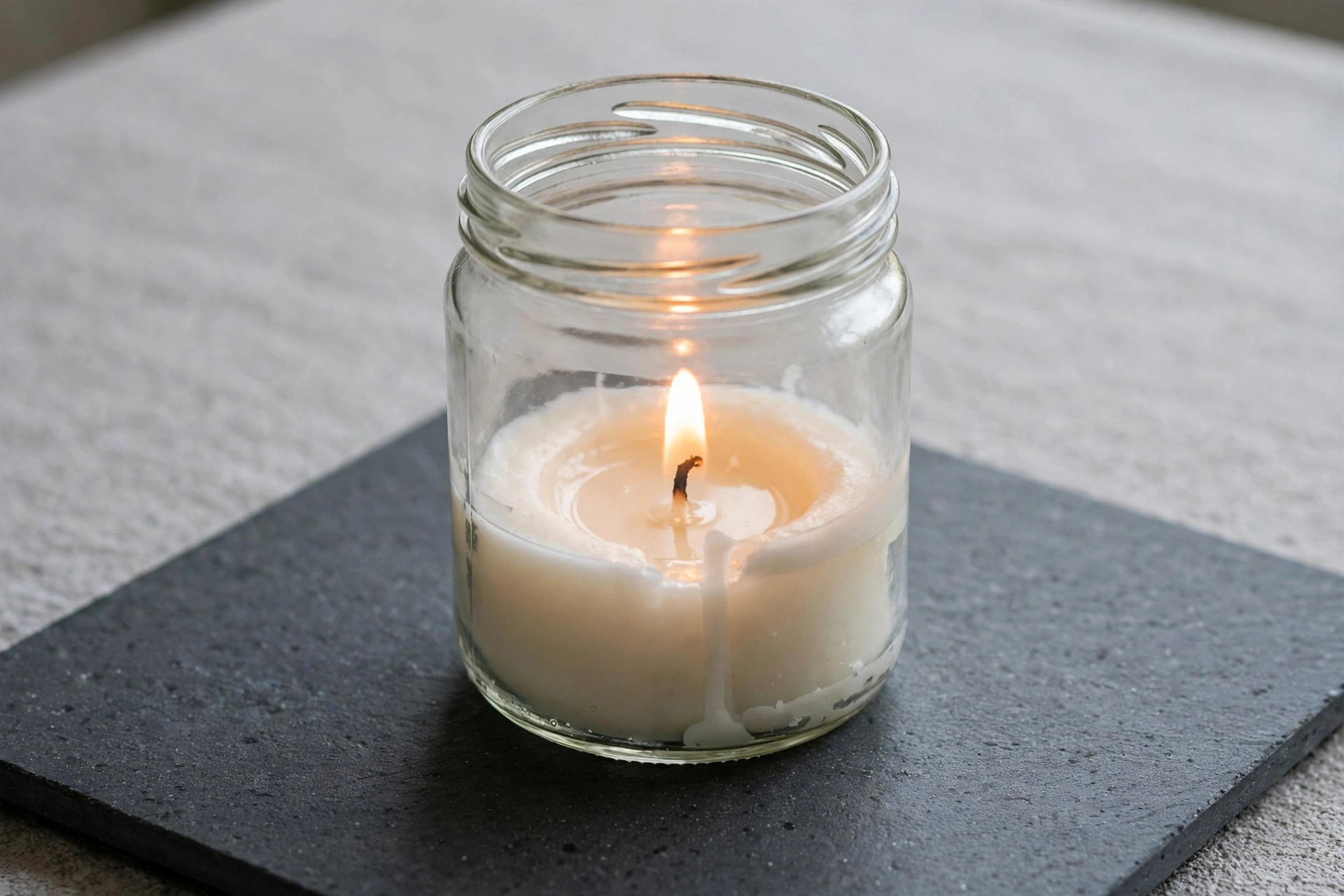
- Give the first burn time. Let the melt pool reach the edges of the container — usually two to four hours depending on size, or roughly one hour per inch of container diameter. Short first burns cause tunneling, where the candle burns a hole down the middle and wastes the wax around it.
- Stop when one half inch of wax remains. Burning a container to the bottom can overheat and crack it. Retire the candle at one half inch.
- Do not move a burning or hot candle. Wait until the wax has set and the container is cool to the touch.
- Keep the wax clean. Remove wick trimmings, match pieces, and debris from the melt pool. Foreign matter in the wax can catch fire.
- Do not burn a candle in a chipped or cracked container. Damage weakens the glass and raises the risk of breakage under heat.
- Extinguish with a snuffer, or dip the wick. Blowing spreads ash and debris into the wax and can smoke. A snuffer or a quick dip of the wick into the melt pool puts the flame out cleanly.
If Something Goes Wrong
Wax fire while making: turn off the heat if you can do so safely, cover the pot with its metal lid to smother the flames, and never pour water on it. If the fire spreads beyond the pot, leave the room and call 911.
Flame too tall or smoking while burning: extinguish the candle, let it cool completely, trim the wick to one quarter inch, and check for drafts before relighting.
Container cracking or wax spilling: extinguish the candle, let everything cool, and discard the candle. Do not try to save a candle in a damaged container.
Fragrance oil on skin: wash with soap and water. If irritation develops, stop using that oil and check its safety sheet for guidance.
Hot wax on skin: cool the area under cool running water. Do not peel wax off burned skin — cool it, then seek medical advice if the burn is more than minor.
Safety Checklist Before You Start
- Double boiler set up, thermometer clipped on, metal lid within reach
- Workspace clear of flammables, ventilated, children and pets out of the way
- Oven mitts, closed shoes, apron on
- Fragrance oil safety sheet checked for its maximum usage rate
- Phone and everything you need already on the table, so you never leave melting wax
Next up: preparing and melting wax — the double boiler method, step by step, with the temperatures that matter.
Get candle-making tips by email
Join the list for new tutorials, tools, and supplier deals — straight to your inbox.
Signed up between Oct 7 and Oct 28 and never heard from us? We fixed a glitch that was dropping signups — please sign up again!