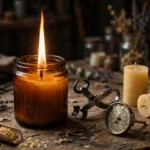
Before you melt anything, it helps to know what you are actually making. A candle is a small, controlled fuel system, and understanding how it works explains almost every piece of advice you will hear later: why the wick matters so much, why the first burn matters, and why patience beats speed at every step. This primer covers how a candle works, what a first attempt realistically looks like, and how to set up a workspace that keeps you safe and calm.
How a Candle Actually Works
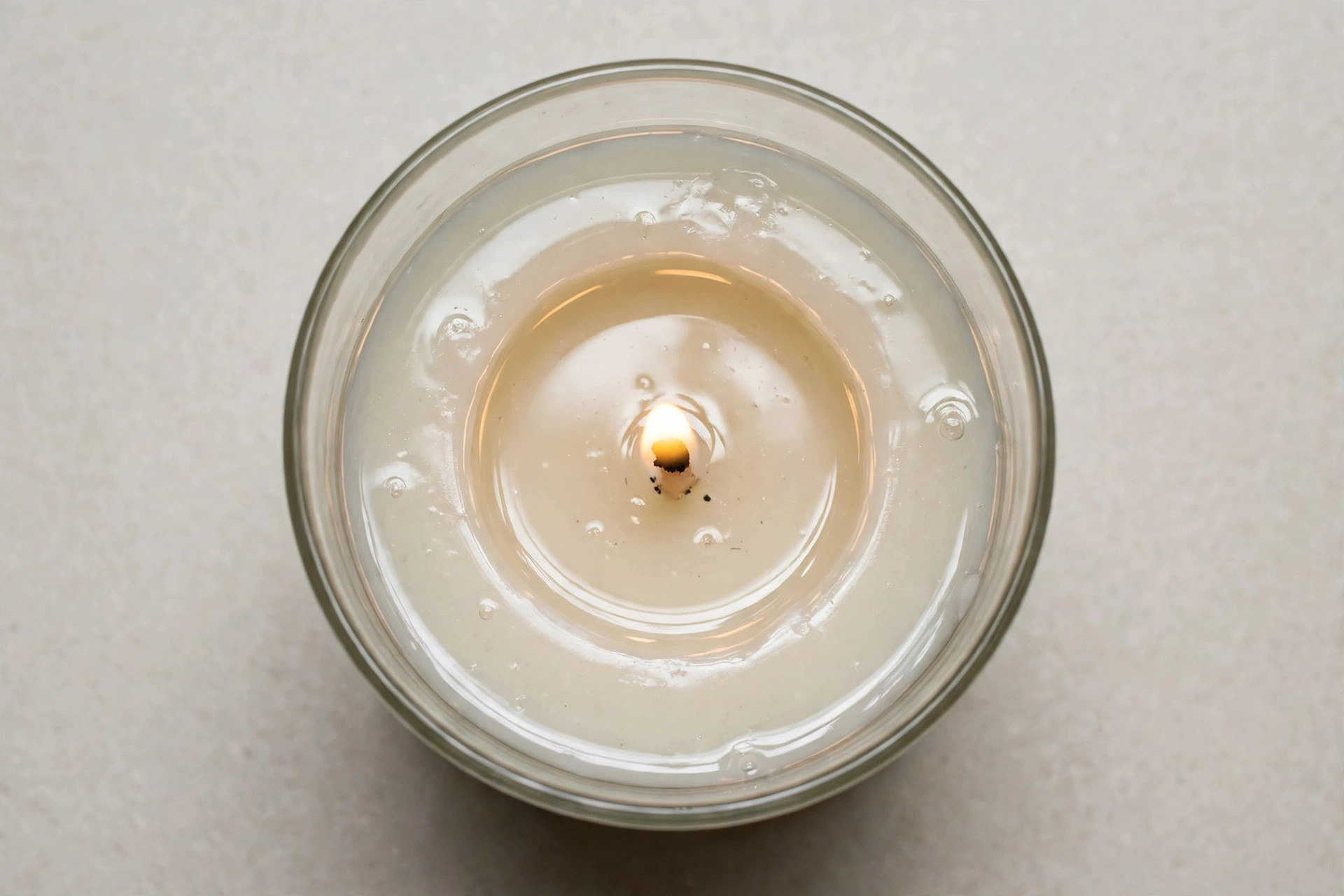
A candle does not burn wax directly. Heat from the flame melts a small pool of wax around the wick. The liquid wax travels up the wick, the same way water climbs a paper towel, and the heat turns that liquid into vapor. The vapor is what burns. So the flame is fed by melted wax, and the wick is really a delivery system: it carries fuel to the flame at a steady rate.
That one idea explains the whole craft. A wick that is too small cannot deliver enough fuel, so the melt pool stays narrow and the candle tunnels down the middle. A wick that is too large delivers too much fuel, so the flame grows tall, smokes, and soots. The right wick makes a melt pool that reaches the edges of the container — and that full melt pool is what releases the fragrance into the room.
What to Expect From a First Attempt
Your first candle will probably not look perfect, and that is normal. Expect a few things so they do not surprise you:
- The top may not be smooth. Soy in particular can set with dips, cracks, or a white frosty pattern. These are cosmetic and do not affect the burn.
- The scent may seem light at first. Candles need time to cure before their scent fully develops. Do not judge a candle the day you pour it.
- The wick may need adjusting. Wick sizing is a test, not a guess. Your first burn tells you whether the wick is right, and changing wick size is part of the process, not a failure.
- It will take longer than you think. Melting, pouring, cooling, and curing stretch across days, even though the hands-on work is about an hour.
- You will learn more from one imperfect candle than from ten articles. Pour it, burn it, watch it, and take notes.
Setting Up Your Workspace
You do not need a workshop. A kitchen table works, with a few rules:
- Cover the surface. Wax drips happen. A silicone mat, an old baking sheet, or layers of newspaper protect the table and make cleanup easy.
- Clear the area. Move away anything flammable — paper towels, curtains, dishcloths — and anything you do not want wax on.
- Ventilate. Open a window or run the range hood. Heated fragrance oil releases fumes, and fresh air keeps the work comfortable.
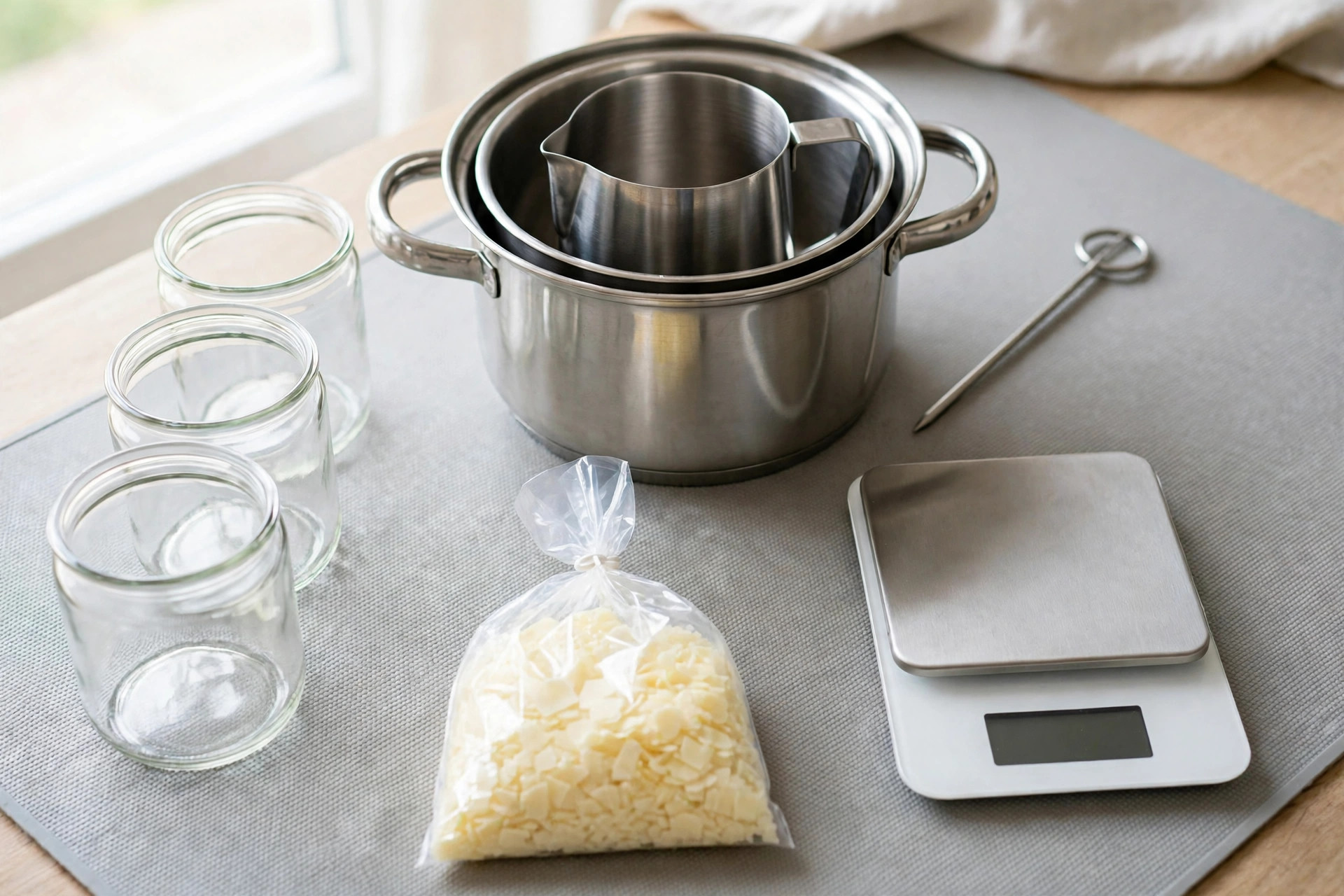
- Keep everything within reach. Wax, wick, fragrance, thermometer, scale, and pitcher should be on the table before you turn on the heat, so you never walk away from melting wax to fetch something.
- Keep children and pets out of the workspace. Hot wax and fragrance oil are not for small hands or curious paws.
- Dress for it. Closed shoes, long pants, and an apron protect you from splashes. Tie back long hair.
Mindset and Prep
- Weigh everything. Wax and fragrance are measured by weight, every time. Guessing is how batches stop being repeatable.
- Read the wax sheet first. Before you melt, know your wax’s fragrance limit and pouring temperature. Those two numbers shape the whole session.
- Plan for a test burn. Your first candle is a test, not a gift. Burn it yourself, watch the melt pool, and write down what happened.
- Do not rush the cool-down. Let candles cool undisturbed at room temperature, away from drafts and cold surfaces, which can cause cracking and wet spots.
- Keep notes. Wax, wick size, container, fragrance, and amounts, for every batch. Your future self will thank you.
Safety
Read the candle making safety guide before you melt anything. The short version: double boiler only, thermometer always, never leave melting wax unattended, and keep a metal lid nearby to smother a flare. The full guide covers burning safety too, which matters the moment your first candle is lit.
Next up: candle making safety — the complete guide to hot wax, fragrance handling, and burning candles safely.
Get candle-making tips by email
Join the list for new tutorials, tools, and supplier deals — straight to your inbox.
Signed up between Oct 7 and Oct 28 and never heard from us? We fixed a glitch that was dropping signups — please sign up again!