
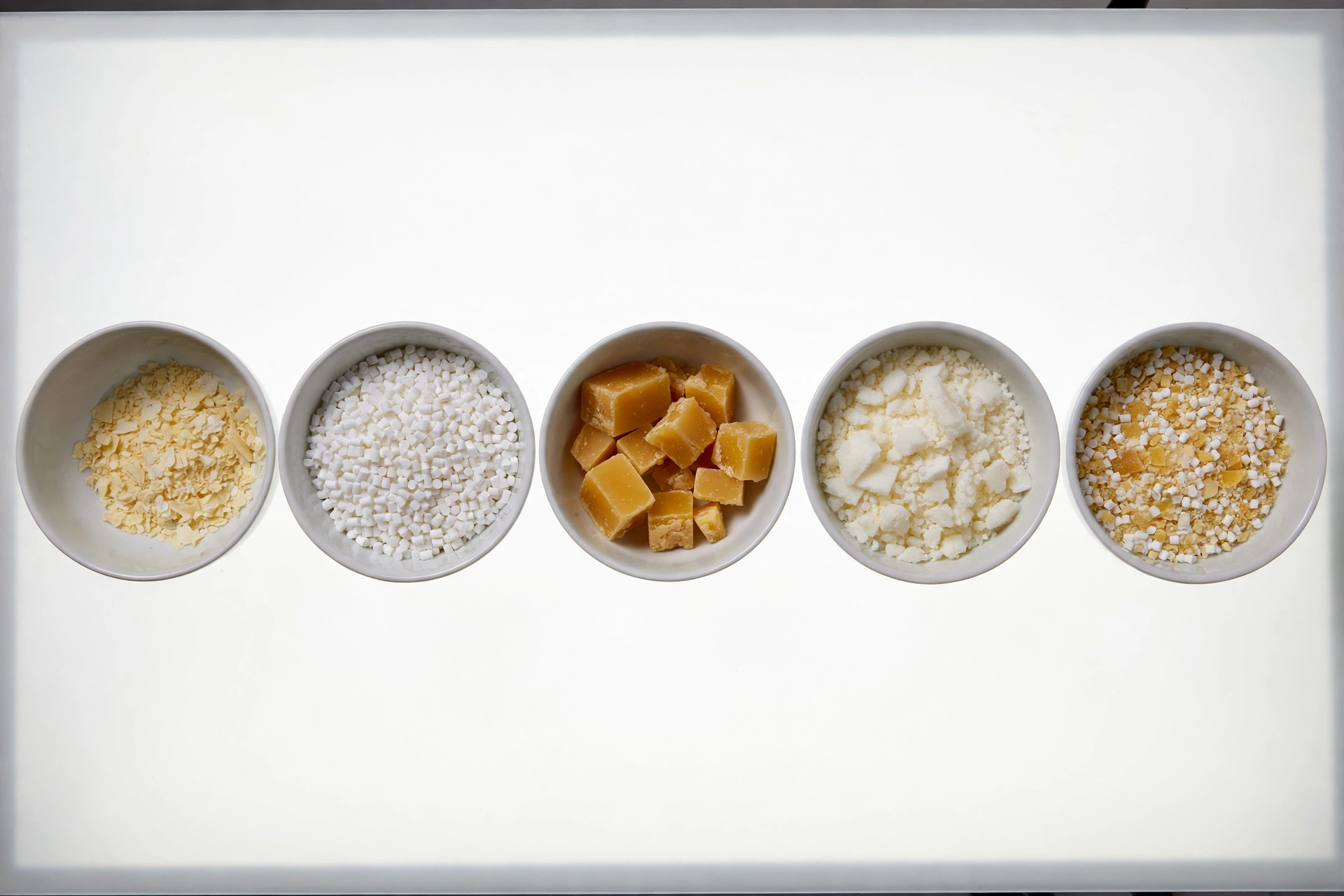
Soy, paraffin, beeswax, coconut, blends — the wax aisle is the most confusing part of starting candle making, and the choice matters more than any other supply decision. Different waxes melt at different temperatures, hold different amounts of fragrance, and suit different candle shapes. This guide compares the main options side by side and ends with a clear recommendation for your first candle.
First, Two Rules That Decide Everything
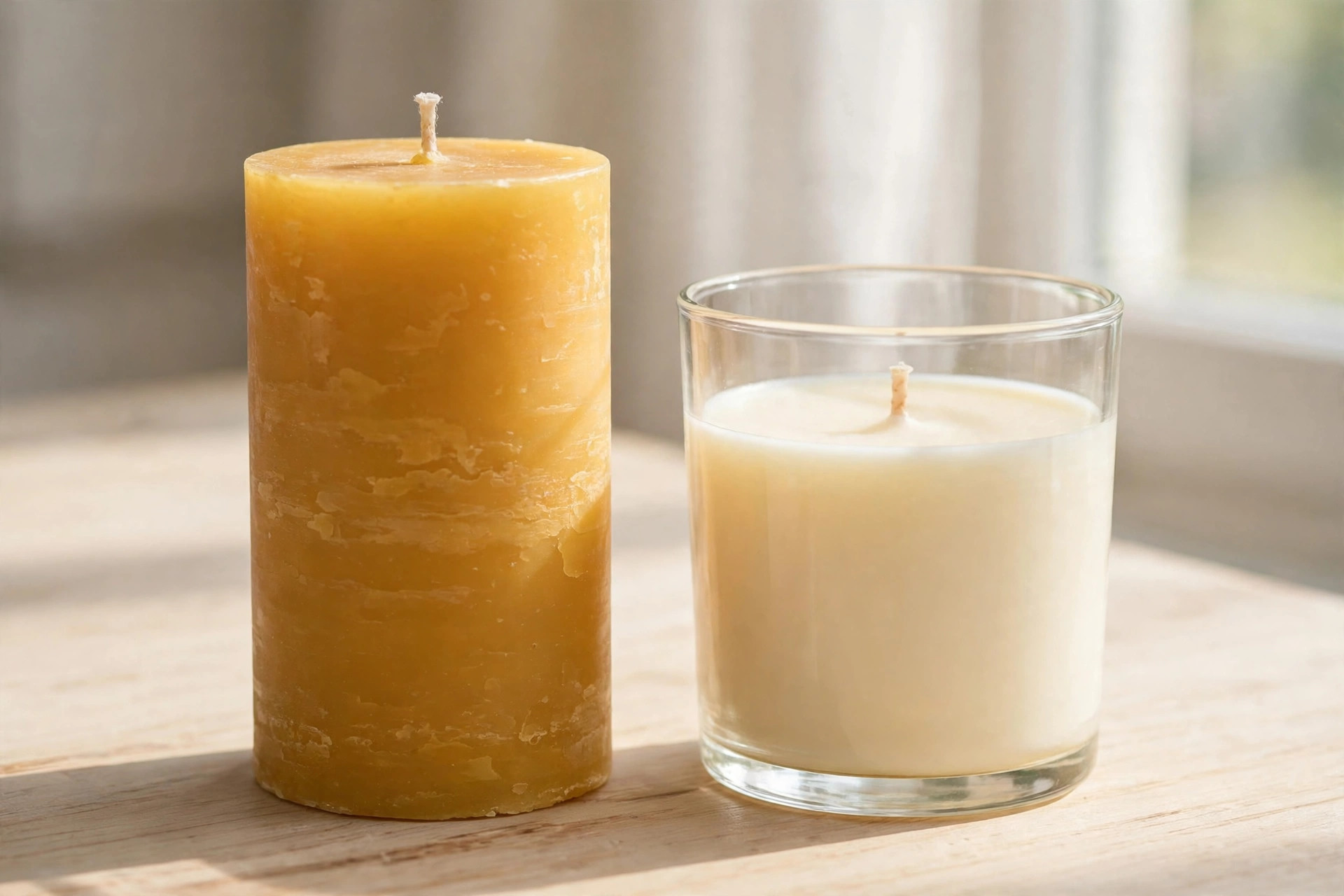
Match the wax to the shape. Container waxes are softer, with lower melting points, and are made to cling to the inside of a jar or tin. Pillar waxes are harder, with higher melting points, so a free-standing candle holds its shape instead of slumping. Soft container wax cannot become a pillar just because you pour it hotter. Buy the wax made for the candle you want to make.
Follow your exact wax, not a generic chart. Temperatures vary by product, even within one wax family. One soy container wax pours near 135 degrees Fahrenheit, another near 95. The bag or product page for your wax is the authority — use its melt, fragrance, and pour temperatures first, and treat any guide (including this one) as a starting range.
Soy Wax
Soy wax is made from hydrogenated soybean oil. It is the most common beginner wax, and for good reason: it is forgiving, widely available, cleans up with hot soapy water, and burns cleanly. Soy container wax melts around 115 to 125 degrees Fahrenheit. A classic beginner soy, the 464 style, is typically heated to about 150 to 160 degrees, takes fragrance at about 150 degrees, and pours near 135 to 140 degrees — but again, check your bag, because other soy waxes pour much cooler.
Soy holds a moderate amount of fragrance, usually 5 to 10 percent of the wax weight, and gives a good scent throw. Its quirks are cosmetic: soy can frost (a white crystalline pattern on the surface) and can pull away from the glass in spots called wet spots. Neither affects how the candle burns. Soy is not suited to free-standing pillars — it is too soft to hold its shape. Best for: container candles, tealights, and votives.
Paraffin Wax
Paraffin is the traditional candle wax, refined from petroleum. It comes in many grades: low-melt paraffin melts near 99 degrees Fahrenheit, while harder pillar grades melt near 130 to 150 degrees. A common container paraffin pours near 170 degrees. Paraffin is known for the strongest scent throw of the common waxes and can hold up to 10 to 12 percent fragrance. It is also the most versatile single wax family, covering containers, pillars, votives, tapers, and tealights, because you choose a grade for each job.
The trade-offs are a faster burn than soy and more soot if the wick is wrong, which makes wick sizing extra important. Best for: makers who want maximum scent throw, and for pillars and votives where a harder wax is required.
Beeswax
Beeswax is made by honeybees, and it behaves like the premium product it is. It melts near 144 to 147 degrees Fahrenheit and pours near 175 degrees. It burns the longest of the common waxes, holds its shape beautifully, and carries a natural honey scent and golden color even unscented. It is also the most expensive of the common waxes and is not vegan.
Beeswax is known for a lighter scent throw than paraffin or soy, so it suits makers who love the wax itself more than heavy fragrance. Its higher temperatures also make it less forgiving for a first melt. Best for: pillars, tapers, and votives, and for container candles once you are comfortable with hotter wax.
Coconut Wax
Coconut wax is soft, creamy, and known for an excellent scent throw and a clean burn. It melts near 120 to 130 degrees Fahrenheit. On its own it is too soft to stand up, so it is almost always sold blended — most often with soy or paraffin. A coconut blend combines the scent throw of one partner with the slower burn and smooth finish of the coconut, and coconut blends are considered beginner-friendly.
Because blends vary, there is no single pour temperature for coconut wax: a coconut-apricot container blend, for example, pours in the 165 to 175 degree range, much hotter than soy. Always follow the blend’s own sheet. Best for: container candles, as a blend.
Blends
Blends exist to fix a single wax’s weakness: soy and coconut for a smoother top and better throw, paraffin and soy for scent plus a slower burn, a small amount of a hard wax to firm up a soft base. If a blend’s label says it is made for containers, trust that over the melt point of any one ingredient. Blends are a great second wax, after you have learned one straight wax well.
The Recommendation for Your First Candle
Start with a soy container wax, the 464 style if your supplier carries it. It is the easiest wax to melt, pour, and clean up, it is forgiving of small temperature mistakes, and it makes a great-smelling jar candle on the first try. Once you can pour a clean soy container candle with a full melt pool and a good test burn, branch out: paraffin when you want the strongest scent, beeswax when you want pillars or a long slow burn, a coconut blend when you want a luxury container candle.
Tips for Choosing
- Buy container wax for jars, pillar wax for pillars. This one choice prevents more failures than any other.
- Read the sheet before you buy. Wax type, fragrance load limit, and pour temperature are the three numbers that matter.
- One wax at a time. Learn how one wax behaves before you compare it to another.
- Do not judge a wax by its first burn. Let candles cure before you decide — soy in particular keeps improving its scent for days after pouring.
Safety
Every wax in this guide is melted in a double boiler, never directly on a burner, and always with a thermometer. Hotter waxes like beeswax and paraffin demand extra respect: keep the temperature on the sheet, never walk away from melting wax, and keep a metal lid nearby to smother any flare. Full details are in the candle making safety guide.
Next up: before your first candle — how a candle actually works, what to expect from a first attempt, and how to set up your workspace.
Get candle-making tips by email
Join the list for new tutorials, tools, and supplier deals — straight to your inbox.
Signed up between Oct 7 and Oct 28 and never heard from us? We fixed a glitch that was dropping signups — please sign up again!