
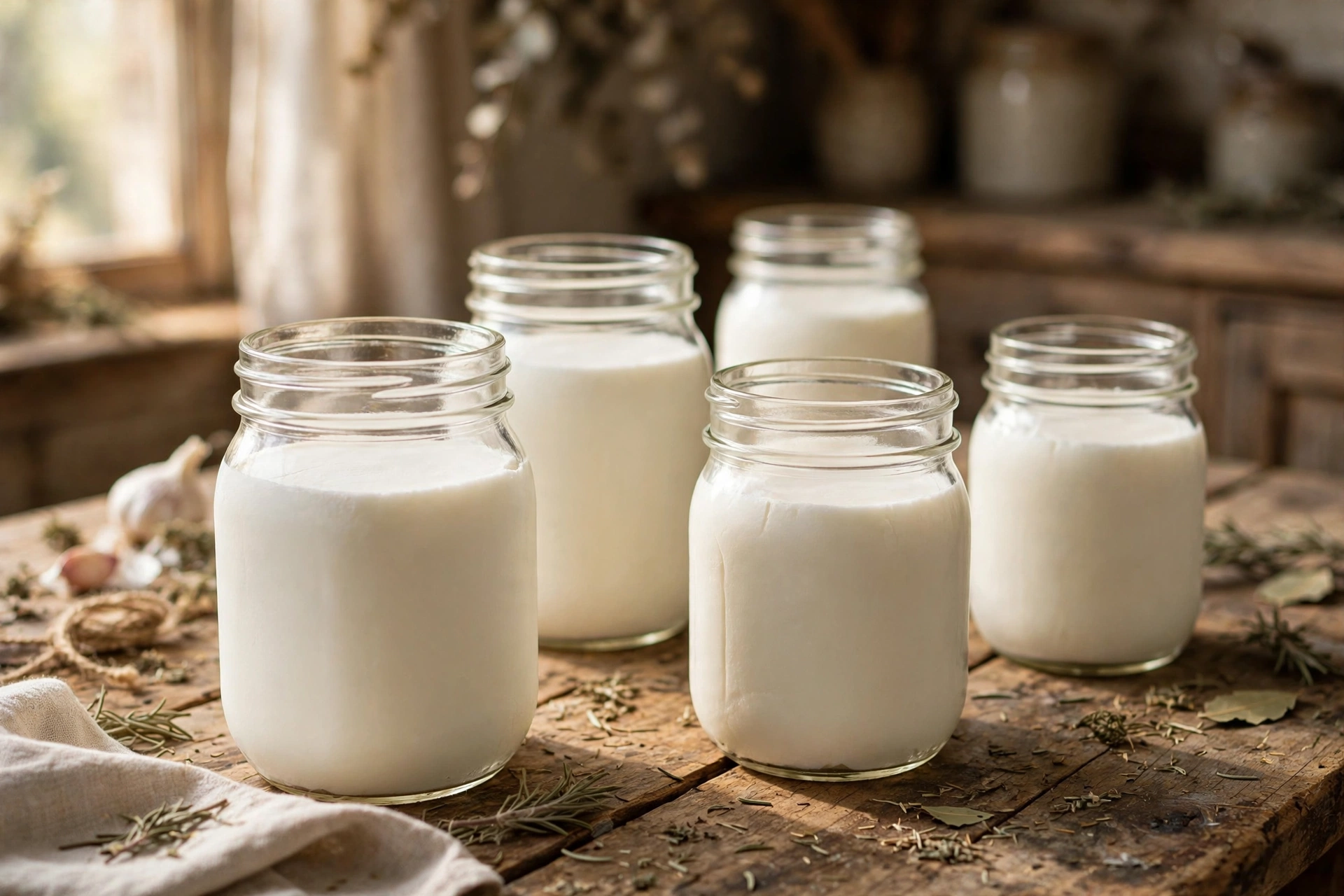
Tallow is rendered beef fat — and before you wrinkle your nose, know this: it was the backbone of soap and candle making for centuries before petroleum-based ingredients took over. Our great-grandmothers made soap from tallow because it produces hard, long-lasting bars with a rich, creamy lather that modern soap makers still chase.
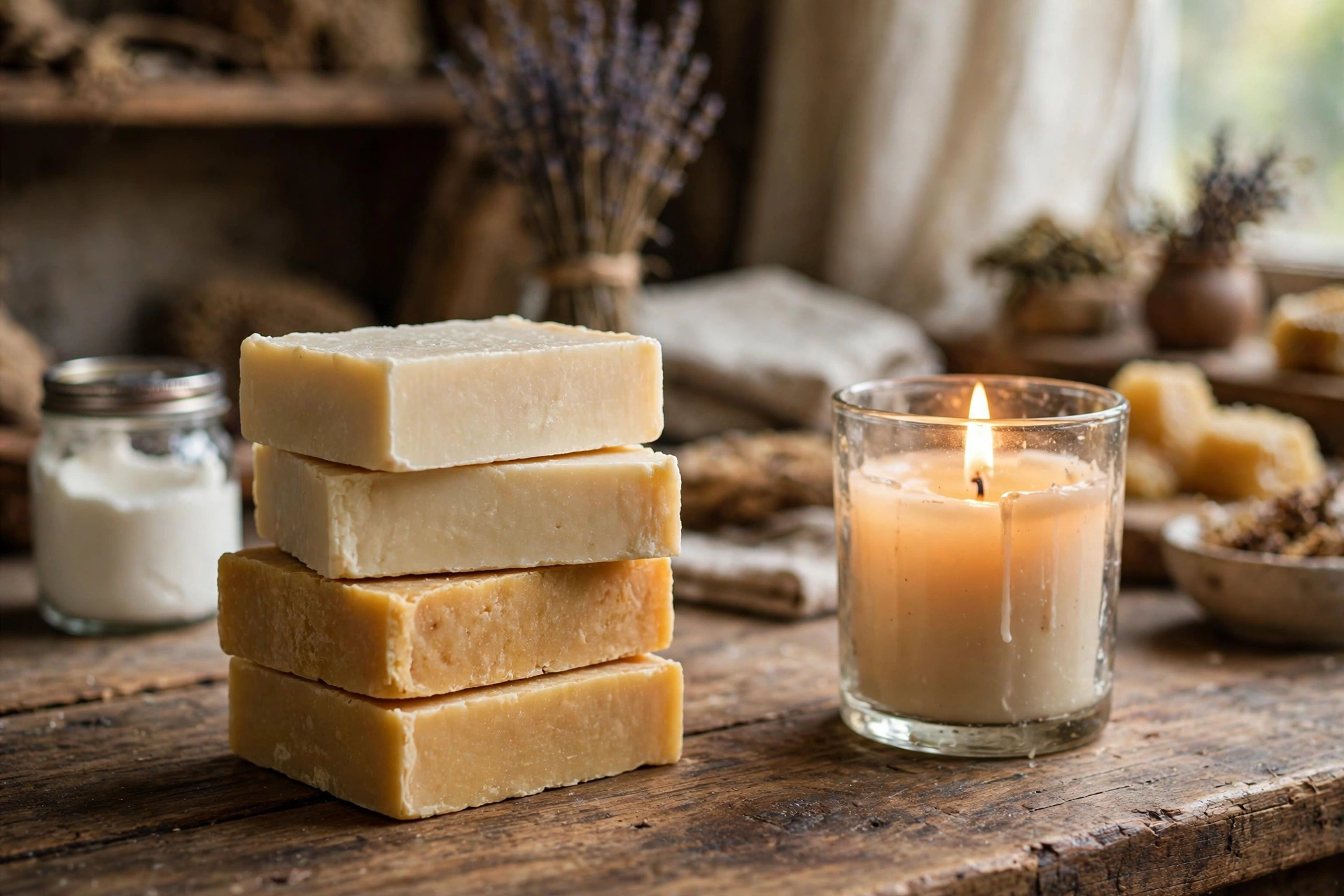
Today, tallow is having a well-earned comeback. Soap makers prize it for rock-hard bars that don’t melt away in the shower. Candle makers blend it into pillar and container formulas for a firm, slow-burning wax. And beyond the workshop, it’s a superb cooking fat and a favorite base for natural skincare.
This guide walks you through rendering tallow at home using the wet method — the cleanest, most beginner-friendly approach — then covers everything you can do with the finished product.
⚠ Safety first: You are working with hot liquid fat. It causes serious burns on contact. Never leave melting fat unattended, keep children and pets out of the kitchen, and never pour water into hot fat — it will splatter violently. Work slowly and deliberately, and keep a lid nearby to smother any flare-up.
What Tallow Is (and What It Isn’t)
Tallow is purified beef fat. It starts as suet — the hard, crumbly fat found around a cow’s kidneys and loins — and becomes tallow once it’s been slowly melted, strained of all solids, and cooled into a clean, creamy-white block.
Don’t confuse it with its cousins:
| Fat | Source | Common uses |
|---|---|---|
| Tallow | Rendered beef fat | Soap, candles, cooking, skincare |
| Lard | Rendered pork fat | Cooking, pie crusts, some soaps |
| Suet | Raw (unrendered) beef fat | The starting material for tallow |
| Schmaltz | Rendered chicken or goose fat | Cooking |
For soap and candle making, tallow’s appeal is chemical: it’s high in saturated fatty acids (roughly half saturated, half unsaturated), which is exactly what produces a hard bar of soap with stable, creamy lather — and a firm candle wax that holds its shape.
Why Render Your Own Instead of Buying It?
You can buy refined tallow online and at some butcher shops. So why bother rendering it yourself? A few good reasons:
- Cost. Raw suet from a butcher is often dirt cheap — sometimes free if you ask nicely. A few dollars of suet yields jars of finished tallow that would cost many times more pre-rendered.
- Quality control. You know exactly what went in: no additives, no bleaching, no mystery sourcing. If you want grass-fed tallow for premium soap, rendering your own from a trusted farm is the only way to be sure.
- Cleanliness. Store-bought tallow varies wildly in purity. Home-rendered tallow using the wet method below comes out snow-white and nearly odorless — cleaner than most commercial options.
- Self-sufficiency. If you’re already making soap and candles from scratch, controlling your own fat supply is the natural next step. Many makers find it deeply satisfying.
Where to get suet: Ask at a local butcher shop, a farmers’ market meat vendor, or a farm that processes its own beef. Ask specifically for kidney suet — the hard fat around the kidneys renders cleaner and milder than soft trim fat. Many butchers sell it for a couple of dollars a pound or give it away as trim waste.
Equipment You’ll Need
Rendering supplies
- 3–5 lbs beef suet (kidney fat preferred)
- Large stockpot or Dutch oven (or a slow cooker — see the note below)
- Sharp knife and cutting board
- Fine mesh strainer
- Cheesecloth (a few layers) — cheesecloth on Amazon
- Large bowl for straining
- Clean glass jars with lids for storage (mason jars work perfectly)
- Salt (about 1 tablespoon per batch — helps draw out impurities)
- Water
Slow cooker option: A slow cooker set on LOW works beautifully for rendering and is nearly hands-off — arguably safer for beginners since there’s no open flame or stovetop to watch. The trade-off is time: it takes 8–12 hours instead of 3–4. Either method works with the steps below.
How to Render Tallow: The Wet Method, Step by Step
The wet method simmers the fat in water, which does three useful things: it prevents scorching, it draws out water-soluble impurities, and it produces a milder-smelling, whiter finished tallow than dry rendering. It takes a little longer, but the result is worth it — especially for soap and skincare where purity matters.
- Trim and chop the suetCut away any meat, blood spots, or discolored bits — these cause off-odors in the finished tallow. Chop the clean fat into roughly 1-inch cubes. Smaller pieces render faster and more evenly. If your suet is partially frozen, it’s much easier to cut — work with it straight from the freezer if you can.
- Add fat, water, and salt to the potPlace the chopped suet in your stockpot. Add enough water to come about halfway up the fat (roughly 2–3 cups for 3 lbs of suet) and stir in about a tablespoon of salt. The salt helps pull impurities out of the fat and into the water.
- Simmer low and slowBring the pot to a gentle simmer over medium-low heat, then reduce to low. You want lazy bubbles, not a rolling boil — the fat should melt gradually over 3–4 hours. Stir occasionally. The kitchen will smell faintly beefy; that’s normal and it fades.
- Watch for the cracklingsAs the fat renders out, the remaining solids (called cracklings) shrink, brown, and sink to the bottom. When the bubbling slows dramatically and the cracklings look crisp and golden-brown, the rendering is nearly done. Most of the liquid in the pot should now be clear, golden fat floating over cloudy water.
- Strain itLet the pot cool for 15–20 minutes so it’s safe to handle (it will still be very hot — use oven mitts). Set your fine mesh strainer over a large heat-safe bowl, line it with 2–3 layers of cheesecloth, and pour the mixture through. The cracklings stay behind; the liquid fat and water pass through. For extra-clean tallow, strain a second time through fresh cheesecloth.
- Chill and separatePour the strained liquid into a bowl or straight into wide-mouth jars and refrigerate overnight. The tallow will rise and solidify into a firm white cap on top; the water and impurities settle below. Lift off the solid tallow disc, scrape any soft or discolored bits from the underside, and discard the water.
- Optional: render a second time for purityIf you want exceptionally clean, odor-neutral tallow (recommended for skincare or light-colored soap), repeat the process: melt the tallow cap with fresh water and a pinch of salt, simmer 30 minutes, strain, and chill again. Each pass gets whiter and milder.
- Store itPat the finished tallow dry, then pack it into clean, dry glass jars. It keeps for months at cool room temperature, 6–12 months in the refrigerator, and a year or more in the freezer. If it ever smells rancid or “off,” discard it — properly rendered tallow should smell neutral to faintly clean.
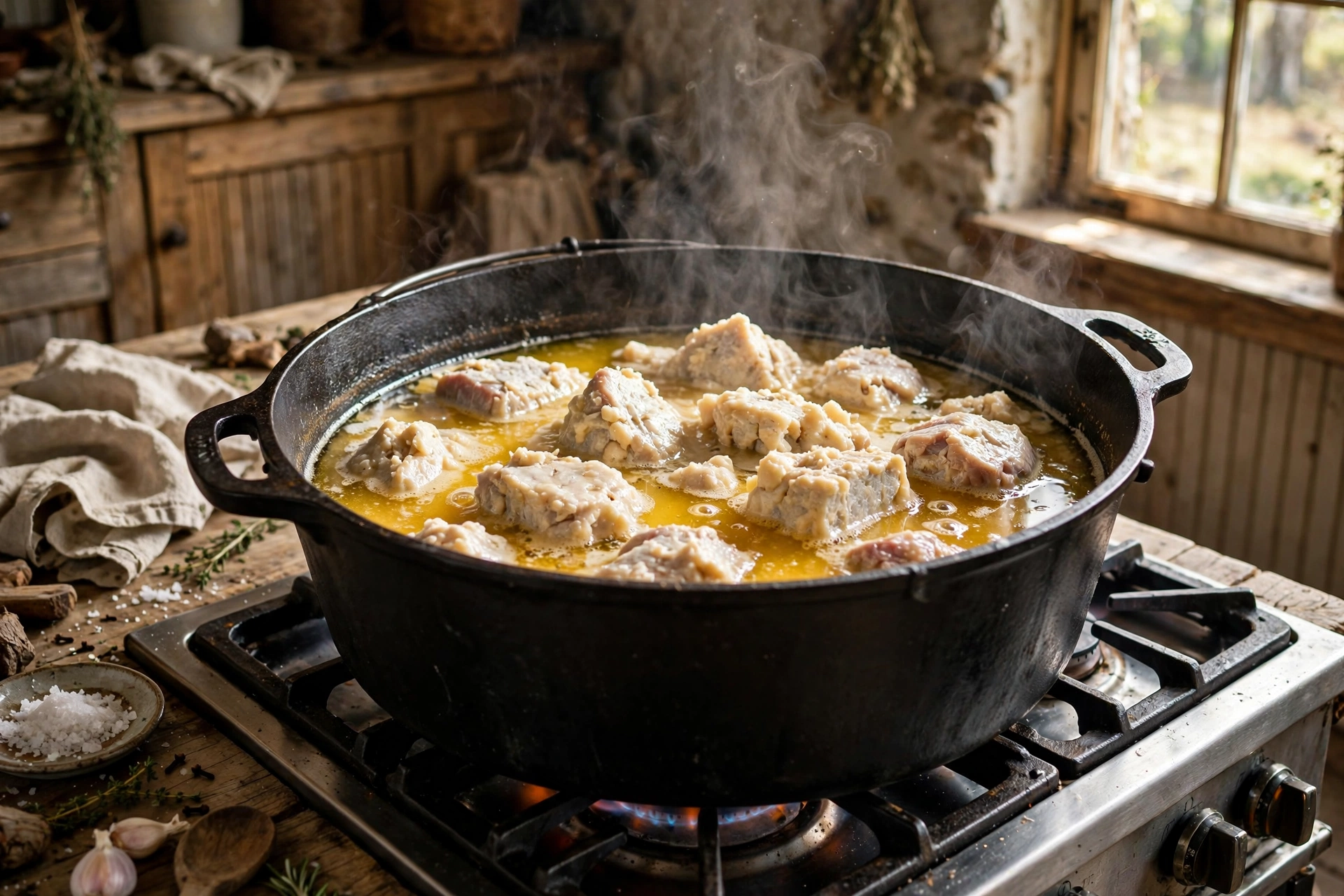
How to tell it’s done: Three signs — the cracklings are browned and shrunken, the vigorous bubbling has calmed (most of the water has cooked off), and the liquid fat looks clear and golden rather than cloudy. If you’re unsure, give it another 30 minutes on low; under-rendered tallow just means a slightly lower yield, not a ruined batch.
Using Tallow in Soap Making
This is where tallow truly shines. For centuries, tallow was the soap fat — and modern soap makers who try it usually understand why within one batch.
What tallow brings to soap:
- Hardness. Tallow’s high saturated fat content produces firm, long-lasting bars that don’t turn to mush in the shower.
- Creamy, stable lather. Not big bubbly lather — a dense, lotion-like creaminess that many makers (and customers) prefer.
- Mildness. Properly rendered tallow makes a gentle bar suitable for sensitive skin.
- Cost. It’s one of the cheapest soap-making fats available, especially home-rendered.
How to use it: Tallow is typically used at 25–60% of a soap recipe’s total oils, blended with coconut oil (for bubbly lather), olive oil (for conditioning), and castor oil (for lather boost). A classic beginner recipe: 50% tallow, 25% coconut oil, 20% olive oil, 5% castor oil.
The SAP value (how much lye is needed to saponify the fat) for tallow is approximately 0.141 for NaOH (sodium hydroxide, for bar soap) and 0.198 for KOH (potassium hydroxide, for liquid soap). Always run your exact recipe through a lye calculator — SAP values vary slightly by source.
Vegan customers? Tallow is an animal product, so it doesn’t belong in soap marketed as vegan. Many makers offer both a tallow line and a vegan line (palm oil or shea butter can approximate tallow’s hardness). Label clearly either way.
Using Tallow in Candle Making
Tallow candles predate paraffin by millennia — but pure tallow makes a soft candle with a relatively low melt point (around 100–115°F), so modern makers almost always blend it rather than using it straight.
How makers use it:
- Blended with soy wax (typically 10–30% tallow) for firmer container candles with good scent throw.
- Blended with beeswax for pillar candles — the beeswax adds hardness and a higher melt point while the tallow keeps costs down.
- As a wax hardener in small percentages to firm up soft container blends.
Test before committing. Tallow varies by source, and its lower melt point means wick sizing may differ from your usual formula. Pour a small test batch, cure it, and burn-test before scaling up — the same discipline as any new wax blend.
Other Uses for Your Rendered Tallow
You’ll likely render more tallow than your soap and candle projects need. Good news — it’s useful all over the house:
- Cooking. Tallow has a high smoke point (around 400°F), making it excellent for searing, roasting, and frying. It was the original McDonald’s french fry oil.
- Skincare. Whipped tallow balm (tallow + a little olive or jojoba oil, optionally with essential oils) is a beloved traditional moisturizer. Use your cleanest, double-rendered batch for skin products.
- Leather conditioning. A thin rub of tallow conditions and waterproofs leather boots and goods.
- Seasoning cast iron. Tallow is a traditional and effective fat for seasoning cast iron cookware.
- Bird suet cakes. Mix cooled (not hot) tallow with birdseed, pack into molds, and hang for winter birds.
Troubleshooting
My tallow smells beefy. Is it ruined?
Not ruined — just under-purified. A faint beefy scent is normal after one rendering pass. Run it through a second wet render with fresh water and salt, and the smell will fade dramatically. For skincare or light-colored soap, two passes is the standard.
My tallow came out yellow instead of white. What happened?
Usually one of three things: the heat was too high (scorching darkens it), soft trim fat was used instead of hard kidney suet, or meat bits weren’t trimmed off before rendering. Next time, keep the heat lower, use kidney suet, and trim carefully. Yellow tallow still works fine for soap — it just isn’t as pretty.
How long does homemade tallow last?
Months at cool room temperature in a sealed jar, 6–12 months refrigerated, and a year or more frozen. The enemies are heat, light, and air — store it cool, dark, and airtight. If it smells rancid or “off,” throw it out.
Can I use a slow cooker instead of the stovetop?
Yes — it’s arguably the easiest method. Put the chopped suet, water, and salt in the slow cooker on LOW for 8–12 hours (or HIGH for 4–6), then strain and chill as described above. No scorching risk and almost no attention needed.
What’s the difference between the first render and the second?
The first render gets you usable tallow. The second render (melt the solid tallow with fresh water and salt, simmer 30 minutes, strain, chill) removes residual impurities and odor. One pass is fine for candles and utility soap; two passes is worth it for facial soap, skincare, or anything where color and scent matter.
Is tallow soap okay for sensitive skin?
Generally yes — tallow makes a mild, gentle bar, and many people with sensitive skin prefer it. That said, anyone with a beef allergy should avoid it, and as with any new soap, a patch test is smart. Don’t make medical claims on your labels.
Frequently Asked Questions
How much tallow will I get from 5 lbs of suet?
Expect roughly 3–3.5 lbs of finished tallow from 5 lbs of raw suet — a yield of about 60–70%. Kidney suet yields more than soft trim fat. One rendering session typically fills several mason jars.
Do I need to refrigerate tallow?
Not strictly — properly rendered tallow is shelf-stable for months at cool room temperature because the water and proteins that cause spoilage have been removed. Refrigeration extends it to 6–12 months. When in doubt, refrigerate.
Can I render tallow from bacon grease or cooking drippings?
You can, but the result won’t be the clean, neutral tallow described here — it’ll carry the flavor of whatever was cooked in it, plus salt and seasonings. Save drippings for cooking; render fresh suet for soap, candles, and skincare.
Is homemade tallow the same as the white blocks sold for soap making?
Chemically similar, but yours is likely purer if you did two wet-render passes. Commercial tallow is often rendered at high industrial temperatures and may be bleached or deodorized. Home-rendered gives you control over sourcing — including grass-fed, if that matters to you or your customers.
Related tutorials: All Tutorials · MoCRA for Soap Makers