How to Blend Fragrance Oils
Anyone can buy a fragrance oil. Blending your own is how you get a scent nobody else sells. Here’s a perfumer’s approach, simplified for candle makers.
What you’ll need
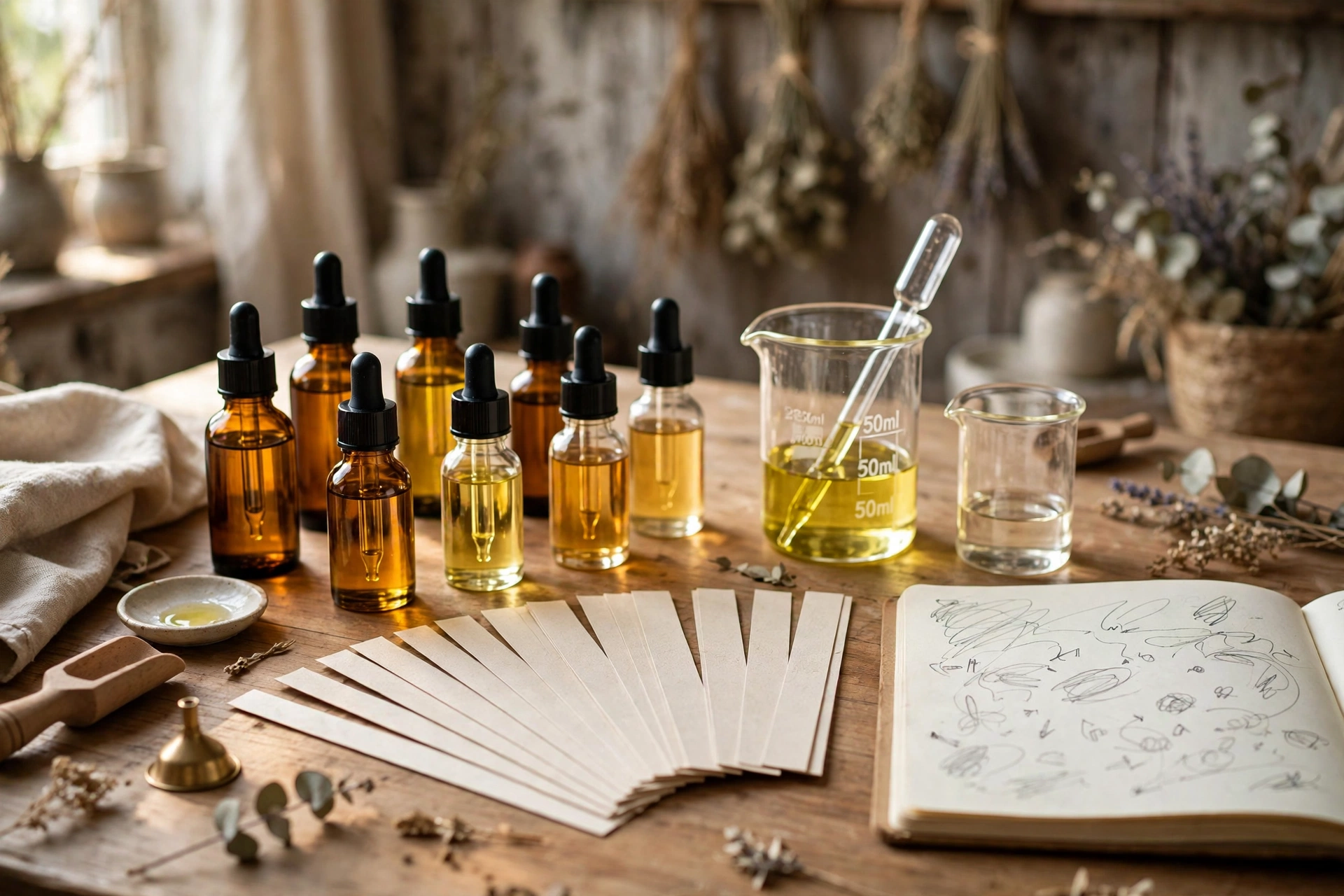
- 5–8 fragrance oils in different families (citrus, floral, wood, musk, vanilla, spice, herbal, fruity)
- Glass beakers or small jars for test blends
- Pipettes or glass droppers — one per oil, no cross-contamination
- Paper scent strips (blotters)
- A notebook — blends you don’t write down don’t exist
- Digital scale (0.01 g precision for small test batches)
Steps
1. Learn the notes
Every blend has three layers: top notes hit first and fade fast (citrus, herbs), heart notes form the character (florals, fruits, spices), and base notes linger for hours (woods, musks, vanilla, amber). A blend that’s all top notes smells exciting for five minutes and then disappears.
2. Start with a ratio
Beginners do well with a 30-50-20 rule: 30% top notes, 50% heart notes, 20% base notes. Pick one oil per layer for your first blend — three oils total. Complexity comes later. Try our free scent blending calculator to split any total across your chosen ratio.
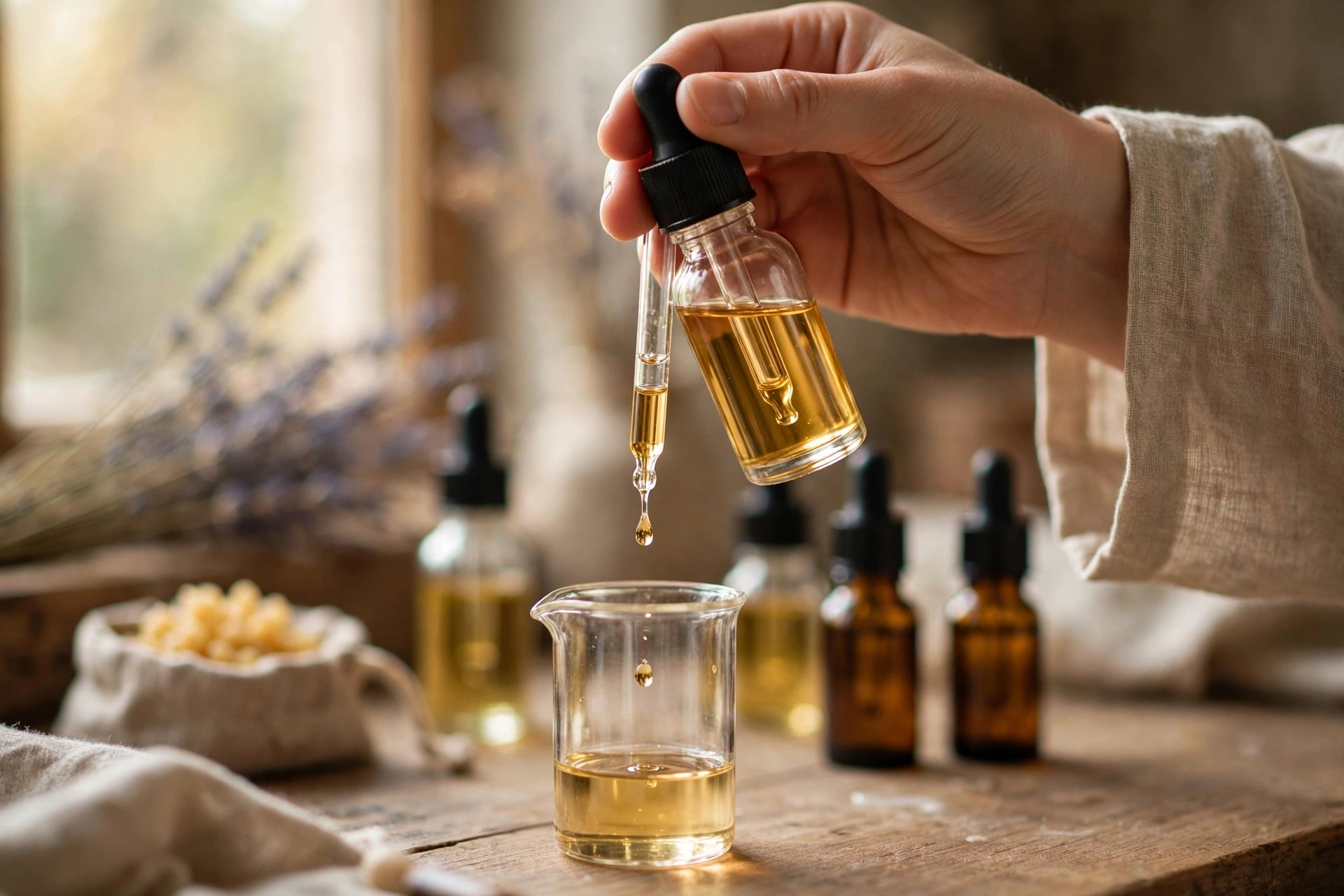
3. Blend by drops, record everything
Using separate pipettes, add drops to a beaker following your ratio — e.g. 3 drops top, 5 drops heart, 2 drops base. Write down the exact oils and drop counts. Dip a strip, wave it to dry, and smell.
4. Evaluate like a customer
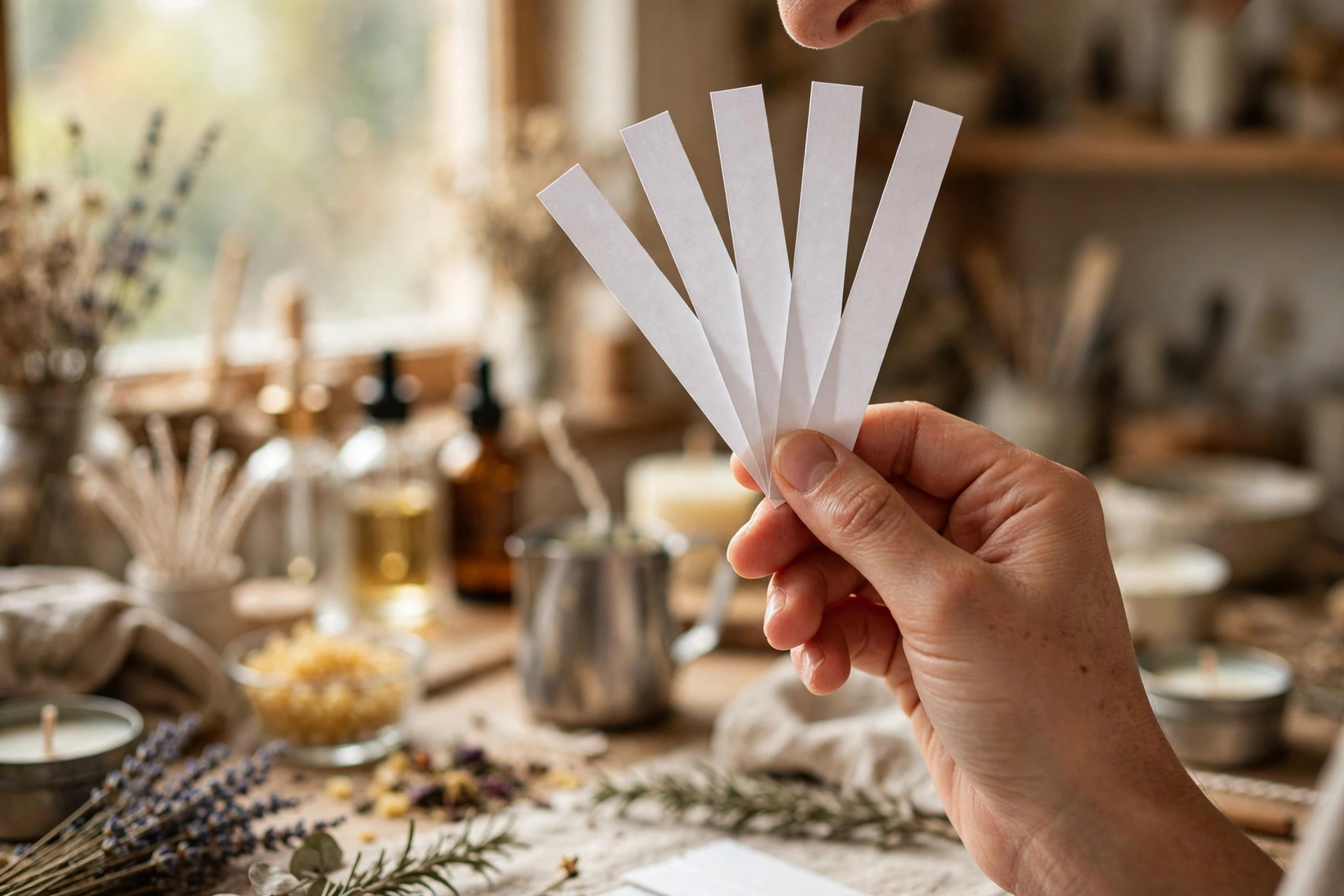
Don’t judge on first sniff. Smell the strip immediately (first impression), after 10 minutes (the heart), and after an hour (the dry-down — this is what the candle will actually smell like most of the time).
5. Iterate, then scale
Too sharp? Add base. Disappears fast? More heart, less top. Muddy? You have too many oils fighting — remove one. When a 10-drop test blend sings, scale it to grams and make a 1 oz test batch. Then — and only then — test it in wax, because heat changes everything.
Three starter formulas
Cozy: vanilla bourbon (base) + cinnamon (heart) + orange (top). Fresh: white musk (base) + eucalyptus (heart) + bergamot (top). Woodsy: cedarwood (base) + clove (heart) + fir needle (top). Adjust the 30-50-20 ratio to taste.
A blend you smell the hour you mix it is not the blend you will smell tomorrow. Freshly mixed oils smell sharper and greener than they will after a day, because the notes have not married yet — the top notes shout over everything and the base has barely woken up. Before you declare a blend a winner or a failure, seal it in a small jar and leave it alone for 24 to 48 hours, then run the same 0, 10, and 60 minute strip test again. Judge the rested blend, not the fresh one. Blends rejected on day one often turn into the best candles on day three, and the reverse happens too: a loud fresh blend can go flat once the top notes settle. Drops are for testing, not for production. Nobody counts 400 drops into a batch, and drop sizes vary by pipette anyway. Convert the test to percentages first: your 3-5-2 drop test is 30% top, 50% heart, 20% base. Our scent blending calculator does that split for any total. Then weigh the batch. Worked example, using the 30-50-20 blend at a 10% fragrance load in an 8 oz candle: 8 oz of wax at 10% takes 0.8 oz of fragrance oil, which is about 22.7 grams. Split it by the ratio: Two rules that outrank the ratio. First, never exceed your wax supplier’s maximum fragrance load — if the wax caps at 10%, a blend that needs 12% to smell right is the wrong blend for that wax, not a reason to overload it. Second, weigh every oil on the scale at batch size. Drops were for finding the blend; grams are for repeating it. Log the test candle in the Batch Cost Log with what you planned against what you actually used, so a blend you love is a blend you can remake. Heat changes everything, so a blend that sang on paper can misbehave in wax. Diagnose before you remix: The tutorial says it plainly: blends you don’t write down don’t exist. Here is the format that makes a log useful months later, when you want to remake a winner and cannot remember what was in it: One row per blend, every time, even the failures — especially the failures. A log full of "don’t do this again" entries is what keeps your next blend from repeating them.Let the blend rest before you judge it
From drops to a full candle batch
Layer Share Weight Top 30% 6.8 g Heart 50% 11.4 g Base 20% 4.5 g Total fragrance oil 100% 22.7 g When the candle doesn’t smell like the strip
A blend log that saves you from yourself
Date Oils + parts Ratio Strip notes (0 / 10 / 60 min + after rest) Candle test Verdict Example Orange / cinnamon / vanilla bourbon, 3 / 5 / 2 30-50-20 Bright, then warm; base arrives after rest Strong cold + hot throw Make again

Learn to make and sell candles — courses, planner & community.
Explore courses →Get candle-making tips by email
Join the list for new tutorials, tools, and supplier deals — straight to your inbox.
Signed up between Oct 7 and Oct 28 and never heard from us? We fixed a glitch that was dropping signups — please sign up again!